
Scholarship Renewal in 2026 How to Keep Your Funding After You Win It

Scholarship Renewal in 2026: How to Keep Your Funding After You Win It

Winning a scholarship can feel like the finish line.

You spend months searching for opportunities, preparing documents, writing essays, asking for recommendations, and waiting for the result.

Then you finally receive the good news.

But there is something many students do not think about until much later:

Will the scholarship continue next year?

Some scholarships are awarded for one academic year only. Others can continue for several years, but only if you meet specific conditions.

That is why understanding scholarship renewal in 2026 is just as important as winning the scholarship in the first place.

A student can receive an excellent award and still lose it later because of a low GPA, insufficient credits, a change in enrollment status, or simply not understanding the renewal rules.

This guide explains how scholarship renewal works, which conditions you should watch, what happens if your grades fall, and how to protect your funding throughout your degree.

What Does Scholarship Renewal Mean?

Scholarship renewal means continuing to receive an award after the initial funding period.

For example, imagine you receive a four-year university scholarship.

The university may not simply guarantee all four years at once.

Instead, the award might be renewable each academic year if you continue meeting its requirements.

Those requirements can include:

  • Minimum GPA
  • Full-time enrollment
  • Required number of credits
  • Satisfactory academic progress
  • Continued eligibility for your degree
  • Good academic standing

Every scholarship has its own rules.

Never assume that a multi-year scholarship automatically continues without conditions.

Is Every Scholarship Renewable?

No.

Scholarships generally fall into a few categories.

One-Time Scholarships

You receive the award once.

For example:

$5,000 for the 2026 academic year.

The scholarship may not provide funding the following year.

Automatically Renewable Scholarships

The award continues when you meet the required conditions.

You may not need to submit another full application.

Scholarships Requiring Renewal Applications

Some programs ask students to apply again each year.

You may need to provide:

  • Updated transcript
  • Academic results
  • Progress report
  • Financial information
  • Renewal form

Read your original scholarship agreement carefully.

Check the Renewal Rules as Soon as You Receive the Scholarship

Do not wait until the end of the year.

When you receive your award, find the section covering:

  • Renewal
  • Continued eligibility
  • Academic requirements
  • Award conditions

Write down the important numbers.

For example:

Minimum GPA: 3.0
Credits required: 30 per academic year
Enrollment: Full-time

Now you know exactly what you need to protect.

Arizona State University, for example, states that recipients of certain merit scholarships must complete a minimum number of ASU credit hours, maintain the required cumulative GPA, and remain continuously enrolled for renewal. Requirements differ by award, which is why checking the official scholarship terms matters. (Tuition at Arizona State University)

ASU Scholarship Renewal Guide

Minimum GPA Requirements

GPA is one of the most common scholarship renewal conditions.

A program may require something like:

Maintain a minimum cumulative GPA of 3.0.

This means your GPA is not only important when applying.

It may continue to determine whether you receive funding.

For example, ASU’s renewal guidance for certain merit awards requires students to maintain a minimum 3.00 cumulative GPA along with the required credit hours. (Tuition at Arizona State University)

Other scholarships may use different thresholds.

Always follow your own award terms.

Understand Cumulative GPA

Students sometimes confuse semester GPA and cumulative GPA.

Your semester GPA measures performance during one semester.

Your cumulative GPA combines your academic performance across multiple semesters.

If a scholarship says:

Minimum cumulative GPA: 3.0

one difficult semester may not automatically remove your funding if your overall GPA remains above the required level.

Check exactly how your scholarship calculates eligibility.

Credit Requirements Can Matter Too

Maintaining your GPA may not be enough.

Some scholarships also require students to complete a certain number of credits.

For example, the University of Central Florida’s Bright Futures renewal guidance states that full-time recipients generally need to earn the required number of funded credit hours and meet the applicable GPA requirement for renewal. (University of Central Florida)

UCF Bright Futures Renewal Requirements

Imagine your scholarship requires 24 credits per academic year.

You enroll in 24 credits but fail one course.

You may no longer have enough successfully completed credits.

That can affect renewal even if your GPA is still acceptable.

Full-Time Enrollment May Be Required

Many scholarships expect recipients to remain full-time students.

That might mean:

  • 12 credits per semester for undergraduate students
  • A different number for graduate students

The exact definition depends on the institution.

For example, UCF states that students receiving several of its renewable scholarship awards need to maintain full-time enrollment and meet annual credit requirements. (University of Central Florida)

If you plan to reduce your course load, talk to the scholarship office first.

Do not make the change and assume the funding will continue.

What Is Satisfactory Academic Progress?

You may see the term:

Satisfactory Academic Progress, often shortened to SAP.

It generally means that you are progressing toward your degree at an acceptable academic rate.

Requirements can involve:

  • GPA
  • Completed credits
  • Degree progress

For U.S. federal student aid, institutions establish satisfactory academic progress policies that students must meet to remain eligible for aid. Policies can include minimum GPA and completion requirements. (Student Aid)

Federal Student Aid: Satisfactory Academic Progress

Private scholarships and international awards may use their own rules rather than the same SAP system.

What Happens If Your GPA Drops?

Do not panic immediately.

The outcome depends on your scholarship.

Possible results include:

  • Warning
  • Probation
  • Reduced funding
  • Loss of scholarship
  • Opportunity to appeal
  • Chance to regain eligibility later

Some institutions offer support before completely removing an award.

For example, ASU has a Scholarship Maintenance Plan for certain merit scholarship recipients who do not fully meet renewal requirements. Depending on academic performance, some students may retain part of their award rather than losing everything immediately. (Tuition at Arizona State University)

ASU Scholarship Maintenance Plan

Your scholarship may work differently.

Contact the scholarship office as soon as you realize you may be at risk.

Do Not Wait Until Results Are Released

Suppose you are struggling academically halfway through the semester.

Do not wait until final grades arrive.

Talk to:

  • Academic adviser
  • Professor
  • Scholarship office
  • Student support services

You may still have time to improve.

Ask about:

  • Tutoring
  • Academic support
  • Course withdrawal consequences
  • Credit requirements
  • Scholarship conditions

The earlier you understand the problem, the more options you usually have.

Be Careful Before Dropping a Course

Dropping one class may seem harmless.

It can affect:

  • Full-time enrollment
  • Completed credits
  • Scholarship eligibility

Before withdrawing, ask:

Will dropping this course affect my scholarship?

Get the answer from the scholarship or financial aid office.

Do not rely only on advice from another student.

Your situation may be different.

What If You Need to Take a Break From Study?

Life happens.

Students sometimes need to pause their studies because of:

  • Family circumstances
  • Financial problems
  • Medical situations
  • Personal emergencies

Some scholarships allow deferment or approved leave.

Others may cancel funding when you stop studying.

ASU, for example, notes that breaks in continuous enrollment can affect scholarship renewal unless an approved deferment is on file. (Tuition at Arizona State University)

If you need a break, contact the scholarship provider before withdrawing when possible.

Keep Copies of Your Scholarship Conditions

Save:

  • Award letter
  • Scholarship agreement
  • Renewal policy
  • Important emails

Create a folder such as:

Scholarship 2026 → Renewal Requirements

You may need to refer to these documents later.

Your existing Scholarship Documents Checklist 2026 is useful here because good document organization should continue even after the application stage. (Peggy Nelsen Design)

Add Renewal Dates to Your Calendar

Some scholarships renew automatically.

Others require action.

Track dates such as:

  • Renewal application deadline
  • Transcript submission date
  • Academic review date
  • FAFSA or financial-aid deadline if relevant
  • Scholarship reporting deadlines

Do not assume the university will remind you about everything.

Your scholarship tracker should continue working after you win the award.

Keep Your Contact Details Updated

Scholarship providers may send important notices by email.

If you change your:

  • Email address
  • Phone number
  • Home address

update your account.

Missing an important renewal notice because you stopped checking an old email account is completely avoidable.

Check Whether Your Scholarship Has a Maximum Duration

A renewable scholarship usually does not continue forever.

It may cover:

  • Four academic years
  • Eight semesters
  • Normal degree duration
  • A fixed number of credits

For example, ASU states that certain New American University merit awards may be renewable for up to eight semesters, subject to eligibility conditions. (Tuition at Arizona State University)

If your degree takes longer than expected, additional semesters may not be covered.

Plan accordingly.

What If You Change Your Major?

Changing your subject may affect some scholarships.

A scholarship may be tied to:

  • STEM
  • Engineering
  • Public health
  • Teaching
  • Research field
  • Specific faculty

Before changing your major, check the funding conditions.

The same applies to changing universities.

Do not assume your scholarship follows you automatically.

What If You Study Abroad for One Semester?

Exchange programs can affect scholarships differently.

Some funding continues.

Some may pause.

Certain credit requirements may also treat study-abroad credits differently.

Ask before confirming an exchange program.

This is especially important if your scholarship tracks credits completed at your home institution.

Budget for the Possibility of Funding Changes

Your current scholarship may cover most of your costs.

Losing even part of it can create a serious financial gap.

Your Scholarship Budget Planning in 2026 guide already explains how tuition, living expenses, insurance, accommodation, and other costs fit together. (Peggy Nelsen Design)

When building your budget, understand what would happen if:

  • Your stipend decreased
  • Funding ended early
  • An extra semester was not covered

You do not need to assume the worst.

You should understand the risk.

Can a Scholarship Be Taken Away?

Yes.

Depending on the award, scholarship funding can sometimes be cancelled because of:

  • Low GPA
  • Insufficient credits
  • Leaving full-time study
  • Academic misconduct
  • Providing false information
  • Changing to an ineligible program
  • Breaking scholarship conditions

This is why reading the terms matters.

Many scholarship problems happen because students understand the application rules but never read the rules that apply after they win.

Your Scholarship Application Mistakes in 2026 article is a useful related resource because careful attention to instructions should continue throughout the entire scholarship journey. (Peggy Nelsen Design)

What If You Lose Your Scholarship?

First, find out why.

Contact the scholarship office.

Ask whether you have options such as:

  • Appeal
  • Probation
  • Reinstatement
  • Academic improvement plan
  • Alternative financial aid

Do not assume the situation is permanent before speaking to the provider.

Some programs allow appeals in specific circumstances.

Gather documentation if your academic performance was affected by a serious situation.

Create a Scholarship Renewal Checklist

At the beginning of each academic year, confirm:

  • Minimum GPA
  • Required credits
  • Enrollment status
  • Renewal deadline
  • Maximum scholarship duration
  • Academic progress rules
  • Required documents
  • Reporting obligations

Then check your progress during the year.

This is much easier than discovering everything one week before renewal.

Review Your Scholarship Every Semester

At the end of each semester, ask:

  • Is my GPA above the minimum?
  • Have I completed enough credits?
  • Am I still full-time?
  • Are there any upcoming renewal forms?
  • Have the scholarship rules changed?

This review may take ten minutes.

It can protect thousands of dollars in funding.

How Scholarship Renewal Connects With Your Initial Application

Renewal planning actually begins before you accept the scholarship.

When comparing awards, look beyond the first-year value.

Suppose:

Scholarship A

$15,000 per year for four years with reasonable renewal requirements.

Scholarship B

$20,000 for the first year only.

Depending on your financial situation, Scholarship A may ultimately be more valuable.

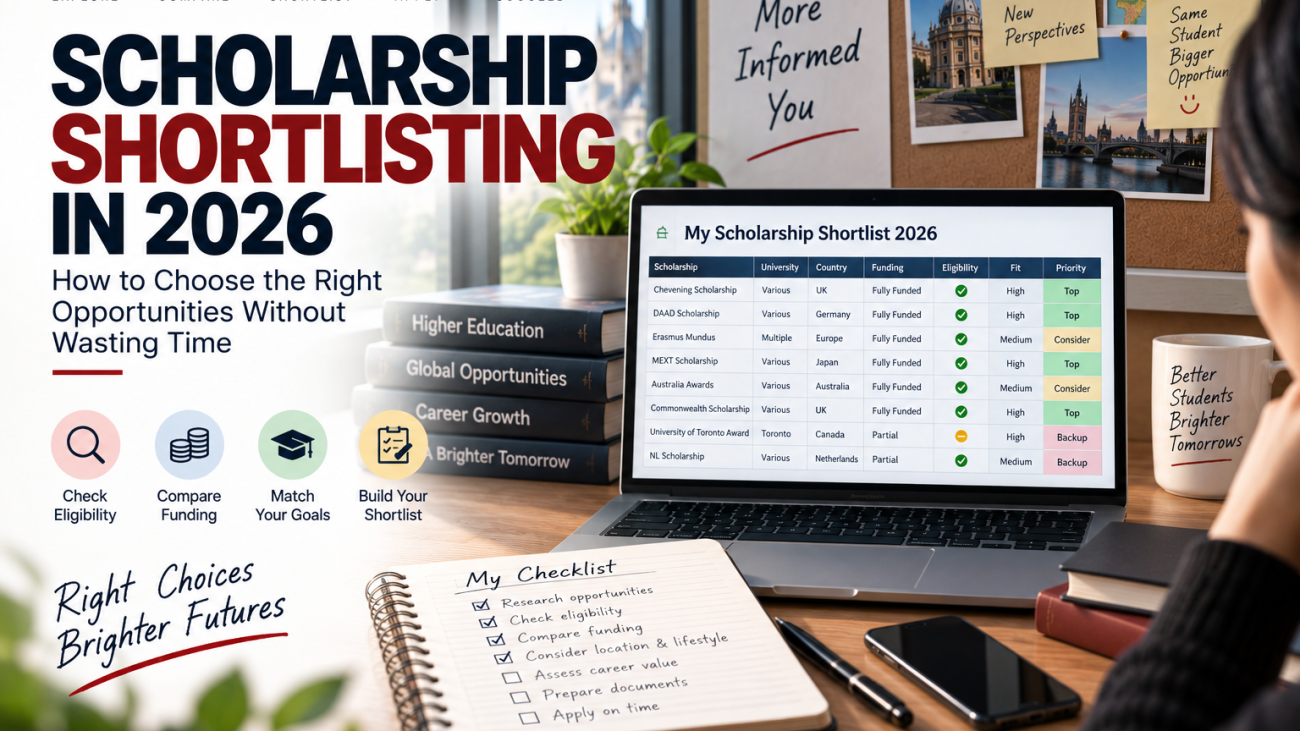
Your Scholarship Shortlisting in 2026 guide helps readers compare funding, program fit, and overall value before choosing where to apply. (Peggy Nelsen Design)

Add renewal potential to that comparison too.

Common Scholarship Renewal Mistakes

Assuming the Scholarship Automatically Continues

Always confirm.

Watching GPA but Ignoring Credits

Both may matter.

Dropping Classes Without Checking

Your enrollment status can affect funding.

Ignoring Emails From the Scholarship Office

Important renewal instructions may arrive there.

Forgetting the Renewal Deadline

Some scholarships require another application.

Assuming Every Year Has the Same Rules

Policies can change.

Check the current requirements.

Waiting Until Your GPA Falls Too Far

Ask for academic support early.

Frequently Asked Questions About Scholarship Renewal

Do scholarships automatically renew every year?

Some do, but many have academic or enrollment requirements. Others require a renewal application.

What GPA do I need to keep my scholarship?

There is no universal GPA requirement. Each scholarship sets its own standard.

Can I lose my scholarship if I fail one class?

Possibly, especially if the failed course causes you to miss GPA or credit requirements. Check your award rules.

Can I get my scholarship back after losing it?

Some programs allow appeals, probation, or reinstatement. The rules depend on the scholarship.

Does changing my major affect my scholarship?

It can if your scholarship is tied to a specific field of study.

What happens if I study part-time?

Some scholarships require full-time enrollment. Always confirm before reducing your course load.

Final Thoughts

Winning a scholarship is exciting.

Keeping it requires a different kind of effort.

You do not need to spend every semester worrying about your funding.

You need to understand the rules.

Know your GPA requirement.

Track your credits.

Stay aware of your enrollment status.

Keep important documents.

Watch renewal deadlines.

Ask questions before making major academic changes.

A scholarship can support several years of your education.

Treat the renewal conditions with the same care you gave the original application.

That way, your focus can stay where it belongs: making the most of the opportunity you already worked so hard to earn.

What to Do After Winning a Scholarship in 2026

What to Do After Winning a Scholarship in 2026: From Acceptance Letter to Visa and Arrival

Winning a scholarship is a huge relief.

You have spent weeks or months searching, writing essays, requesting recommendation letters, checking deadlines, and waiting for a decision.

Then the email finally arrives:

Congratulations. You have been selected.

For a moment, it feels like the hard part is over.

In reality, winning the scholarship is the beginning of a new stage.

You may now need to accept the offer, confirm university admission, prepare financial documents, apply for a visa, arrange accommodation, book travel, and understand the scholarship conditions before leaving home.

A good post-scholarship plan in 2026 can help you move from “I won” to “I am ready to study” without unnecessary stress.

This guide explains what to do after receiving a scholarship offer, which documents to prepare, how to plan your visa and budget, and what to check before travelling.

First, Read the Scholarship Offer Carefully

Do not immediately click “accept” without reading everything.

Scholarship offers can contain important conditions.

Check:

  • Scholarship amount
  • Tuition coverage
  • Monthly stipend
  • Accommodation support
  • Travel funding
  • Insurance
  • Start date
  • Duration
  • Renewal conditions
  • Acceptance deadline

Some scholarships require you to maintain a certain GPA or remain enrolled full-time.

Others may have conditions about:

  • Changing your course
  • Changing universities
  • Deferring admission
  • Working while studying

Save a copy of the offer letter.

You may need it later for your visa or university registration.

Accept the Scholarship Before the Deadline

Many scholarship offers have an acceptance deadline.

You may need to:

  • Sign an acceptance form
  • Reply by email
  • Complete an online portal
  • Upload documents

Do not assume the scholarship is automatically yours because you received the offer.

If you miss the acceptance deadline, the funding may be offered to another candidate.

Before accepting, make sure you are comfortable with the financial package. Your scholarship may sound generous but still leave some costs uncovered. My guide on Scholarship Budget Planning in 2026 explains how to calculate the real amount you may still need to pay. (Peggy Nelsen Design)

Confirm Your University Admission

A scholarship offer and a university admission offer may be separate.

Check whether you already have:

  • Conditional admission
  • Unconditional admission
  • Scholarship-only confirmation

If your offer is conditional, you may still need to submit something such as:

  • Final transcript
  • Degree certificate
  • English-language result
  • Passport copy
  • Deposit confirmation

Do not assume that winning a scholarship automatically completes university admission.

Contact the admissions office if anything is unclear.

Check Exactly What the Scholarship Covers

This is one of the most important steps.

Create a simple list.

For example:

Covered

  • Full tuition
  • Monthly stipend
  • Health insurance

Not covered

  • Visa
  • Flight
  • Accommodation deposit

This immediately shows what you still need to prepare financially.

Even strong scholarships may leave some upfront expenses to the student.

Your existing Scholarship Budget Planning guide goes into this in more detail, including living costs, emergency savings, airfare, housing, and stipend planning. (Peggy Nelsen Design)

Organize Your Important Documents

After winning, your paperwork becomes even more important.

Create one folder containing:

  • Passport
  • Scholarship offer
  • University admission letter
  • Academic transcripts
  • Degree certificate
  • English-language result
  • Financial documents
  • Medical documents
  • Visa documents
  • Accommodation confirmation
  • Flight details

Keep both digital and physical copies where appropriate.

Your Scholarship Documents Checklist 2026 is a useful internal resource to link here because many of the documents used during the scholarship application are needed again during admission and visa preparation. (Peggy Nelsen Design)

Check Your Passport

Look at the expiry date.

You do not want to discover during your visa application that your passport expires too soon.

Different countries have different passport-validity rules.

Renew it early if necessary.

Also make sure your name appears consistently across:

  • Passport
  • University offer
  • Scholarship letter
  • Academic records

If there is a spelling difference, contact the relevant institution before submitting your visa application.

Start the Student Visa Process Early

Visa requirements depend on your destination country.

Do not rely on old YouTube videos or Facebook posts.

Immigration rules can change.

Use the official government website for the country where you will study.

Studying in the UK

For the UK Student visa, applicants generally need an offer from a licensed student sponsor and must meet the relevant financial, English-language, and other requirements. Students studying at an eligible institution receive a Confirmation of Acceptance for Studies, commonly called a CAS, which is needed for the visa application. (GOV.UK)

Official UK Student Visa guidance

Studying in Canada

Most international students need a study permit to study in Canada. The Canadian government advises students to apply before travelling and requires documents such as a letter of acceptance from a designated learning institution, alongside other documentation that applies to the applicant’s situation. (Canada)

Official Canada Study Permit guidance

Studying in the United States

Students entering the United States for academic study generally need an F student visa. After acceptance by a SEVP-approved institution, the school issues Form I-20, which is part of the student visa process. (Travel.state.gov)

Official U.S. Student Visa guidance

Use official immigration sources because visa requirements, fees, processing procedures, and timelines can change.

Do Not Wait for the Last Minute to Apply for Your Visa

Winning a scholarship does not guarantee that the visa process will be instant.

You may need:

  • Biometrics
  • Medical examination
  • Financial evidence
  • Visa interview
  • Additional documents

Processing times can also vary.

Start as soon as your required university documents become available.

For example, the UK currently allows students applying from outside the country to apply for a Student visa up to six months before the course begins. (GOV.UK)

Canada also advises students to apply for their study permit before travelling. (Canada)

Prepare Proof of Funding

Your scholarship letter may help demonstrate how your studies will be funded.

Still, you may need additional evidence depending on the visa system.

You might be asked to show:

  • Scholarship award letter
  • Bank statements
  • Sponsor documents
  • Proof of tuition payment
  • Proof of living funds

Do not assume that the word “scholarship” automatically removes every financial-document requirement.

Check the official visa guidance for your destination.

Plan for Upfront Expenses

One common surprise happens before the scholarship payments begin.

Imagine your scholarship provides a monthly stipend.

That is helpful once you arrive.

You may still need to pay for:

  • Visa
  • Flight
  • Housing deposit
  • First month’s rent
  • Medical tests
  • Local transport
  • Temporary accommodation

Your first stipend may not arrive immediately.

Keep some emergency money available if possible.

This is another place where your Scholarship Budget Planning 2026 article creates a useful internal link for readers. (Peggy Nelsen Design)

Arrange Accommodation Carefully

Do not book the first room you see.

Check whether the university offers:

  • Student halls
  • Graduate accommodation
  • Partner housing
  • International student accommodation

Compare:

  • Rent
  • Deposit
  • Utilities
  • Distance from campus
  • Transport
  • Contract length

Be cautious about sending large deposits to unknown individuals.

Ask the university housing office if you are unsure whether a property or provider is legitimate.

Do Not Book an Expensive Flight Too Early

It is exciting to book the flight as soon as you receive your scholarship.

Waiting may be safer.

Ideally, confirm:

  • Visa approval
  • University arrival date
  • Accommodation availability
  • Scholarship orientation dates

before purchasing a non-refundable ticket.

Visa delays can happen.

Flexible flight options can sometimes be worth the additional cost.

Check When You Are Allowed to Enter the Country

Your visa may limit how early you can arrive.

Do not assume you can enter months before the course begins.

For example, the UK provides specific rules on how early Student visa holders can arrive based on course length. (GOV.UK)

The U.S. also states that new students with F or M visas cannot enter more than 30 days before their program start date. (Travel.state.gov)

Always check your own visa conditions before booking travel.

Understand Your Scholarship Payment Schedule

Find out when you will receive money.

Ask:

  • Is the stipend monthly?
  • When is the first payment?
  • Is airfare paid upfront or reimbursed?
  • Is accommodation paid directly?
  • Is there an arrival allowance?
  • Do I need a local bank account?

This matters because reimbursement and direct payment are very different.

If airfare is reimbursed after arrival, you still need enough money to purchase the ticket yourself.

Open a Local Bank Account If Required

Some scholarships pay the stipend into a local bank account.

Your university may provide guidance after arrival.

You may need:

  • Passport
  • Student ID
  • Proof of address
  • University letter
  • Visa documents

Do not worry about arranging this too early unless the scholarship specifically asks you to.

Check Health Insurance Requirements

Health insurance rules vary.

Your scholarship may:

  • Pay for insurance
  • Enroll you automatically
  • Reimburse you
  • Expect you to arrange it

Check both the scholarship conditions and visa requirements.

Do not assume university healthcare automatically covers everything.

Prepare for Academic Life Too

Once visa and travel planning starts, it is easy to forget why you are going.

Look at:

  • Course modules
  • Reading lists
  • Orientation
  • Academic calendar
  • Research expectations

If you are starting a research degree, contact your supervisor about what you should prepare before arrival.

You may not need to study heavily before the course begins.

A little preparation can make the first few weeks easier.

Join Official Student Communities

Your university may offer:

  • International student groups
  • Scholarship recipient groups
  • Orientation communities
  • Student societies

These can help with practical questions about:

  • Housing
  • Transport
  • Banking
  • Campus life

Use official or university-linked groups when possible.

Be careful with random social media accounts asking for money or sensitive documents.

Watch Out for Post-Award Scams

Winning a scholarship can make you a target for scams too.

Someone may claim:

Pay this fee to activate your scholarship.

or:

Send your passport through WhatsApp to confirm your award.

Verify any unexpected request directly with the university or scholarship organization.

A useful related internal resource is your scholarship application-mistakes article, which already emphasizes verification and careful document handling. Scholarship Application Mistakes in 2026 (Peggy Nelsen Design)

Create a Pre-Departure Checklist

A simple checklist can prevent last-minute panic.

Before travelling, confirm:

  • Scholarship accepted
  • University admission confirmed
  • Passport valid
  • Visa approved
  • Accommodation arranged
  • Flight booked
  • Insurance confirmed
  • Important documents printed
  • Emergency money available
  • University arrival instructions checked
  • Scholarship contact details saved

Keep the list somewhere easy to access.

Keep Important Documents in Your Hand Luggage

Do not put everything in checked baggage.

Keep essential documents with you during travel.

These may include:

  • Passport
  • Visa
  • Admission letter
  • Scholarship letter
  • Accommodation details
  • Travel insurance
  • University contact details

Border officials may ask for documentation.

You need to be able to access it quickly.

Keep Digital Backups

Scan important documents and store secure copies online.

This can be useful if something is lost.

Avoid storing sensitive documents in public folders.

Use a secure account protected with a strong password and two-factor authentication.

Tell the Scholarship Provider If Your Plans Change

Do not quietly change:

  • Course
  • University
  • Start date
  • Enrollment status

without checking the scholarship conditions.

Funding may be tied to a specific program or institution.

Contact the scholarship office first.

What If You Receive More Than One Scholarship?

Congratulations — but do not immediately try to keep both.

Check the conditions.

Some scholarships do not allow recipients to hold another major award at the same time.

Compare:

  • Funding
  • Course quality
  • Career value
  • Conditions
  • Destination
  • Living costs

Your Scholarship Shortlisting in 2026 guide can also be used at this stage because the same comparison principles apply when choosing between offers. (Peggy Nelsen Design)

Common Mistakes After Winning a Scholarship

Students sometimes relax too much after receiving the award.

Avoid:

  • Missing the acceptance deadline
  • Delaying the visa application
  • Assuming all costs are covered
  • Booking travel before checking visa rules
  • Ignoring scholarship conditions
  • Losing important documents
  • Arriving without emergency funds
  • Changing programs without permission

Winning the scholarship solves one major problem.

Good preparation handles the rest.

Frequently Asked Questions

What should I do first after winning a scholarship?

Read the award letter carefully and confirm the acceptance deadline. Make sure you understand the funding and conditions before accepting.

Does a scholarship guarantee a student visa?

No. Scholarship selection and immigration approval are separate processes. You still need to meet the visa requirements of your destination country.

Should I book my flight before receiving my visa?

Usually, it is safer to wait until your visa is approved unless the scholarship or university provides different instructions.

Do I still need financial documents if I have a fully funded scholarship?

Possibly. Requirements vary by country and visa type, so check the official immigration guidance.

What documents should I carry when travelling?

Keep your passport, visa, admission letter, scholarship confirmation, accommodation details, and other important travel documents easily accessible.

What if my scholarship does not cover all expenses?

Calculate the funding gap early and decide how you will cover it before accepting the offer. Your scholarship should be financially realistic, not just attractive on paper.

Final Thoughts

Winning a scholarship in 2026 is a major milestone.

Take time to enjoy it.

Then get organized.

Accept the award.

Confirm admission.

Read the funding conditions.

Prepare your documents.

Start the visa process.

Plan your budget.

Arrange accommodation.

Book travel at the right time.

The months between winning a scholarship and arriving at university can feel complicated, but most of the stress becomes manageable when you handle one step at a time.

You worked hard to win the opportunity.

Good preparation helps you arrive ready to use it.

How to Find Scholarships in 2026

How to Find Scholarships in 2026: Where to Search Without Wasting Hours on Fake or Irrelevant Opportunities

Searching for scholarships can become a full-time job surprisingly quickly.

You open Google.

Then Facebook.

And, then LinkedIn.

Then a scholarship website.

Before you know it, you have 25 tabs open and no idea which opportunities are actually worth applying for.

Some are expired.

And, Some are only available to students from certain countries.

Some cover tuition but nothing else.

And some are not legitimate at all.

Finding scholarships in 2026 is not really about finding the largest possible list.

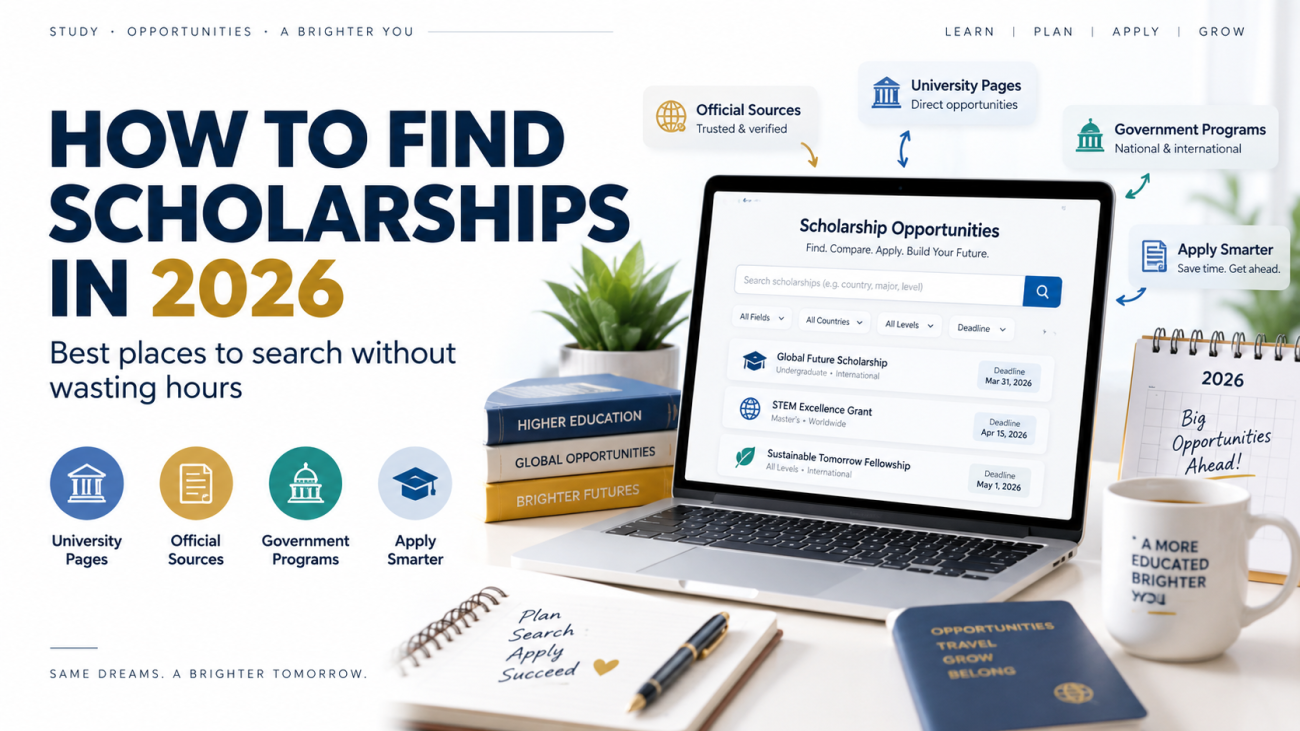
It is about knowing where to search, what to verify, and which opportunities deserve your time.

A better scholarship search strategy can save you hours and give you more time to improve the applications that actually matter.

Start With Your Scholarship Profile

Before searching for opportunities, define what you are looking for.

Write down:

  • Your nationality
  • Current qualification
  • Intended degree level
  • Subject
  • GPA
  • Work experience
  • Research experience
  • Preferred countries
  • Funding needs

This immediately makes your search more focused.

Instead of searching:

scholarships 2026

you can search:

fully funded master’s scholarships in public health 2026 for international students

or:

PhD scholarships in artificial intelligence Germany 2026

The more specific your search becomes, the less irrelevant information you need to filter.

Before going too far, it is also worth checking your basic eligibility. My guide to Scholarship Shortlisting in 2026 explains how to compare eligibility, funding, course fit, and application workload before spending hours on an opportunity. Scholarship Shortlisting in 2026

1. Start With Official Government Scholarship Websites

Government-funded scholarships are often among the strongest options for international students.

These programs may cover:

  • Tuition
  • Living allowance
  • Travel
  • Insurance
  • Research costs

Examples include major programs such as Chevening, Fulbright, and government-funded opportunities in countries such as Germany, Australia, Japan, and others.

For example, the official Chevening website currently lists its scholarship application information and participating countries directly, rather than requiring students to rely on third-party scholarship blogs. (Chevening)

Official Chevening Scholarships

If you find a government scholarship on social media, use the post only as a discovery point.

Then find the official government page.

2. Search University Scholarship Pages

Universities themselves are one of the most overlooked scholarship sources.

Go to a university website and look for sections such as:

Admissions → Scholarships

International Students → Funding

Fees and Funding

Graduate Funding

Financial Aid

You may find:

  • Merit scholarships
  • International student awards
  • Tuition waivers
  • Research assistantships
  • Departmental scholarships

Some of these receive less online attention than famous government scholarships.

That does not make them less valuable.

If you are unsure whether the funding is financially sufficient, read my Scholarship Budget Planning in 2026 guide before deciding whether the award is really worth pursuing. Scholarship Budget Planning in 2026

3. Use DAAD for Germany Scholarships

Students interested in Germany should know about the official DAAD scholarship database.

DAAD maintains a database containing its own scholarship programs as well as selected opportunities from other funding organizations. (DAAD)

You can filter scholarships based on factors such as:

  • Country
  • Academic status
  • Subject
  • Study purpose

Official DAAD Scholarship Database

Do not assume every German scholarship has the same requirements.

Open the specific program and check:

  • Eligibility
  • Funding
  • Deadline
  • Required documents

4. Check Erasmus Mundus for European Master’s Programs

For students interested in studying across multiple European universities, Erasmus Mundus Joint Masters can be worth exploring.

The official Erasmus+ page states that students from around the world can apply and that full scholarships may be available to top-ranked applicants. Funding can contribute toward participation costs, travel, visa expenses, and living allowances. (Erasmus+)

Official Erasmus Mundus Joint Masters

Applications are made directly to the consortium running each master’s program, so always check the individual program website.

5. Check Fulbright for US Graduate Study

Students interested in graduate study or research in the United States should also check the official Fulbright Foreign Student Program.

Application procedures can differ by country, which is why it is important to use the official country information rather than copying another student’s process.

The official Fulbright site provides country-specific information, including application and placement details. (Fulbright Online)

Fulbright Foreign Student Program

6. Search Individual University Departments

This is especially important for:

  • PhD students
  • Research master’s applicants
  • STEM applicants

A university’s main scholarship page may not list every funded research position.

Visit:

  • Department pages
  • Research group pages
  • Faculty profiles
  • PhD vacancy pages

A professor may already have funding for a specific project.

That opportunity may never appear on a popular scholarship directory.

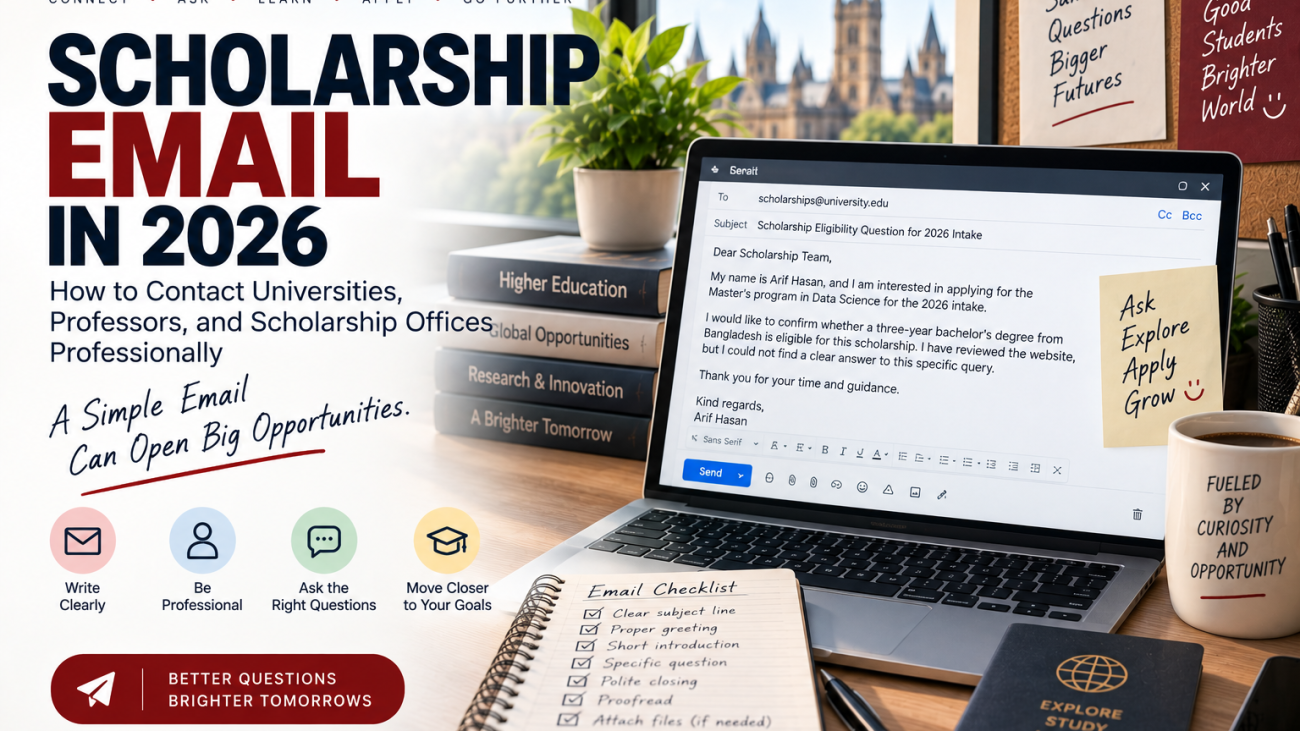
If you need to contact a professor, use a concise and professional email rather than sending a generic request. My Scholarship Recommendation Request Email in 2026 article also shows how to structure respectful academic communication. Scholarship Recommendation Request Email in 2026

7. Use Scholarship Websites as Discovery Tools

Third-party scholarship websites can be useful.

They bring many opportunities together in one place.

But there is an important rule:

Discover there. Verify elsewhere.

If you find a scholarship through a blog or database, look for the same opportunity on:

  • University website
  • Government website
  • Official foundation website

Never submit sensitive documents simply because an opportunity appears on a scholarship listing website.

8. Use Google More Strategically

Instead of searching broad phrases, combine your criteria.

Try searches like:

fully funded master’s scholarship 2026 computer science UK

international student scholarship 2026 Canada engineering

PhD funding 2026 machine learning Europe

You can also search a specific university.

For example:

University of X international scholarships master’s

or:

University of X PhD funded positions computer science

Specific searches save time.

9. Search by Your Academic Field

Some funding opportunities are subject-specific.

Try searching:

  • Public health scholarships
  • Nursing scholarships
  • Engineering scholarships
  • AI scholarships
  • Climate scholarships
  • Agriculture scholarships
  • Education scholarships

You may find professional associations, research organizations, and foundations that do not appear in general scholarship searches.

10. Look at Professional Organizations

Depending on your subject, professional organizations may provide:

  • Scholarships
  • Research grants
  • Travel funding
  • Conference funding
  • Fellowships

For example, engineering, medical, scientific, and business associations often support students in their own fields.

These opportunities may be smaller than a full government scholarship, but they can still reduce study costs significantly.

11. Search for Research Assistantships

If you are applying for a master’s or PhD, do not search only for the word “scholarship.”

Also search:

  • Research assistant
  • Graduate assistant
  • Teaching assistant
  • Funded PhD
  • Doctoral researcher

Funding may be attached to employment or research instead of being called a scholarship.

12. Ask Your Current University

Your own university may have opportunities you will never find through Google.

Ask:

  • International office
  • Department
  • Academic adviser
  • Career office

They may know about:

  • Exchange programs
  • Partner university scholarships
  • Alumni-funded awards
  • Research grants

Create a Scholarship Search Routine

You do not need to search every day.

That quickly becomes exhausting.

A simple weekly routine works better.

For example:

Monday: Check government and university scholarship pages.

Wednesday: Search by subject and country.

Friday: Review saved opportunities and update your shortlist.

Then spend the rest of your time actually preparing applications.

Keep a Scholarship Tracker

When you find a promising opportunity, record it immediately.

Include:

  • Scholarship name
  • Official link
  • Country
  • Degree
  • Funding
  • Eligibility
  • Deadline
  • Status

Do not rely on browser bookmarks alone.

A scholarship you save today can easily disappear inside 100 other bookmarks.

Once you identify an opportunity, use the Scholarship Documents Checklist 2026 to see which files you should start preparing. Scholarship Documents Checklist 2026

Verify Every Scholarship Before Applying

Before starting an application, confirm:

  • Is the provider real?
  • Is the opportunity on an official website?
  • Is the deadline current?
  • Does your nationality qualify?
  • Does your degree qualify?
  • What exactly is funded?
  • Are there application fees?

If anything looks suspicious, investigate before sharing personal information.

Do Not Apply Just Because a Scholarship Is Fully Funded

“Fully funded” is attractive.

But the program still needs to make sense for you.

Consider:

  • Course quality
  • Academic fit
  • Career goals
  • Country
  • Funding conditions

You can use the decision-making approach in Scholarship Shortlisting in 2026 to separate high-priority opportunities from applications that are probably not worth your time. Scholarship Shortlisting Guide

Avoid These Scholarship Search Mistakes

The most common problems are surprisingly simple:

  • Searching only on social media
  • Trusting unofficial deadlines
  • Applying without checking eligibility
  • Saving links but forgetting deadlines
  • Applying only to famous scholarships
  • Ignoring university-specific awards
  • Choosing funding without checking actual costs

Several of these issues are covered in more detail in Scholarship Application Mistakes in 2026: 15 Common Errors That Can Cost You Funding. Scholarship Application Mistakes in 2026

Frequently Asked Questions

Where is the best place to find scholarships in 2026?

Start with official university, government, and recognized scholarship-provider websites. Large official programs such as Chevening, Erasmus Mundus, Fulbright, and DAAD can also be useful starting points depending on your destination and degree. (Chevening)

Are scholarship websites trustworthy?

Some are useful, but you should verify opportunities through the organization actually providing the scholarship.

Can I find scholarships through social media?

Yes. Social media can help with discovery, but always verify the information through an official source.

Should I apply to every scholarship I qualify for?

Not necessarily. Prioritize scholarships that match your academic goals, financial needs, and profile.

Are university scholarships easier to get?

Not always. Some university-specific awards may have a smaller, more focused applicant pool than major international scholarship programs.

When should I start searching?

Start searching around 8–12 months before your intended intake. This gives you enough time to prepare documents, complete required tests, and arrange recommendation letters.

Final Thoughts

Finding scholarships in 2026 does not have to mean spending every evening scrolling through hundreds of opportunities.

Start with official sources.

Search based on your actual profile.

Verify everything.

Build a shortlist.

Then stop searching long enough to actually prepare a strong application.

A list of 100 scholarships is not particularly useful if it never submit a good application.

Five carefully selected opportunities can be much more valuable.

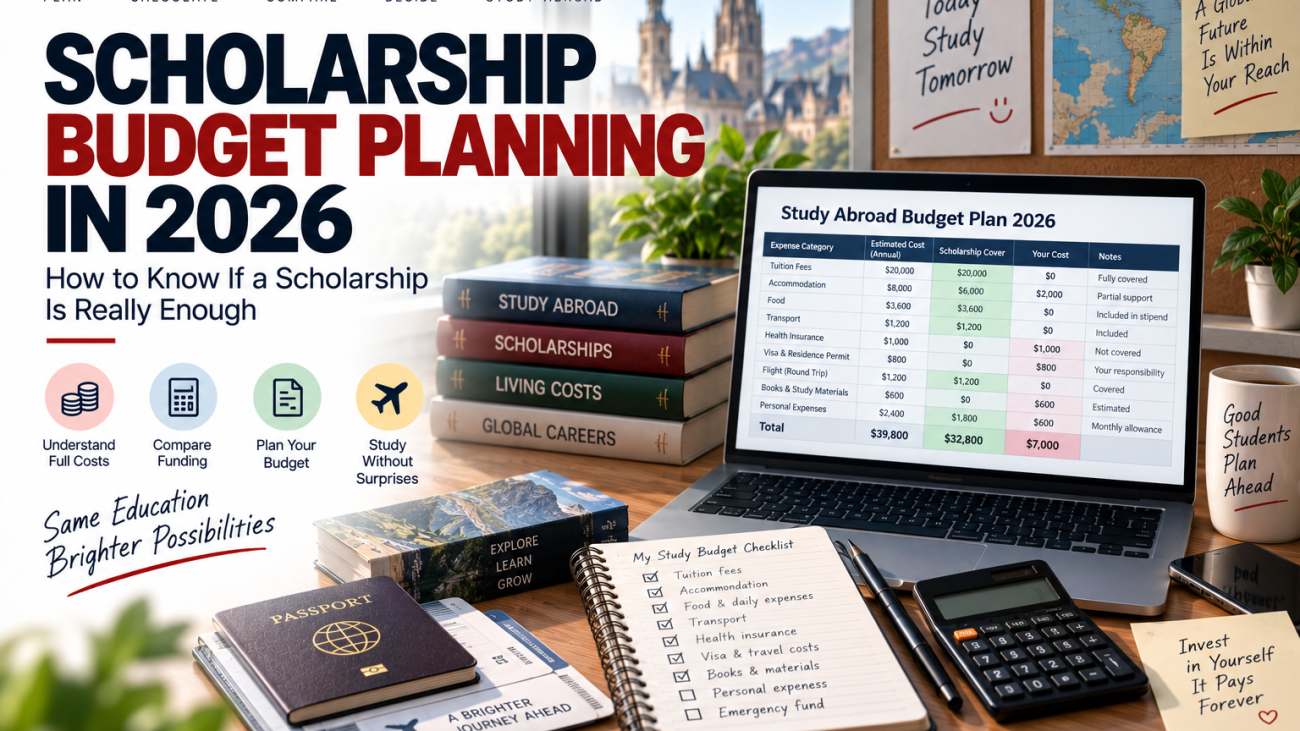
Scholarship Budget Planning 2026

Scholarship Budget Planning in 2026: How to Know If a Scholarship Is Really Enough

A scholarship can look amazing on paper.

It may say:

50% tuition waiver.

Or:

Monthly stipend included.

Or even:

Fully funded.

At first glance, that sounds like the financial problem is solved.

But studying costs more than tuition.

You may still need to pay for rent, food, transport, insurance, visa fees, flights, books, deposits, and everyday expenses.

That is why scholarship budget planning in 2026 is so important.

Before accepting or even applying for a scholarship, you should understand what the funding actually covers and what you may still need to pay yourself.

This guide explains how to calculate the real cost of studying, compare scholarship offers, avoid hidden expenses, and decide whether an opportunity is financially realistic.

Why Scholarship Budget Planning Matters

Students often focus only on the scholarship amount.

But the scholarship amount by itself does not tell you whether the opportunity is affordable.

For example:

University A offers a 70% tuition scholarship.

University B offers a 50% tuition scholarship plus accommodation and a monthly stipend.

At first, University A may sound better.

But after you calculate everything, University B could actually cost you much less.

The real question is not:

How big is the scholarship?

The better question is:

How much will I still need to pay after the scholarship?

Start With the Full Cost of Study

Before calculating the value of a scholarship, list the total expected cost.

This usually includes:

  • Tuition fees
  • Accommodation
  • Food
  • Transport
  • Health insurance
  • Visa fees
  • Airfare
  • Books
  • Study materials
  • Mobile and internet
  • Personal expenses

Depending on the country, you may also need to consider:

  • Residence permits
  • Medical tests
  • Security deposits
  • Winter clothing
  • Local registration fees

These small costs add up.

Understand the Difference Between Full Tuition and Fully Funded

This is one of the most common misunderstandings.

A full tuition scholarship may cover only tuition.

You may still need to pay for:

  • Rent
  • Food
  • Travel
  • Insurance
  • Visa
  • Personal expenses

A fully funded scholarship usually covers much more, but even then, you should still read the details.

Do not assume.

Check.

How to Calculate the Real Scholarship Value

Use a simple formula:

Total Cost of Study − Scholarship Support = Your Remaining Cost

For example:

Tuition: $20,000
Living costs: $12,000
Insurance: $1,500
Travel and visa: $1,500

Total cost:

$35,000

Scholarship covers:

  • $20,000 tuition
  • $8,000 living stipend

Total scholarship support:

$28,000

Your estimated remaining cost:

$7,000

This gives you a much clearer picture.

Check Whether the Stipend Matches the Cost of Living

A monthly stipend sounds attractive.

But you need to know whether it is enough for the city.

For example, a stipend of $1,000 per month may be comfortable in one place and too low in another.

Compare the stipend with:

  • Average rent
  • Food costs
  • Public transport
  • Utilities
  • Personal expenses

Always judge the stipend in context.

Accommodation Can Change Everything

Housing is often the biggest living expense.

Check whether the scholarship:

  • Provides free accommodation
  • Gives a housing allowance
  • Includes accommodation inside the stipend
  • Offers discounted university housing
  • Provides nothing for housing

These are very different situations.

If accommodation is not included, research realistic rent prices.

Do Not Forget Initial Costs

Even when a scholarship pays monthly, you may need money before the first payment arrives.

Common upfront expenses include:

  • Visa fee
  • Flight
  • Deposit
  • First month’s rent
  • Residence permit
  • Medical checks
  • Temporary accommodation

You may need a financial buffer.

This is something many students overlook.

How Much Emergency Money Should You Keep?

If possible, keep some emergency savings.

There is no universal amount, but having enough for at least a few weeks of living costs can help.

Unexpected expenses may include:

  • Medical costs
  • Travel changes
  • Laptop repair
  • Housing issues
  • Delayed scholarship payment

A scholarship reduces financial pressure, but it does not remove every risk.

Check Whether the Scholarship Is Paid Monthly or Upfront

Funding schedules matter.

A scholarship may provide:

  • Monthly stipend
  • Quarterly payments
  • One annual payment
  • Reimbursement

Reimbursement can be difficult if you must pay first.

For example, if the scholarship reimburses airfare after arrival, you still need enough money to buy the ticket initially.

Check Currency and Exchange Rates

If your scholarship is paid in a different currency, exchange rates can affect your budget.

Also check:

  • Bank charges
  • International transfer fees
  • ATM fees

Small financial costs can become noticeable over time.

How to Compare Two Scholarship Offers

Use the same categories for both.

For example:

Cost / Benefit Scholarship A Scholarship B
Tuition covered 100% 70%
Monthly stipend $700 $1,200
Accommodation No Yes
Airfare Yes No
Insurance Yes Yes

Now calculate the remaining cost.

Do not compare scholarships only by the tuition percentage.

Fully Funded Does Not Always Mean Zero Cost

Even strong scholarships may not cover:

  • Passport renewal
  • Clothing
  • Laptop
  • Personal travel
  • Family visits
  • Entertainment
  • Some administrative fees

That is normal.

The key is understanding these costs before you accept.

What If the Scholarship Is Partial?

Partial scholarships can still be valuable.

Suppose tuition is $15,000 and the scholarship covers $7,500.

That may be enough if:

  • You have savings
  • Family can support you
  • Living costs are low
  • You can legally work part-time

But do not assume you can easily cover the remaining amount.

Calculate first.

Can You Work While Studying?

This depends on visa rules.

Some countries allow international students to work a limited number of hours.

Others have stricter restrictions.

Part-time work can help with living costs, but it should not be your only financial plan unless you understand the local rules and job market.

Do not assume you will immediately find work.

Build a Monthly Student Budget

A simple monthly budget might include:

  • Rent
  • Food
  • Transport
  • Phone
  • Internet
  • Insurance
  • Study materials
  • Personal spending
  • Emergency savings

Then compare it to your stipend.

For example:

Monthly stipend: $1,200

Estimated costs:

Rent: $600
Food: $250
Transport: $80
Phone/internet: $50
Personal: $120
Emergency savings: $100

Total:

$1,200

In this case, the budget is tight.

There is little room for unexpected expenses.

Create a Scholarship Cost Tracker

You can use a spreadsheet.

Useful columns include:

  • Scholarship name
  • Tuition
  • Tuition covered
  • Monthly stipend
  • Accommodation
  • Travel support
  • Insurance
  • Estimated living cost
  • Remaining annual cost
  • Notes

This makes comparisons much easier.

Questions to Ask Before Accepting a Scholarship

Before saying yes, confirm:

  • Is tuition fully covered?
  • Is the stipend monthly?
  • When is the first payment?
  • Is housing included?
  • Is insurance included?
  • Is airfare included?
  • Are visa costs reimbursed?
  • Are there hidden fees?
  • Is the scholarship renewable?
  • Are there academic conditions?

These questions can prevent surprises later.

Check Renewal Conditions

Some scholarships continue only if you maintain:

  • Minimum GPA
  • Full-time enrollment
  • Attendance
  • Academic progress

If you lose the scholarship, your financial situation could change dramatically.

Read the conditions carefully.

Scholarship Budget Mistakes to Avoid

Looking Only at Tuition

Living costs matter just as much.

Assuming “Fully Funded” Covers Everything

Always check the details.

Ignoring Upfront Costs

You may need money before the first scholarship payment.

Depending Completely on Part-Time Work

Employment is not guaranteed.

Forgetting Insurance

International student health insurance can be expensive.

Ignoring the Cost of the City

The same stipend can have very different value in different locations.

A Simple Scholarship Budget Example

Imagine you receive a scholarship in Germany.

Annual costs:

Tuition: €0
Living costs: €11,000
Insurance: €1,500
Travel and setup: €1,000

Total:

€13,500

Scholarship provides:

Monthly stipend: €1,000 × 12 = €12,000

Remaining estimated cost:

€1,500

This is a very different situation from simply saying:

I received a scholarship.

Numbers help you make better decisions.

How to Reduce Study-Abroad Costs

You can sometimes reduce expenses by:

  • Choosing university housing
  • Cooking at home
  • Using student transport discounts
  • Buying used books
  • Avoiding unnecessary subscriptions
  • Comparing mobile plans
  • Sharing accommodation

Small savings matter over a full year.

Should You Choose a Cheaper Country?

Not necessarily.

You should consider:

  • Program quality
  • Funding
  • Career value
  • Cost of living
  • Research opportunities
  • Personal goals

A more expensive country can still be affordable if the scholarship is strong.

A cheaper country can still be difficult if the funding is weak.

Frequently Asked Questions About Scholarship Budget Planning

Is a fully funded scholarship enough for everything?

Usually it covers most major costs, but you may still have personal or administrative expenses.

How do I know if the stipend is enough?

Compare it with realistic monthly living costs in the destination city.

Should I apply for partial scholarships?

Yes, if you can realistically cover the remaining cost.

Can I rely on part-time work?

It can help, but it should not be your only financial plan.

Do scholarships cover visa fees?

Some do. Others do not.

Should I keep emergency savings?

Yes, if possible. It can help with unexpected expenses or delayed payments.

Final Thoughts

Good scholarship budget planning in 2026 is about looking beyond the scholarship headline.

Do not focus only on:

50% tuition.

or:

Fully funded.

Calculate the full cost.

Check what is covered.

Estimate your remaining expenses.

Think about upfront costs.

Compare the stipend with the actual cost of living.

A scholarship should make education more accessible, not create a financial problem you discover after arrival.

The best scholarship is not always the one with the biggest number.

It is the one that makes the full study experience financially realistic for you.

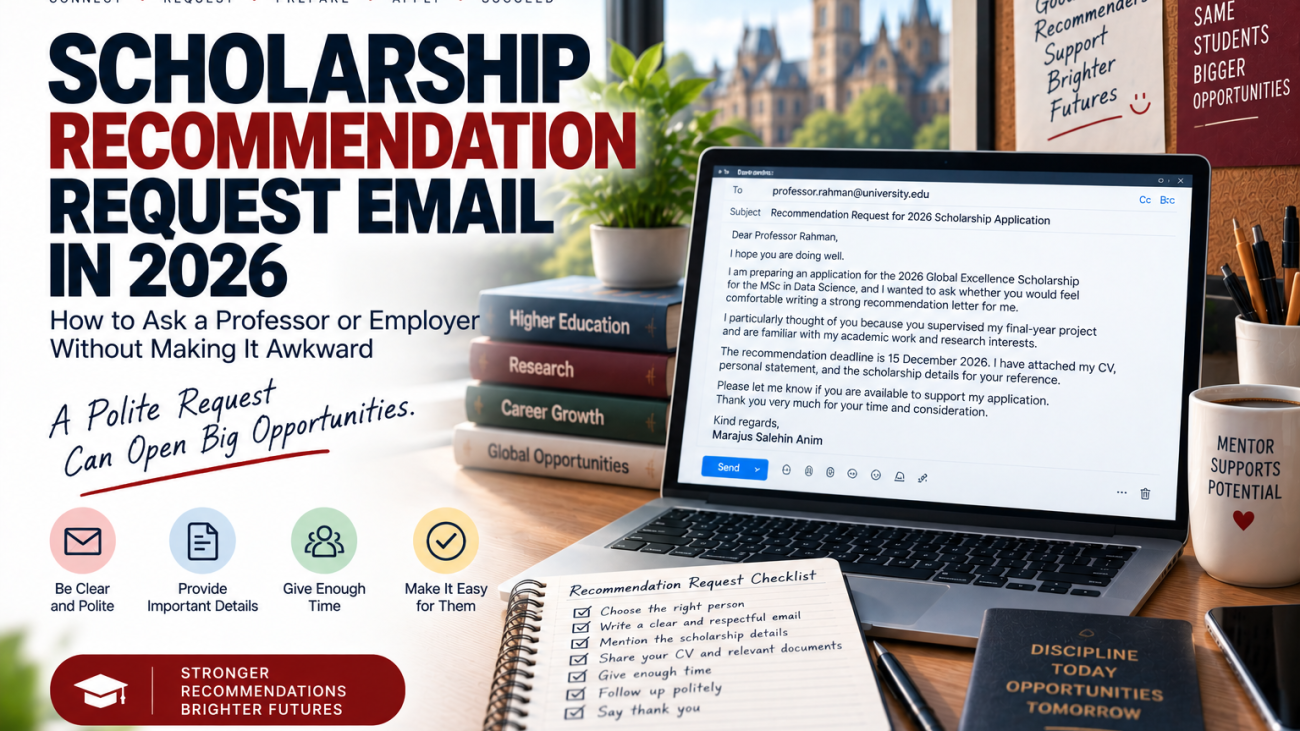
Scholarship Recommendation Request Email 2026

Scholarship Recommendation Request Email in 2026: How to Ask a Professor or Employer Without Making It Awkward

Asking someone for a recommendation letter can feel uncomfortable.

You may worry that you are bothering them.

You may not know what to say.

You may even delay sending the message because you want it to sound “perfect.”

The truth is, most professors, supervisors, and managers are familiar with recommendation requests. What matters is how you ask.

A good scholarship recommendation request email in 2026 should be polite, specific, easy to understand, and easy for the other person to act on.

You do not need to write a long emotional message.

You need to give the recommender enough context, enough time, and the right information.

This guide explains how to ask naturally, who to choose, what to include, how to follow up, and what mistakes to avoid.

Why the Recommendation Request Matters

The recommendation letter itself is important, but the way you ask also matters.

A rushed message like:

Sir, I need a recommendation letter urgently. Please send by tomorrow.

creates unnecessary pressure.

A stronger request gives the person:

  • Context
  • Time
  • Scholarship details
  • Submission instructions
  • Useful supporting documents

That makes it easier for them to write something specific.

Who Should You Ask?

Choose someone who actually knows your work.

Good options may include:

  • University professor
  • Research supervisor
  • Thesis supervisor
  • Employer
  • Manager
  • Internship supervisor
  • Volunteer coordinator

The best recommender is not always the most senior person you know.

A lecturer who taught you closely may write a stronger letter than a department head who barely remembers you.

What Makes Someone a Good Recommender?

A strong recommender should be able to speak about things such as:

  • Your academic performance
  • Work ethic
  • Research ability
  • Leadership
  • Communication
  • Reliability
  • Growth
  • Future potential

Specific examples matter.

A useful recommendation says more than:

He is a hardworking student.

It might say:

During his final-year project, he consistently took initiative in data collection and helped the team solve several technical problems.

That is much stronger.

When Should You Ask?

Ask early.

Ideally, give the recommender at least 3–4 weeks before the deadline.

For major scholarships or busy academic periods, even more time is better.

Do not wait until the final week unless you genuinely have no other choice.

People are more likely to write thoughtful letters when they are not rushed.

How to Start the Email

Use a professional greeting.

For example:

Dear Professor Rahman,

or:

Dear Ms. Ahmed,

If you know the person well, you can still be warm while staying professional.

Keep the Opening Natural

You do not need an overly formal introduction.

For example:

I hope you are doing well. I am preparing an application for the XYZ Scholarship for the 2026 intake, and I wanted to ask whether you would feel comfortable writing a strong recommendation letter for me.

That is clear and respectful.

Ask for a Strong Recommendation

This wording is useful:

Would you feel comfortable writing a strong recommendation for me?

Why?

Because it gives the person an easy way to decline if they do not know you well enough.

A weak recommendation can hurt more than a polite refusal.

What Information Should You Include?

Your email should usually include:

  • Scholarship name
  • Program or university
  • Deadline
  • Why you are applying
  • Why you chose them
  • Submission method

You do not need to write your entire life story.

Example: Asking a Professor

Subject: Recommendation Request for 2026 Scholarship Application

Dear Professor Karim,

I hope you are doing well.

I am preparing an application for the 2026 Global Excellence Scholarship for the MSc in Data Science, and I wanted to ask whether you would feel comfortable writing a strong recommendation letter for me.

I particularly thought of you because you supervised my final-year project and are familiar with my academic work and research interests.

The recommendation deadline is 15 December 2026, and the letter needs to be submitted through the university portal.

I would be happy to send my CV, personal statement, scholarship details, and any other information that would be helpful.

Thank you very much for considering my request.

Kind regards,
Your Name

Example: Asking an Employer

Subject: Recommendation Request for Scholarship Application

Dear Mr. Hasan,

I hope you are well.

I am applying for a master’s scholarship for the 2026 intake and would like to ask whether you would feel comfortable providing a recommendation for me.

Because you supervised my work during the past two years, I believe you could speak about my professional performance, teamwork, and responsibility.

The deadline is 20 November 2026.

I can send my CV, scholarship information, and submission instructions if you are available to support the application.

Thank you for your time.

Kind regards,
Your Name

What Should You Send After They Agree?

Once they say yes, send useful supporting materials.

You can provide:

  • Updated CV
  • Scholarship description
  • Personal statement
  • SOP
  • Relevant achievements
  • Deadline
  • Submission instructions

Do not make them search for everything themselves.

Should You Send a Draft Letter?

Only if the recommender asks for one or the institution allows it.

Sometimes a professor may say:

Send me a draft or some bullet points.

In that case, help them.

But do not assume you should write the entire recommendation yourself.

It is better to provide factual bullet points they can use.

What Kind of Bullet Points Can You Send?

You might send:

  • Final-year project topic
  • GPA or academic result
  • Research contribution
  • Leadership example
  • Internship achievement
  • Class performance
  • Relevant scholarship goals

Keep them factual.

For example:

  • Completed final-year project on pneumonia detection using deep learning
  • Led a four-member project team
  • Presented research findings at department seminar
  • Interested in graduate study in medical AI

This gives the recommender useful material.

How to Explain Why You Chose Them

This can make the request feel more personal.

You might write:

I thought of you because you supervised my research project and saw my work throughout the semester.

or:

I am asking you because you directly managed my work during the internship and are familiar with my contributions.

This is much better than sending the same generic message to several people.

Should You Ask in Person or by Email?

Either can work.

If you see the person regularly, you can ask briefly in person and then follow up by email with the details.

For example:

Professor, I am applying for a scholarship and wanted to ask whether you might be comfortable writing a recommendation for me. I can email you all the details.

Then send the formal information afterward.

How to Follow Up Without Being Annoying

If the deadline is approaching and the letter has not been submitted, send a polite reminder.

A good time is around 5–7 days before the deadline.

For example:

Dear Professor Karim,
I wanted to send a gentle reminder that the recommendation deadline for the XYZ Scholarship is 15 December. I completely understand you may be busy, and I appreciate your support. Please let me know if you need any additional information from me.
Thank you again.

Short and respectful.

What If They Do Not Reply?

Wait a few working days.

Then send one follow-up.

If there is still no response and the deadline is getting close, contact another potential recommender.

Do not keep sending daily messages.

What If They Say No?

Do not take it personally.

They may be:

  • Too busy
  • Unavailable
  • Not comfortable writing
  • Unable to meet the deadline
  • Unsure they know you well enough

A simple reply is enough:

Thank you for letting me know. I appreciate your time and consideration.

Then ask someone else.

Can You Use the Same Recommender for Multiple Scholarships?

Usually, yes.

If they are willing.

Just make sure they know:

  • Which scholarships you are applying for
  • Different deadlines
  • Whether each letter needs customization

Do not surprise them with five portal invitations without warning.

Should the Recommendation Be Different for Each Scholarship?

Ideally, yes, especially when scholarships value different qualities.

A research scholarship may need more focus on:

  • Research ability
  • Academic potential

A leadership scholarship may need more focus on:

  • Initiative
  • Teamwork
  • Community impact

Even small adjustments can make a letter stronger.

Common Recommendation Request Mistakes

Asking Too Late

This is one of the biggest mistakes.

Give people time.

Sending a Vague Message

Do not write:

Sir, need recommendation.

Explain what it is for.

Choosing Someone Who Barely Knows You

Status is less important than relevance.

Forgetting the Deadline

Always include the exact date.

Sending No Supporting Information

Help the recommender help you.

Being Too Informal

Avoid:

Bro, can you write me a recommendation?

Even if you know the person well, keep the scholarship request professional.

Sending Too Many Reminders

One polite reminder is usually enough.

How Long Should the Request Email Be?

Usually 100–180 words is enough.

Your email should answer:

  • What are you applying for?
  • Why are you asking them?
  • When is the deadline?
  • What do they need to do?

That is enough for the first message.

Should You Mention the Scholarship Value?

Usually not necessary.

You do not need to say:

This scholarship is worth $50,000, so it is very important.

Focus on the academic opportunity and why you are applying.

What If the Recommender Wants You to Write the Letter?

This happens sometimes.

If they ask you to prepare a draft, keep it honest.

Do not write exaggerated praise such as:

He is the greatest student I have ever taught.

Instead, draft specific factual points based on real experience.

The recommender should review, edit, and submit the final version themselves.

How to Thank Your Recommender

Once they submit the letter, send a short thank-you message.

For example:

Thank you very much for submitting the recommendation. I really appreciate your time and support.

If you later receive the scholarship, update them.

People usually appreciate knowing the outcome.

Scholarship Recommendation Request Checklist

Before sending your email, check:

  • Correct recommender
  • Professional subject line
  • Scholarship name included
  • Program included
  • Deadline included
  • Reason for choosing them included
  • Submission method explained
  • Supporting documents ready
  • Email proofread
  • Enough time given

Frequently Asked Questions

How early should I ask for a recommendation letter?

Around three to four weeks before the deadline is a good minimum when possible.

Should I ask by email?

Yes. Email works well because the recommender can easily refer back to the details.

Can I ask my employer instead of a professor?

Yes, if the scholarship accepts professional referees and your employer can speak meaningfully about your work.

How many recommenders should I ask?

Ask only the number required by the scholarship, plus perhaps one backup if you are unsure about availability.

Should I send my personal statement?

Yes, if it helps the recommender understand your goals.

Can I remind my professor?

Yes. A polite reminder near the deadline is completely appropriate.

Final Thoughts

A good scholarship recommendation request email in 2026 does not need to be complicated.

Choose someone who knows your work.

Ask early.

Be specific.

Give them the information they need.

And make the process easy.

Most recommenders are more willing to help when the request feels organized and respectful.

The goal is not to pressure someone into writing a letter.

The goal is to give the right person enough context to support your application well.


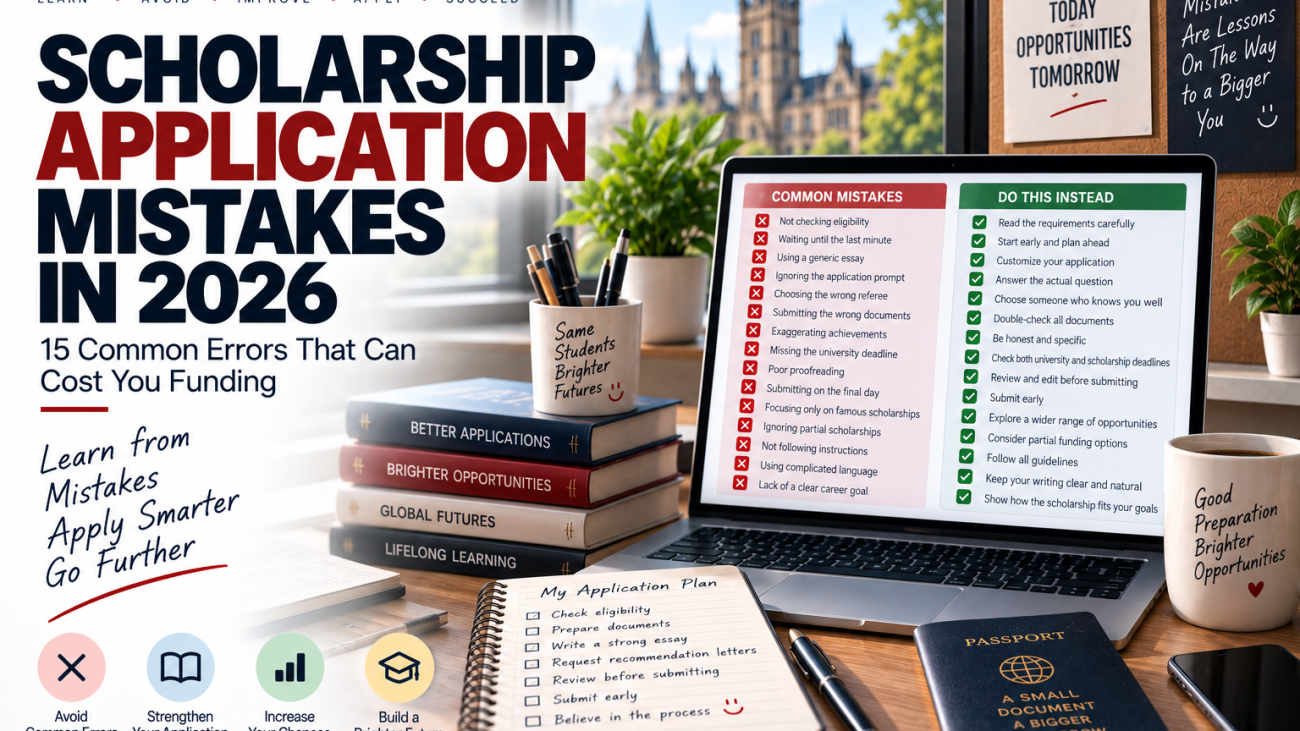
scholarship application mistakes 2026

Scholarship Application Mistakes in 2026: 15 Common Errors That Can Cost You Funding

A scholarship application can be strong in many areas and still fail because of one avoidable mistake.

Sometimes the problem is obvious, like missing the deadline.

Other times, it is something smaller:

using the same essay for every scholarship, choosing the wrong referee, uploading the wrong file, or failing to answer the actual application question.

The frustrating part is that many of these mistakes have nothing to do with intelligence or academic ability.

They happen because students are rushed, disorganized, or trying to manage too many applications at once.

Understanding the most common scholarship application mistakes in 2026 can help you avoid losing opportunities for reasons that were completely preventable.

This guide covers the mistakes students make most often and what you should do instead.

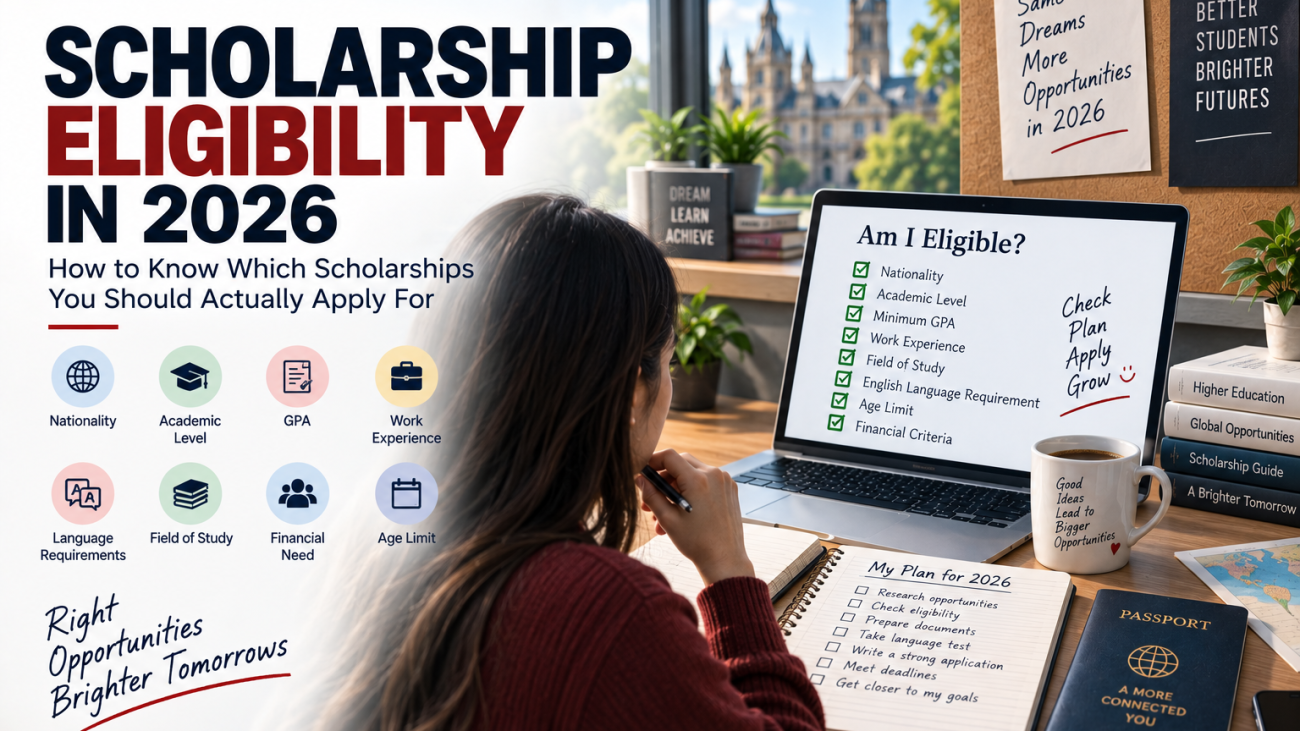
1. Applying Without Checking Eligibility

This is probably one of the biggest wastes of time.

A student finds an attractive scholarship and immediately starts preparing the application.

Only later do they discover that the scholarship requires:

  • A specific nationality
  • A minimum GPA
  • Two years of work experience
  • A particular subject
  • A completed degree

Check eligibility first.

Before you write anything, ask:

  • Am I eligible?
  • Do I meet the mandatory criteria?
  • Is my degree accepted?
  • Does my nationality qualify?

If the answer is clearly no, move on.

2. Waiting Until the Last Minute

Starting late creates unnecessary pressure.

You may need time for:

  • Recommendation letters
  • Transcripts
  • English-language tests
  • Research proposals
  • Personal statements
  • University admission

Some of these things are not completely under your control.

A professor may take a week to reply.

A transcript may take several days to issue.

A test date may already be full.

Starting early gives you room to solve problems.

3. Using the Same Personal Statement Everywhere

This is one of the easiest mistakes for scholarship committees to notice.

A generic statement might say:

I am applying because this scholarship will help me achieve my academic and professional goals.

That could be sent to almost any scholarship.

A stronger statement explains why that particular opportunity fits you.

Mention:

  • The scholarship’s mission
  • Your relevant experience
  • Your future goals
  • Why the program matters to you

You do not need to rewrite your entire life story every time, but your application should feel intentional.

4. Writing What You Think the Committee Wants to Hear

Students sometimes try too hard to sound like the “perfect applicant.”

They write:

My lifelong ambition has always been to transform society through education.

But maybe that is not actually their story.

Scholarship committees read many applications.

Generic ambition is easy to forget.

Real experiences are much more memorable.

Write about what you actually did, what you learned, and what you genuinely want to do next.

5. Focusing Only on Grades

Good grades can help.

But many scholarships consider more than academic performance.

They may also look at:

  • Leadership
  • Research
  • Work experience
  • Community involvement
  • Communication
  • Career plans
  • Motivation

If your application only talks about your GPA, the committee may not understand what else you bring.

Show the full picture.

6. Listing Achievements Without Explaining Them

Students often write things like:

I was president of the student club.

I completed an internship.

I volunteered at an organization.

These are useful facts, but they do not explain much.

Add context.

For example:

As president of the student club, I coordinated a six-member team and organized three career workshops attended by more than 200 students.

Now the committee can see your contribution.

7. Choosing the Wrong Recommender

A senior professor is not automatically the best referee.

Neither is the CEO of a company.

The strongest recommender is usually someone who knows your work well enough to provide specific examples.

That could be:

  • A lecturer
  • Research supervisor
  • Manager
  • Project leader
  • Volunteer supervisor

A detailed letter from someone who genuinely knows you is usually more useful than a generic letter from someone with a prestigious title.

8. Asking for Recommendation Letters Too Late

Do not email your professor two days before the deadline and expect a strong letter.

Good recommendations take time.

Ideally, ask several weeks in advance.

Give your referee:

  • Your CV
  • Scholarship information
  • Deadline
  • Personal statement
  • Relevant achievements
  • Submission instructions

Make the process easy for them.

9. Ignoring the Scholarship Prompt

A well-written essay can still fail if it answers the wrong question.

Suppose the prompt asks:

Describe one leadership challenge and explain what you learned.

If you spend most of the essay describing your academic achievements, you have not answered the question.

Before submitting, read the prompt again.

Then ask:

Does my answer actually respond to this?

It sounds simple, but it matters.

10. Writing Too Much

More writing does not automatically make an application stronger.

If the limit is 500 words, respect it.

Do not write 800 words because every detail feels important.

A strong scholarship essay should be focused.

Good editing often makes your application better.

11. Using Complicated Language

Some students believe formal writing needs to sound difficult.

So they write sentences such as:

This transformative academic journey substantially enhanced my multidisciplinary competencies and professional aspirations.

You could simply write:

The experience helped me improve my research skills and clarified the kind of work I want to pursue.

The second version is easier to read and easier to believe.

Clarity is not weakness.

12. Exaggerating Achievements

It can be tempting to make your experience sound bigger.

Do not.

If you helped organize a small event, do not claim that you “transformed the educational landscape.”

If you contributed to a project, do not claim you led the entire thing.

Scholarship applications may involve interviews and verification.

Be specific and truthful.

Real achievements are enough.

13. Uploading the Wrong Documents

This happens more often than you might expect.

Students accidentally upload:

  • An old CV
  • The wrong essay
  • Another university’s SOP
  • An incomplete transcript
  • A document with the wrong scholarship name

Use clear file names.

For example:

Aisha_Rahman_CV_2026.pdf

Aisha_Rahman_Personal_Statement_Chevening.pdf

Then check every file before submitting.

14. Forgetting About the University Application

Scholarship and university admission are not always the same process.

Some scholarships require:

  1. University admission first
  2. Scholarship application afterward

Others allow both at the same time.

Do not assume.

Check:

  • Admission deadline
  • Scholarship deadline
  • Whether an offer is required
  • Whether there is a separate application

Missing the university deadline can make the scholarship irrelevant.

15. Submitting on the Final Day

Technically, submitting at 11:55 PM may still count as on time.

But it is risky.

You could face:

  • Website problems
  • Internet failure
  • File upload errors
  • Payment issues
  • Timezone confusion

Try to submit at least a little earlier.

The peace of mind is worth it.

Bonus Mistake: Applying Only to Famous Scholarships

Many students focus on the biggest names.

That is understandable.

But famous scholarships often receive extremely high numbers of applications.

Also look at:

  • University-specific scholarships
  • Department funding
  • Research assistantships
  • Regional programs
  • Smaller foundations

A less famous scholarship can still provide excellent support.

Bonus Mistake: Ignoring Partial Scholarships

Not every useful scholarship is fully funded.

A partial scholarship may still reduce your costs significantly.

The question is whether the remaining cost is realistic for you.

Calculate:

  • Remaining tuition
  • Living expenses
  • Travel
  • Insurance
  • Visa
  • Accommodation

Then decide whether the scholarship is worth applying for.

Bonus Mistake: Trusting Social Media Without Verification

A scholarship post may look legitimate.

That does not mean it is.

Use social media to discover opportunities.

Then verify them through:

  • Official university websites
  • Government portals
  • Scholarship provider pages

Do not submit sensitive documents based only on a Facebook or Telegram post.

A Better Scholarship Application Process

A good application process can reduce most of these mistakes.

Try this order:

Step 1: Find the Scholarship

Discover the opportunity.

Step 2: Verify It

Check the official source.

Step 3: Confirm Eligibility

Do not proceed until you know you qualify.

Step 4: Check the Deadline

Add it to your tracker.

Step 5: Review Required Documents

Identify anything that takes time.

Step 6: Research the Scholarship

Understand what it values.

Step 7: Customize Your Application

Adapt your CV, essay, or SOP.

Step 8: Proofread

Check everything carefully.

Step 9: Submit Early

Avoid last-minute risk.

Step 10: Save Confirmation

Keep a copy of the application and confirmation email.

How to Review Your Application Before Submission

Before clicking submit, go through the application like you are reviewing someone else’s work.

Check:

  • Is my name correct everywhere?
  • Did I use the correct scholarship name?
  • Did I answer every question?
  • Are dates consistent?
  • Are files readable?
  • Are recommendation details correct?
  • Did I stay within the word limit?
  • Does my essay sound like me?
  • Does the application show why I am a good fit?

This final review can catch surprisingly important mistakes.

Frequently Asked Questions About Scholarship Application Mistakes

What is the most common scholarship mistake?

Starting too late and submitting generic applications are both extremely common.

Can one mistake cause rejection?

Yes, especially if it involves eligibility, missing documents, or deadlines.

Is a small grammar mistake a big problem?

Usually not by itself. But repeated careless errors can make the application look rushed.

Can I reuse scholarship essays?

You can reuse ideas and parts of your story, but customize the final version to the new scholarship.

Should I apply if I only meet the minimum requirements?

Yes, if you are eligible and the scholarship fits your goals.

Is it bad to use AI for scholarship applications?

AI can help with planning, editing, and clarity, but your experiences and final message should remain accurate and personal.

Final Thoughts

Most scholarship application mistakes in 2026 are avoidable.

You do not need a perfect application.

You need a careful one.

Check eligibility.

Start early.

Use real examples.

Choose your referees carefully.

Customize your essays.

Review your documents.

And submit before the final minute.

Scholarship applications are competitive enough already.

Do not make the process harder by losing an opportunity over something you could have checked in advance.

Scholarship Documents 2026 Complete Checklist

Scholarship Documents Checklist 2026: Everything You Should Prepare Before You Apply

Scholarship applications become stressful very quickly when your documents are not ready.

You find a good opportunity.

The deadline looks manageable.

Then you realize you need a transcript, two recommendation letters, a passport copy, an English-language score, a CV, a personal statement, and maybe even a research proposal.

Suddenly, what looked like a simple application becomes a race against time.

That is why preparing your scholarship documents in 2026 before deadlines start piling up can make a huge difference.

You do not need to prepare every possible document for every scholarship. But there are several documents that appear again and again, and having them organized early can save you days of unnecessary stress.

This guide explains which scholarship documents you may need, how to prepare them properly, what mistakes to avoid, and how to create a simple system so you are always ready to apply.

Why Scholarship Documents Matter

Scholarship committees usually evaluate more than one part of your application.

Your documents help them understand:

  • Your academic history
  • Your achievements
  • Your identity
  • Your professional experience
  • Your motivation
  • Your financial background
  • Your research potential

A strong application can be weakened by missing or incorrect documents.

Even something simple, like uploading the wrong transcript or forgetting a signature, can delay or invalidate an application.

Good preparation reduces those risks.

The Most Common Scholarship Documents in 2026

Different scholarships ask for different things.

But these are some of the most common documents students should expect.

Passport or National ID

International scholarships often require proof of identity.

This may include:

  • Passport
  • National ID
  • Birth certificate

For international applications, a passport is usually the most useful document.

Check the expiry date.

If your passport will expire soon, renewing it early can save you problems later.

Do not wait until the scholarship deadline to discover that your passport is no longer valid.

Academic Transcripts

Your transcript shows your academic results.

It may include:

  • Course names
  • Grades
  • Credits
  • GPA
  • Degree progress

Some scholarships accept unofficial transcripts during the first stage.

Others require official copies.

Check whether the document must be:

  • Signed
  • Sealed
  • Certified
  • Digitally verified

Do not assume a screenshot of your student portal will be accepted.

Degree Certificate

If you have already graduated, you may need to provide your degree certificate.

This proves that you completed the qualification you listed in your application.

For postgraduate scholarships, this is commonly required.

If you are still studying, you may be asked for:

  • Provisional certificate
  • Enrollment letter
  • Expected graduation letter

English-Language Test Result

Some scholarships require proof of English-language proficiency.

This may include:

  • IELTS
  • TOEFL
  • PTE
  • Cambridge English

Some universities may also accept previous education in English.

The important thing is to check whether the scholarship and university use the same rule.

A university may waive IELTS, but the scholarship may still have separate requirements.

Scholarship CV

Your CV gives the scholarship committee a quick overview of your background.

It may include:

  • Education
  • Work experience
  • Research
  • Leadership
  • Volunteering
  • Awards
  • Skills
  • Publications

Keep it relevant.

Your scholarship CV should not be filled with unrelated information just to make it longer.

Personal Statement

A personal statement explains your motivation, background, experiences, and future goals.

A good one should answer questions such as:

  • Why are you applying?
  • What shaped your interests?
  • What have you achieved?
  • What do you want to do next?

Avoid writing one generic statement and submitting it everywhere.

Customize it.

Statement of Purpose

Some scholarships ask for an SOP instead of a personal statement.

Your SOP usually focuses more on:

  • Academic background
  • Research
  • Program fit
  • Career goals

If both are requested, do not submit the same document twice under different names.

Recommendation Letters

Many scholarships ask for one or more references.

These may come from:

  • Professors
  • Research supervisors
  • Employers
  • Managers
  • Volunteer supervisors

Choose people who actually know your work.

A detailed recommendation from someone who knows you well is usually stronger than a generic letter from someone with a prestigious title.

Research Proposal

Research scholarships may require a proposal.

This is especially common for:

  • PhD applications
  • Research master’s programs
  • Funded research positions

A proposal may include:

  • Research title
  • Background
  • Research problem
  • Objectives
  • Methodology
  • Expected contribution

This document often takes more time than students expect.

Start early.

Motivation Letter

Some scholarships specifically ask for a motivation letter.

This may overlap with a personal statement or SOP, but the focus is usually on why you want the opportunity.

Read the prompt carefully.

Do not assume all application essays are the same.

Proof of Work Experience

Professional scholarships may ask for evidence of employment.

This may include:

  • Employment letter
  • Experience certificate
  • Contract
  • Employer reference

If the scholarship requires two years of work experience, they may want proof.

Financial Documents

Need-based scholarships may ask for evidence of financial circumstances.

This could include:

  • Family income documents
  • Salary statements
  • Bank statements
  • Tax records
  • Financial declaration

Only submit these through official systems.

Financial documents are sensitive.

Scholarship Application Form

Some scholarships have a separate application form.

Do not rush through it.

Check:

  • Names
  • Dates
  • Contact information
  • Education history
  • Work experience

Inconsistencies between the form and your CV can create unnecessary questions.

Photograph

Some programs ask for a recent photograph.

Use a clear, professional image.

Avoid heavily edited selfies unless the instructions allow them.

How to Organize Your Scholarship Documents

A simple folder system can make applications much easier.

For example:

Scholarships 2026

Inside it:

  • Passport
  • Transcripts
  • Degree Certificates
  • CV
  • Personal Statements
  • SOP
  • Recommendation Letters
  • English Test
  • Research Proposal
  • Financial Documents

You can also create a separate folder for each scholarship.

Use Professional File Names

Avoid file names like:

documentfinal2new.pdf

Use clear names.

For example:

Rahim_Hasan_CV.pdf

Rahim_Hasan_Transcript.pdf

Rahim_Hasan_Personal_Statement.pdf

This helps you stay organized.

It also looks more professional.

Keep Master Versions

Create a master version of your:

  • CV
  • Personal statement
  • SOP
  • Research proposal

Then create customized copies for each application.

Do not overwrite the original.

For example:

Master_CV_2026.pdf

CV_DAAD_2026.pdf

CV_Chevening_2026.pdf

This makes customization easier.

Check Document Format

Scholarships may ask for:

  • PDF
  • JPG
  • DOCX
  • Specific file size

Do not ignore these instructions.

A portal may reject a file if it is too large.

PDF is usually a safe option for documents unless the application says otherwise.

Check File Size

A scholarship portal may limit uploads to:

  • 1 MB
  • 2 MB
  • 5 MB

If your scanned transcript is too large, compress it carefully.

Make sure the text remains readable.

Do You Need Certified Documents?

Sometimes.

A scholarship may ask for:

  • Certified copies
  • Notarized copies
  • Official translations

Do not pay for certification unless it is actually required.

Some scholarships only require certified documents after selection.

Read the instructions first.

What If Your Documents Are Not in English?

You may need an official translation.

Check whether the translation must be:

  • Certified
  • Notarized
  • Issued by your university
  • Completed by an approved translator

Do not rely on your own translation unless the scholarship explicitly allows it.

How to Prepare Recommendation Letters Early

Recommendation letters are one of the hardest documents to control because someone else has to write them.

Contact referees early.

Give them:

  • Your CV
  • Scholarship description
  • Deadline
  • Submission instructions
  • Personal statement if relevant
  • Key achievements

Make their job easier.

How to Prepare Your CV Early

Your CV should be updated before scholarship season begins.

Review:

  • Dates
  • Education
  • Achievements
  • Research
  • Work
  • Volunteering

Remove outdated or irrelevant information.

Then customize the order for each scholarship.

How to Prepare Your Personal Statement Early

You do not need to write the final version months in advance.

But you can prepare a strong base.

Write down:

  • Your academic journey
  • Important experiences
  • Leadership examples
  • Career goals
  • Challenges
  • Motivation

Then customize the final version for each scholarship.

Create a Scholarship Document Tracker

A simple spreadsheet can help.

Useful columns include:

  • Scholarship
  • Passport
  • Transcript
  • CV
  • Personal statement
  • Recommendations
  • English test
  • Research proposal
  • Deadline
  • Status

Mark each document as:

Ready

Needs Update

Waiting

Not Required

This gives you a clear picture.

Common Scholarship Document Mistakes

Uploading the Wrong File

Always check before submission.

Using an Outdated CV

Update your achievements and dates.

Sending a Generic Personal Statement

Customize it.

Forgetting Signatures

Some forms require them.

Submitting Blurry Scans

Make sure everything is readable.

Using Inconsistent Names

Your name should match your passport and application.

If different documents use different spellings, clarify if necessary.

Missing Translation Requirements

Check whether documents need official translation.

Waiting Too Long for Recommendation Letters

Ask early.

Should You Scan Documents With Your Phone?

Yes, if the quality is good.

Modern scanning apps can produce clear PDFs.

Make sure:

  • The whole page is visible
  • Text is readable
  • There are no shadows
  • Pages are in the correct order

Avoid photos taken at awkward angles.

Should You Watermark Scholarship Documents?

Only if you have a reason and the scholarship allows it.

Do not add large watermarks that make the document hard to read.

If privacy is a concern, check whether the application system is official before uploading sensitive documents.

Protect Your Sensitive Documents

Be especially careful with:

  • Passport
  • National ID
  • Bank statements
  • Financial records

Only upload them through verified scholarship or university systems.

Do not send sensitive documents to unknown contacts on WhatsApp or Telegram.

What to Prepare Before Scholarship Season

A practical early-preparation list is:

  • Valid passport
  • Updated CV
  • Academic transcripts
  • Degree certificate
  • English-language test
  • List of referees
  • Personal statement base draft
  • SOP base draft
  • Research proposal outline if needed

These documents cover a large percentage of scholarship applications.

How Early Should You Prepare Documents?

Start around 6–12 months before your intended intake.

You do not need everything immediately.

But you should identify which documents take time.

For example:

  • Passport renewal
  • Transcript requests
  • English tests
  • Recommendation letters
  • Certified translations

These can cause delays.

Scholarship Documents Checklist

Before submitting, confirm:

  • Passport is valid
  • Transcript is correct
  • Degree certificate is included
  • CV is updated
  • Personal statement is customized
  • SOP is customized
  • Recommendation letters are ready
  • English test is valid
  • Research proposal is complete
  • Financial documents are correct
  • Files use proper names
  • Formats match the application rules
  • File sizes are within limits
  • All scans are readable

Frequently Asked Questions About Scholarship Documents

What documents are usually required for scholarships?

Common documents include a passport, transcript, degree certificate, CV, personal statement, recommendation letters, and English-language results.

Do I need all documents before I start applying?

Not always. Some scholarships allow certain documents to be submitted later.

Can I use the same CV for several scholarships?

Yes, but it is better to customize it.

Do recommendation letters need to be signed?

Some scholarships require signatures or official letterhead. Check the instructions.

Can I submit unofficial transcripts?

Some scholarships allow them initially. Others require official copies.

Do documents need to be translated into English?

If the scholarship requires English documents, yes.

Final Thoughts

Preparing your scholarship documents for 2026 early can make the application process much less stressful.

Do not wait until the deadline.

Organize your files.

Update your CV.

Request transcripts.

Contact your referees.

Prepare base drafts of your essays.

Then, when a good opportunity appears, you can focus on improving the application instead of trying to find missing documents.

A strong scholarship application is not only about writing well.

It is also about being prepared.

scholarship shortlisting 2026

Scholarship Shortlisting in 2026: How to Choose the Right Opportunities Without Wasting Time

Finding scholarships is not always the hardest part.

Choosing which ones are actually worth applying for is often harder.

You may find dozens of opportunities that look attractive at first. Some are fully funded. Some have excellent universities attached to them. Some seem perfect until you read the eligibility rules closely.

Then the questions begin.

Should I apply even if my GPA is only slightly above the minimum?

Is a partial scholarship still worth it?

Should I prioritize a famous scholarship or one that fits my profile better?

How many applications should I realistically prepare?

This is where scholarship shortlisting in 2026 becomes important.

A good shortlist helps you focus your time on opportunities where you are eligible, competitive, and genuinely interested.

The goal is not to apply to the largest number of scholarships.

The goal is to apply to the right ones.

Why Scholarship Shortlisting Matters

Scholarship applications take time.

A serious application may require:

  • Personal statement
  • Scholarship essay
  • CV
  • Recommendation letters
  • Transcript
  • English-language score
  • Research proposal
  • Interview preparation
  • University application

If you apply to too many scholarships without a clear strategy, the quality of your applications may fall.

You may start copying the same personal statement everywhere.

You may miss important details.

You may even spend days applying for an opportunity you were never a strong match for.

A shortlist helps prevent that.

What Does Scholarship Shortlisting Mean?

Scholarship shortlisting means reviewing available opportunities and deciding which ones deserve your attention.

You evaluate each scholarship based on factors such as:

  • Eligibility
  • Funding
  • Course fit
  • Country
  • University
  • Deadline
  • Competition
  • Required documents
  • Career value
  • Application workload

Then you prioritize the strongest matches.

Think of it as filtering.

You are not asking:

Is this scholarship good?

You are asking:

Is this scholarship good for me?

That is a much better question.

Start With Your Own Profile

Before comparing scholarships, understand what you bring to the application.

Write down your current profile.

For example:

  • Nationality
  • Degree level
  • Academic subject
  • GPA
  • Work experience
  • Research experience
  • Leadership experience
  • English-language score
  • Preferred countries
  • Career goals
  • Financial needs

This helps you judge opportunities more realistically.

A scholarship may be excellent but still not fit your background.

Step 1: Check Eligibility First

Eligibility should always come before excitement.

Before reading everything else, check whether you meet the basic requirements.

Look at:

  • Nationality
  • Academic level
  • GPA
  • Degree subject
  • Age
  • Work experience
  • English-language requirement
  • Graduation status

If you clearly do not meet a mandatory requirement, remove that scholarship from your shortlist.

Do not spend hours on a personal statement for an opportunity that will reject you automatically.

Step 2: Check the Funding

Not all scholarships provide the same level of support.

Look at exactly what is covered.

This may include:

  • Full tuition
  • Partial tuition
  • Monthly stipend
  • Accommodation
  • Airfare
  • Health insurance
  • Visa support
  • Research costs

Do not assume that “scholarship” means fully funded.

For some students, a 50% tuition scholarship may still leave an unaffordable amount.

For others, a partial scholarship may be enough.

Your financial situation matters.

Step 3: Check the Course Fit

A scholarship is only useful if the program helps you reach your goals.

Ask:

  • Does the course match my field?
  • Are the modules relevant?
  • Is there a research area I care about?
  • Does the program help with my career direction?

Avoid applying only because the university has a famous name.

A less famous university with a better program fit may be more valuable for you.

Step 4: Check the Country

Think beyond the scholarship amount.

Different countries have different:

  • Living costs
  • Visa rules
  • Language environments
  • Job markets
  • Academic cultures
  • Post-study opportunities

Ask yourself whether you would actually be comfortable studying there.

You are not only choosing a scholarship.

You may be choosing where you will live for one, two, or even four years.

Step 5: Check the University

Research the university itself.

Look at:

  • Strength in your field
  • Research environment
  • Career support
  • Alumni network
  • International student services
  • Location
  • Graduate outcomes

Do not rely only on global rankings.

A university can rank lower overall but be excellent in your specific subject.

Step 6: Look at the Deadline

Deadlines affect your strategy.

Suppose you find two great scholarships.

One closes in six weeks.

The other closes in four months.

You may need to prioritize the first one.

Keep track of:

  • Scholarship deadline
  • University application deadline
  • Recommendation deadline
  • English-test deadline

Some opportunities require you to apply for admission before the scholarship.

Others use a combined process.

Step 7: Consider the Application Workload

Some applications are simple.

Others require:

  • Multiple essays
  • Recommendation letters
  • Research proposal
  • Video submission
  • Interview
  • Separate university application

Ask yourself whether the opportunity is worth the effort.

This does not mean avoiding difficult applications.

It means being strategic.

If you have limited time, prioritize applications with a good balance between fit and effort.

Step 8: Estimate How Competitive You Are

You will never know exactly who else is applying.

But you can still assess your own position.

Ask:

  • Do I meet only the minimum requirements?
  • Is my academic record strong?
  • Do I have relevant experience?
  • Do my goals match the scholarship mission?
  • Can I provide strong examples of leadership or research?

You do not need to be perfect.

But you should understand whether you are a strong, medium, or weaker fit.

Use Three Scholarship Categories

A useful way to organize your shortlist is by category.

High-Priority Scholarships

These are scholarships where:

  • You meet the requirements well
  • The course fits your goals
  • The funding is suitable
  • You have a strong profile match

These deserve your best effort.

Competitive but Possible Scholarships

These are more challenging opportunities.

Maybe your profile is good, but the scholarship attracts a large number of strong applicants.

Apply if the opportunity is valuable.

Just do not depend on it as your only option.

Backup Scholarships

These may include:

  • Smaller university awards
  • Partial scholarships
  • Lower-competition opportunities
  • Alternative universities

Backups are important.

A good scholarship strategy should not depend on winning one famous award.

Create a Scholarship Scorecard

You can make shortlisting easier by scoring each scholarship.

Use a scale from 1 to 5.

For example:

Factor Score
Eligibility 5
Program fit 5
Funding 4
University fit 4
Career value 5
Application effort 3
Deadline flexibility 4

Then compare your options.

You do not need a complicated formula.

The purpose is simply to make your decision less emotional.

Give Eligibility the Highest Weight

Not all factors should be treated equally.

For example, a scholarship may offer amazing funding.

But if you are not eligible, that funding does not matter.

A simple priority order could be:

  1. Eligibility
  2. Program fit
  3. Funding
  4. Career value
  5. University fit
  6. Deadline
  7. Application effort

You can adjust this based on your goals.

Should You Apply to Famous Scholarships?

Yes, if you are a good fit.

But do not apply only because everyone else is talking about them.

Famous scholarships often receive huge numbers of applications.

They can still be worth applying to, but they should be part of your strategy, not your entire strategy.

Look for:

  • Government scholarships
  • University scholarships
  • Departmental awards
  • Research funding
  • Regional programs

Less famous does not mean less valuable.

Should You Apply to Partial Scholarships?

Sometimes.

This depends on your finances.

Suppose tuition is $20,000 per year and a scholarship covers 50%.

You still need $10,000 plus living costs.

If you cannot realistically cover that amount, the scholarship may not solve your problem.

Before applying, calculate the remaining cost.

Look at:

  • Tuition after scholarship
  • Rent
  • Food
  • Insurance
  • Transport
  • Visa
  • Travel

A scholarship should be evaluated as part of the full financial picture.

How Many Scholarships Should You Apply For?

There is no perfect number.

For some students, five strong applications may be realistic.

For others, ten may be manageable.

The important thing is quality.

A useful approach is:

  • 2–3 high-priority applications
  • 2–4 competitive applications
  • 2–3 backup opportunities

You can adjust this based on your time.

Do not apply to 30 scholarships if every application becomes rushed.

How to Know When a Scholarship Is Not Worth Applying For

You may want to skip an opportunity if:

  • You do not meet mandatory requirements
  • The remaining cost is unaffordable
  • The program does not fit your goals
  • The deadline is unrealistic
  • The scholarship has unclear or suspicious information
  • The application requires major effort for very little benefit
  • The location does not work for you

Saying no to one scholarship can give you more time to improve another application.

Keep a Scholarship Tracker

A simple tracker can keep your shortlist organized.

Useful columns include:

  • Scholarship name
  • University
  • Country
  • Degree
  • Funding
  • Deadline
  • Eligibility
  • Program fit
  • Application status
  • Priority
  • Notes

You can mark priority as:

High

Medium

Backup

Update the tracker regularly.

Do Not Let Social Media Decide Your Shortlist

Social media is useful for discovering opportunities.

But popularity is not the same as relevance.

A scholarship may go viral because it sounds attractive.

That does not mean it fits your profile.

Use social media to discover.

Use official information to decide.

How to Compare Two Similar Scholarships

Suppose you have two options.

Scholarship A offers:

  • Full tuition
  • Small stipend
  • Excellent program
  • Expensive city

Scholarship B offers:

  • Full tuition
  • Larger stipend
  • Good program
  • Lower living costs

Do not automatically choose A because the university is more famous.

Compare the full experience.

Think about:

  • Academic fit
  • Total cost
  • Research opportunities
  • Career outcomes
  • Personal preference

The better option depends on your goals.

Scholarship Shortlisting Mistakes to Avoid

Applying Based Only on Funding

Money matters, but so does program quality and fit.

Ignoring Eligibility

Always check requirements first.

Choosing Only Famous Universities

Look at your subject, not only the university name.

Applying to Too Many Programs

More applications can reduce quality if you are overwhelmed.

Ignoring Smaller Scholarships

Smaller awards can still make a major difference.

Waiting Too Long to Shortlist

If you wait until deadlines are close, you may rush everything.

Not Calculating the Remaining Cost

Partial funding can still leave a large financial gap.

A Simple Scholarship Shortlisting Example

Imagine you are applying for a master’s in data science.

You find three scholarships.

Scholarship A

Eligibility: Strong
Funding: Full
Program fit: Excellent
Deadline: 2 months
Competition: High

Priority: High

Scholarship B

Eligibility: Strong
Funding: 50% tuition
Program fit: Good
Living cost: High

Priority: Medium

Scholarship C

Eligibility: Unclear because of nationality restriction
Funding: Full
Program fit: Excellent

Priority: Verify first

This approach helps you decide what to do next.

When Should You Start Shortlisting Scholarships?

Ideally, start around 8–12 months before your intended intake.

At the beginning, your shortlist can be broad.

Then gradually narrow it.

For example:

Initial list: 30 opportunities

After eligibility check: 18

After funding and program fit: 12

Final serious shortlist: 6–8

This is much easier to manage.

Frequently Asked Questions About Scholarship Shortlisting

How many scholarships should I shortlist?

A final shortlist of around 5–10 serious opportunities can be manageable for many students, but the right number depends on your available time.

Should I apply if I only meet the minimum requirements?

Yes, if the scholarship fits your goals. Just understand that eligibility does not guarantee competitiveness.

Is a partial scholarship worth applying for?

Yes, if the remaining cost is affordable.

Should I prioritize ranking or funding?

Neither automatically. Consider program fit, funding, career value, and your personal situation together.

Can I apply to several scholarships at once?

Usually yes, but check whether any program restricts holding multiple awards.

What is the most important shortlisting factor?

Eligibility comes first. After that, program fit and funding are usually among the most important factors.

Final Thoughts

Good scholarship shortlisting in 2026 is about making better decisions before you start writing applications.

You do not need every scholarship.

You need the right scholarships.

Check your eligibility.

Understand the funding.

Look at the course.

Think about the country.

Compare the university.

Consider the application effort.

Then focus your energy on the opportunities where your background and goals genuinely fit.

A thoughtful shortlist will not guarantee that you win a scholarship.

But it will give each application a much better chance of being your best work.

scholarship email 2026

Scholarship Email in 2026: How to Contact Universities, Professors, and Scholarship Offices Professionally

Sending an email about a scholarship sounds easy until you actually have to write one.

Then suddenly you start wondering:

Should I write “Dear Sir/Madam”?

Should I explain my whole background?

Should I attach my CV?

Is it okay to ask if I am eligible?

What if nobody replies?

For many students, email is the first direct contact they have with a university, professor, or scholarship office. That means a short message can quietly shape how professional and prepared you appear.

The good news is that you do not need to write a long or overly formal email.

A good scholarship email in 2026 should be clear, respectful, specific, and easy to answer.

This guide explains how to write scholarship emails naturally, what subject lines to use, when to contact professors, what mistakes to avoid, and how to follow up without sounding impatient.

Why Scholarship Emails Matter

Scholarship applications are full of questions.

You may need to confirm:

  • Eligibility
  • Required documents
  • Language requirements
  • Admission status
  • Funding coverage
  • Recommendation rules
  • Research supervision
  • Application deadlines

Sometimes the official website answers everything.

Sometimes it does not.

That is when a good email becomes useful.

The goal is not to impress the recipient with complicated language.

The goal is to make it easy for them to understand your question and respond.

Before You Send Any Scholarship Email

Before writing, check the official website carefully.

This matters because many scholarship offices receive hundreds of emails asking questions that are already answered online.

If the website clearly says:

Applicants must have at least two years of work experience.

do not email:

Do I need work experience?

Instead, email only when something genuinely needs clarification.

That shows that you have done your research.

Who Should You Email?

The right person depends on your question.

Scholarship Office

Contact the scholarship office for questions about:

  • Eligibility
  • Funding
  • Deadlines
  • Required documents
  • Selection process
  • Scholarship terms

Admissions Office

Contact admissions for questions about:

  • Course requirements
  • Application status
  • Degree eligibility
  • English-language requirements
  • University admission

Professor or Potential Supervisor

Contact a professor if you are applying for:

  • PhD funding
  • Research scholarships
  • Master’s by research
  • Lab-based programs

Your email should focus on research fit, not general scholarship questions.

International Student Office

This office may help with:

  • Visa guidance
  • International entry requirements
  • Country-specific documents
  • Enrollment support

How to Write a Good Scholarship Email Subject Line

Your subject line should be simple.

Good examples:

  • Scholarship Eligibility Question for 2026 Intake
  • Question About 2026 Scholarship Application Requirements
  • Prospective MSc Applicant — Funding Question
  • PhD Applicant 2026 — Research Supervision Inquiry

Avoid vague subjects such as:

  • Hello
  • Important
  • Urgent
  • Please Reply
  • Scholarship Help

A clear subject helps the recipient understand the purpose immediately.

How to Start a Scholarship Email

If you know the person’s name, use it.

For example:

Dear Dr. Ahmed,

or:

Dear Ms. Smith,

If you do not know the name, you can write:

Dear Scholarship Team,

or:

Dear Admissions Team,

This often sounds better than:

Dear Sir/Madam,

because it feels more direct and modern.

Keep the Introduction Short

You do not need to explain your entire life story.

A simple introduction is enough.

For example:

My name is Rahim, and I am preparing an application for the MSc Data Science program for the 2026 intake.

That immediately gives context.

Ask One Clear Question

A strong scholarship email usually has one main purpose.

For example:

I completed a three-year bachelor’s degree in Computer Science and would like to confirm whether this meets the academic eligibility requirement for the scholarship.

That is easy to answer.

A weak email might say:

Please tell me everything about the scholarship and whether I can get it.

That creates more work for the recipient and may not get a useful reply.

A Simple Scholarship Email Structure

You can use this structure:

Greeting

Address the correct person or team.

Short Introduction

Say who you are and what you are applying for.

Specific Question

Ask what you need to know.

Thank You

Keep the ending polite.

Signature

Include your full name.

Example: Scholarship Eligibility Email

Subject: Scholarship Eligibility Question for 2026 Intake

Dear Scholarship Team,

My name is Arif Hasan, and I am interested in applying for the 2026 Master’s Scholarship.

I completed a three-year bachelor’s degree in Business Administration and would like to confirm whether this meets the academic eligibility requirement for the program.

I have reviewed the eligibility page but could not find clarification regarding three-year degrees.

Thank you for your time and guidance.

Kind regards,
Arif Hasan

This email works because it is short and specific.

Example: Asking About IELTS Requirements

Subject: English Language Requirement for 2026 Scholarship

Dear Admissions Team,

I am preparing an application for the MSc Public Health program for the 2026 intake.

My previous degree was fully taught in English. Could you please confirm whether this may be accepted as evidence of English proficiency, or whether IELTS is still required?

Thank you for your help.

Kind regards,
Nadia Rahman

Notice that the question is direct.

Example: Asking a Professor About PhD Supervision

Emails to professors should be slightly different.

They should show research fit.

For example:

Subject: Prospective PhD Applicant 2026 — Medical Imaging Research

Dear Professor Lee,

My name is Fahim Ahmed, and I am preparing a PhD application for the 2026 intake.

My current research focuses on deep learning for chest X-ray classification, particularly explainability and region-based feature analysis. I recently read about your work in medical image interpretation and found the overlap with my interests very relevant.

I would like to ask whether you expect to accept new PhD students for 2026 and whether my research background may fit your group.

I have attached my CV for reference.

Thank you for your time.

Kind regards,
Fahim Ahmed

This is much stronger than:

Dear Professor, please give me scholarship in your lab.

Should You Attach Your CV?

Sometimes.

Attach your CV when:

  • Contacting a potential supervisor
  • Asking about research positions
  • The scholarship office requests it
  • Your background helps explain your question

Do not attach multiple files unless necessary.

A first email should not contain ten documents.

Should You Attach Your Transcript?

Usually not unless requested.

If you are asking whether your academic background is eligible, you can describe your degree briefly.

If they need the transcript, they can ask.

What File Names Should You Use?

Use professional file names.

Good:

Fahim_Ahmed_CV.pdf

Better than:

cvfinalnew2updated.pdf

Small details help your application look organized.

How Long Should a Scholarship Email Be?

Short.

For most general scholarship questions, around 80–150 words is enough.

Professor emails may be slightly longer because you need to explain research fit.

Avoid sending a full personal statement in the email body.

The recipient should understand your question quickly.

How Formal Should You Sound?

Professional but natural.

You do not need to write:

I humbly beseech your esteemed office to provide clarification regarding the aforementioned matter.

You can simply write:

Could you please confirm whether this requirement applies to international applicants?

Simple language sounds more confident.

Common Scholarship Email Mistakes

Writing Without Researching First

Do not ask questions already answered clearly on the website.

Sending the Same Email to Many Professors

Generic mass emails are easy to recognize.

Personalize research emails.

Writing Extremely Long Messages

A long email can hide the actual question.

Using Informal Language

Avoid:

  • Hey
  • Bro
  • Plz
  • ASAP
  • Kindly reply fast

Professional communication matters.

Using All Capital Letters

Do not write:

I NEED INFORMATION ABOUT FULL SCHOLARSHIP URGENTLY.

It sounds aggressive.

Asking for a Guaranteed Scholarship

Avoid:

Can you guarantee me full funding?

Scholarship selection usually happens through a formal process.

Asking Someone to Review Your Entire Application

Unless they offer this service, scholarship staff are unlikely to review your CV, SOP, essay, and transcripts before you apply.

Ask specific questions instead.

Should You Mention Your GPA?

Only if it is relevant to your question.

For example:

My CGPA is 3.25/4.00, while the page states that strong academic performance is preferred. Could you please confirm whether there is a formal minimum GPA?

That gives useful context.

How to Ask If You Are Eligible

Do not simply write:

Am I eligible?

Give them enough information.

Better:

I am a Bangladeshi citizen with a four-year bachelor’s degree in Economics and two years of full-time work experience. Could you please confirm whether applicants from Bangladesh are eligible for the 2026 program?

Specific questions produce better answers.

How to Email a Professor Without Sounding Desperate

This is important for PhD applicants.

Do not write:

I desperately need a scholarship and want to join your lab.

Focus on academic fit.

Mention:

  • Your research background
  • Their research
  • The connection
  • Your question

Professors usually care more about research alignment than financial need in the first email.

Should You Mention Their Research Paper?

Yes, if you have genuinely read it.

But do not write:

I have read all your excellent research papers and I am deeply impressed.

That sounds generic.

Instead:

Your recent work on weakly supervised lesion localization is closely related to the direction of my final-year research.

That sounds real.

How to Follow Up on a Scholarship Email

Sometimes you will not get a reply.

That does not necessarily mean they are ignoring you.

University staff and professors can be extremely busy.

A polite follow-up after about 5–7 working days is reasonable.

You can write:

Dear Dr. Smith,
I am following up on my previous email regarding the 2026 scholarship eligibility requirement. I understand you may be busy, but I would be grateful for any clarification when convenient.
Thank you.

Keep it short.

How Many Times Should You Follow Up?

Usually one follow-up is enough.

For important research inquiries, a second follow-up may sometimes be reasonable after additional time.

Do not send daily emails.

Repeated messages can create a negative impression.

What If You Receive No Reply?

Try another official contact.

For example:

  • Department administrator
  • Graduate admissions office
  • Scholarship team
  • International office

For professor outreach, lack of response can simply mean they are not accepting students or do not have capacity.

Do not take it personally.

When Should You Not Email?

Do not email if the website clearly answers your question.

For example, if the page says:

Application deadline: December 1, 2026

there is no need to email asking for the deadline.

Also avoid emailing just to ask:

Can you tell me how to win the scholarship?

There is usually no useful answer to that.

How to Thank Someone Who Helped You

A short reply is enough.

For example:

Thank you for the clarification. This is very helpful and answers my question.

You do not need to write a long message.

Should You Use AI to Write Scholarship Emails?

AI can help you improve grammar and structure.

But be careful.

Overly polished AI-generated emails can sound strange, especially when they use unnecessary formal language.

Use AI to make your email clearer, not more complicated.

A good test is to read the message aloud.

If it sounds like something no normal person would say, simplify it.

Scholarship Email Checklist

Before sending, check:

  • Am I emailing the correct person?
  • Did I read the official website first?
  • Is the subject line clear?
  • Is my question specific?
  • Is the email short?
  • Did I use the correct scholarship or program name?
  • Are attachments actually necessary?
  • Are file names professional?
  • Did I proofread the email?
  • Did I include my name?

A two-minute check can prevent avoidable mistakes.

Frequently Asked Questions About Scholarship Emails

How do I email a scholarship office?

Introduce yourself briefly, explain what you are applying for, and ask one specific question.

Can I ask a professor for a scholarship?

You can ask about available funding or research positions, but do not assume the professor directly controls every scholarship.

Should I attach my CV when emailing a professor?

Usually, yes, if you are contacting them about research supervision or a PhD position.

How long should I wait before following up?

Around five to seven working days is generally reasonable.

What if I do not know the person’s name?

Use a greeting such as “Dear Scholarship Team” or “Dear Admissions Team.”

Is it okay to use ChatGPT to write the email?

Yes, but make sure the final version reflects your actual question and sounds natural.

Final Thoughts

A good scholarship email in 2026 does not need to sound impressive.

It needs to be easy to understand.

Research first.

Ask a specific question.

Keep the message short.

Be respectful.

And make it easy for the person receiving your email to help you.

Professional communication is a small part of the scholarship process, but it can make everything else smoother.

Sometimes the difference between confusion and clarity is simply knowing how to ask the right question.

scholarship eligibility 2026

Scholarship Eligibility in 2026: How to Know Which Scholarships You Should Actually Apply For

One of the biggest mistakes students make when searching for scholarships is applying to everything they see.

At first, that approach can feel productive.

You find a list of 50 scholarships, open 20 tabs, save a few posts from Facebook or LinkedIn, and start thinking:

“Maybe I should just apply to all of them.”

But scholarship applications take time.

You may need to prepare essays, recommendation letters, transcripts, test scores, CVs, research proposals, and application forms.

If you spend that time on scholarships you were never eligible for, you are not improving your chances. You are just creating more work.

Understanding scholarship eligibility in 2026 can help you focus on opportunities where you actually have a realistic chance.

This guide explains how to read eligibility requirements properly, which criteria matter most, how to avoid wasting time, and how to decide whether a scholarship is worth applying for.

What Does Scholarship Eligibility Mean?

Scholarship eligibility simply means the conditions you must meet before your application can be considered.

These conditions may include:

  • Nationality
  • Academic level
  • GPA
  • Age
  • Work experience
  • English-language proficiency
  • Subject area
  • Financial need
  • Leadership experience
  • Country of residence
  • Admission status

Every scholarship is different.

Some have very strict rules.

Others are more flexible.

The important thing is to understand the difference between:

required criteria

and

preferred criteria

If something is required and you do not meet it, your application may be rejected automatically.

If something is preferred, you may still be eligible even if you do not have it.

Why Scholarship Eligibility Matters

Imagine spending three days writing a personal statement for a scholarship.

You submit everything.

Then your application is rejected because the program requires two years of work experience and you only have six months.

That is frustrating.

But it is also avoidable.

Checking eligibility first helps you:

  • Save time
  • Avoid unnecessary applications
  • Focus on stronger opportunities
  • Prepare better essays
  • Improve your overall application quality

A smaller number of well-matched applications is often better than dozens of random ones.

The Most Common Scholarship Eligibility Requirements

Most scholarships use a combination of criteria.

Here are the ones you will see most often.

Nationality Requirements

Some scholarships are open to students from every country.

Others are restricted to specific regions or nationalities.

For example, a scholarship may say:

Applicants must be citizens of eligible developing countries.

Or:

Applicants must be nationals of participating countries.

Do not assume your country is included.

Check the official list.

Sometimes eligibility is based on citizenship.

Other times it is based on current residence.

These are not always the same thing.

Academic Level

Scholarships are usually designed for a specific level of study.

Examples include:

  • Undergraduate
  • Master’s
  • MBA
  • PhD
  • Postdoctoral research

A scholarship for master’s students will not normally fund an undergraduate degree.

Make sure the program matches the level you want to study.

Academic Results and GPA

Many scholarships have minimum academic requirements.

You may see:

  • Minimum GPA
  • Minimum percentage
  • Required degree classification
  • Specific academic rank

For example:

Applicants must have a minimum CGPA of 3.0 out of 4.0.

If the requirement is clear, take it seriously.

Do not assume a strong essay will automatically compensate for missing a mandatory GPA threshold.

At the same time, not every scholarship is based entirely on grades.

Some programs also evaluate:

  • Leadership
  • Work experience
  • Research
  • Community involvement
  • Financial need

Subject or Field of Study

Some scholarships fund all subjects.

Others only support certain fields.

For example:

  • Engineering
  • Public health
  • Agriculture
  • Artificial intelligence
  • Climate science
  • Education
  • Development studies

If you want to study marketing but the scholarship only funds STEM programs, it is probably not the right opportunity.

Always check the eligible subject list.

Work Experience Requirements

This is common for postgraduate and leadership scholarships.

You may need:

  • One year of experience
  • Two years
  • Three years
  • A specific number of working hours

Work experience may include:

  • Full-time employment
  • Part-time employment
  • Internships
  • Volunteering

But not every scholarship counts these in the same way.

Read the official definition.

Age Requirements

Some scholarships have age limits.

You may see rules such as:

Applicants must be under 30 years old.

or:

Applicants must have been born after a specific date.

Do not rely on old blog posts.

Age rules can change.

Always confirm them from the current application cycle.

English-Language Requirements

Many international scholarships ask for proof of English ability.

This may include:

  • IELTS
  • TOEFL
  • PTE
  • Cambridge English
  • Previous education in English

Some universities offer waivers.

Others do not.

This is one area where students often misunderstand eligibility.

A scholarship may not require IELTS directly, but the university may still require English-language evidence for admission.

You need to check both.

Admission Requirements

Some scholarships require you to already have an offer from a university.

Others allow you to apply for the scholarship first.

You may see requirements such as:

Applicants must hold an unconditional admission offer.

or:

Scholarship and university applications must be submitted separately.

Pay attention to the order.

Applying for the scholarship at the wrong stage can make you ineligible.

Financial Need

Need-based scholarships may require evidence of financial circumstances.

This can include:

  • Household income
  • Family income
  • Bank records
  • Tax documents
  • Financial statements

Do not assume that simply saying:

“I cannot afford international tuition.”

is enough.

Need-based programs may ask for documentation.

Leadership Experience

Some scholarships specifically look for future leaders.

This does not always mean you need to be president of an organization.

Leadership can come from:

  • University clubs
  • Work
  • Volunteering
  • Community projects
  • Entrepreneurship
  • Research teams

The key is showing responsibility and impact.

Research Experience

Research scholarships may require:

  • Previous thesis work
  • Research projects
  • Publications
  • Research assistant experience
  • A research proposal

For PhD funding, research fit can be one of the most important factors.

How to Read Scholarship Eligibility Requirements Properly

Do not skim the page.

Read it carefully.

A useful approach is to divide requirements into three categories.

Must Have

These are mandatory.

Examples:

  • Specific nationality
  • Minimum degree
  • Required GPA
  • Required work experience
  • Eligible subject area

If you do not meet a must-have condition, applying may not be worthwhile.

Preferred

These improve your application but may not be mandatory.

Examples:

  • Leadership
  • Community service
  • Research experience
  • Professional achievements

You can still apply if you are weaker in one of these areas.

Supporting Requirements

These are things you may need to provide.

Examples:

  • Passport
  • Transcript
  • Recommendation letters
  • CV
  • Personal statement
  • Test score

You may be eligible but still unable to submit a complete application without these documents.

Should You Apply If You Do Not Meet Every Requirement?

It depends on the requirement.

If the scholarship says:

Minimum GPA: 3.5

and your GPA is 3.2, you may not be eligible.

But if it says:

Preference will be given to applicants with leadership experience

and you have limited leadership, you may still apply.

The words matter.

Look for language such as:

  • Must
  • Required
  • Eligible applicants must
  • Preference
  • Desirable
  • Advantageous

Do not treat preferred criteria as mandatory.

Do not treat mandatory criteria as optional.

How to Know If You Are a Strong Fit

Eligibility only tells you whether you can apply.

It does not tell you whether you are a strong candidate.

A scholarship may be technically open to you, but you still need to ask:

  • Does my background match the program?
  • Do my goals fit the scholarship mission?
  • Do I have evidence of achievement?
  • Can I explain why this scholarship makes sense for me?

Think about fit, not only eligibility.

Use a Scholarship Eligibility Checklist

Before applying, create a simple checklist.

For each scholarship, confirm:

  • Nationality
  • Academic level
  • GPA
  • Subject
  • Age
  • Work experience
  • Language requirement
  • Admission requirement
  • Financial criteria
  • Required documents

Mark each one as:

Yes

No

Need to confirm

This makes decision-making much easier.

How to Compare Multiple Scholarships

Suppose you find five scholarships.

Instead of applying randomly, score them.

You can rate each scholarship based on:

  • Eligibility match
  • Funding quality
  • Program fit
  • Competition
  • Application workload
  • Deadline
  • Career value

For example:

Scholarship A

Eligibility match: Strong
Funding: Full
Program fit: Strong
Application workload: Medium

Scholarship B

Eligibility match: Weak
Funding: Full
Program fit: Average
Application workload: High

Scholarship A is probably worth prioritizing.

Red Flags in Scholarship Eligibility Pages

Be cautious if a scholarship page:

  • Has no clear eligibility rules
  • Says everyone is guaranteed acceptance
  • Does not explain who can apply
  • Uses vague language
  • Has no official institution listed
  • Requests payment before explaining requirements

Legitimate programs usually explain eligibility clearly.

What If the Eligibility Information Is Confusing?

Contact the scholarship provider.

A short email can save you hours.

For example:

Dear Scholarship Team, I am interested in applying for the 2026 program. I completed a three-year bachelor’s degree and would like to confirm whether this meets the academic eligibility requirement. Thank you for your guidance.

Keep the question specific.

Do not send:

Am I eligible?

Give them the information they need.

Should You Trust Scholarship Eligibility Information on Blogs?

Blogs and scholarship websites can be useful for discovering opportunities.

But eligibility rules should always be confirmed through the official source.

Why?

Because:

  • Rules change
  • Deadlines change
  • Eligible countries change
  • Funding changes
  • Language requirements change

A blog may be accurate when it is published and outdated six months later.

Use third-party sites for discovery.

Use official sites for decisions.

Scholarship Eligibility for International Students

International students often need to check additional conditions.

These may include:

  • Country eligibility
  • Visa requirements
  • International tuition status
  • English-language evidence
  • Degree recognition
  • Financial documentation

You should also check whether the scholarship is available to:

  • All international students
  • Students from selected countries
  • Students from low-income countries
  • Students from partner institutions

Do not assume “international scholarship” means every nationality is eligible.

Can You Apply With a Low GPA?

Sometimes.

It depends on whether the GPA requirement is mandatory.

If the scholarship has no strict cutoff, other strengths may help.

These might include:

  • Work experience
  • Research
  • Leadership
  • Community involvement
  • Strong recommendations
  • Clear career goals

If there is a hard minimum, however, your application may not pass the first screening stage.

Can You Apply Without Work Experience?

Yes, for many scholarships.

Work experience is especially common in professional and leadership programs.

Academic scholarships may focus more on:

  • Grades
  • Research
  • Potential
  • Academic interests

Always check the specific program.

Can Final-Year Students Apply?

Often, yes.

Some scholarships allow students who have not yet graduated to apply if they will complete their degree before the funded program begins.

They may ask for:

  • Provisional transcripts
  • Expected graduation letter
  • Enrollment certificate

Other scholarships require a completed degree at the time of application.

Check carefully.

Common Scholarship Eligibility Mistakes

Applying Before Reading the Requirements

This wastes time.

Eligibility should be the first thing you check.

Trusting Old Information

Always look at the 2026 cycle.

Confusing Admission Eligibility With Scholarship Eligibility

You may qualify for the university but not the scholarship.

Or the opposite.

Check both separately.

Ignoring Work Experience Definitions

Some scholarships count internships.

Others do not.

Assuming Language Waivers Are Automatic

A university may allow a waiver, but the scholarship may have different rules.

Applying Because Someone Else Was Eligible

Your friend’s background may be different from yours.

Eligibility is personal.

A Simple Rule for Choosing Scholarships

Ask yourself three questions.

Am I eligible?

Am I a good fit?

Is the scholarship worth the effort?

If the answer to all three is yes, apply.

If you are clearly ineligible, move on.

There will always be other opportunities.

Frequently Asked Questions About Scholarship Eligibility

How do I know if I am eligible for a scholarship?

Read the official eligibility section and compare each requirement with your own background.

Can I apply if my GPA is slightly below the requirement?

If the GPA is a strict minimum, you may not be eligible. If it is only preferred, you may still apply.

Can international students apply for all scholarships?

No. Some scholarships are restricted by nationality, region, or residency.

Can I apply before graduating?

Some scholarships allow final-year students to apply. Others require a completed degree.

Do all scholarships require IELTS?

No. Requirements vary by program and university.

Should I apply if I meet only the minimum criteria?

Yes, if you are eligible and the scholarship matches your goals. However, meeting the minimum requirements does not guarantee selection.

Final Thoughts

Understanding scholarship eligibility in 2026 can save you an enormous amount of time.

Do not begin with the essay.

Do not begin with the recommendation letter.

Begin with the requirements.

Check whether you qualify.

Then check whether the scholarship fits your goals.

Only then decide whether the application deserves your time.

You do not need to apply to every scholarship you find.

You need to find the scholarships where your background, experience, and goals actually make sense.

That is a much smarter application strategy.