Scholarships in 2026 Guide, Scholarship

Fully Funded Scholarships in 2026: What They Really Cover and How to Find the Right One

A fully funded scholarship sounds simple.

You apply, get selected, and everything is paid for.

In reality, it is a little more complicated than that.

Some fully funded scholarships cover tuition and living expenses but not travel. Others include flights, insurance, visa support, research funding, or even family allowances. Some use the term “full scholarship” while still expecting students to pay certain costs themselves.

That is why students should look beyond the headline.

If you are searching for a fully funded scholarship in 2026, the most important thing is to understand what is actually covered, who is eligible, how competitive the program is, and whether the scholarship matches your academic and career goals.

This guide explains the main types of funding, what to check before applying, common mistakes, and how to build a stronger application.

What Is a Fully Funded Scholarship?

A fully funded scholarship is a funding package designed to cover most or all of the major costs associated with studying.

Depending on the program, it may include:

  • Full tuition fees
  • Monthly living allowance
  • Accommodation support
  • Airfare
  • Health insurance
  • Visa costs
  • Books or study materials
  • Research expenses
  • Conference funding
  • Relocation support

But not every scholarship covers every item.

That is why you should always read the official funding details carefully.

A scholarship can be called “fully funded” and still have limits.

What Does a Fully Funded Scholarship Usually Cover?

The exact benefits depend on the provider.

Still, several types of support appear frequently.

Tuition Fees

This is usually the biggest part of the scholarship.

The scholarship may cover:

  • 100% of tuition
  • Registration fees
  • University charges

Some programs pay the university directly.

Others reimburse the student.

Make sure you know which system applies.

Monthly Living Allowance

Many fully funded scholarships provide a monthly stipend.

This is intended to help with expenses such as:

  • Food
  • Local transport
  • Utilities
  • Personal expenses

The amount can vary significantly depending on the country and city.

A stipend that feels generous in one location may be tight in another.

Accommodation

Some scholarships provide university housing.

Others give a housing allowance.

Some expect students to arrange accommodation themselves using the monthly stipend.

Always check the details before assuming housing is completely separate from your living allowance.

Travel Costs

Some major scholarships include:

  • One return flight
  • Economy airfare
  • Travel at the beginning and end of the program

Others do not.

Students often overlook this cost when comparing offers.

Health Insurance

International students may need mandatory health insurance.

Some scholarships include it.

Others leave this cost to the student.

Visa and Immigration Costs

Certain programs provide visa support or reimbursement.

But this is not universal.

You may still need to pay:

  • Visa application fees
  • Medical tests
  • Biometric fees
  • Document legalization
  • Police clearance costs

These smaller expenses can add up.

Who Offers Fully Funded Scholarships in 2026?

Fully funded scholarships can come from several sources.

Governments

Governments often fund international students as part of education, diplomacy, development, or research programs.

These scholarships may target:

  • Specific countries
  • Particular academic fields
  • Leadership candidates
  • Developing regions
  • Research areas

Government scholarships can be highly competitive, but they often provide strong funding packages.

Universities

Universities may offer fully funded scholarships to attract strong students.

These may be based on:

  • Academic excellence
  • Research potential
  • Leadership
  • Financial need
  • International background

At doctoral level, universities may combine scholarships with research assistantships or funded research positions.

International Organizations

Some international organizations support students in fields related to:

  • Public policy
  • Development
  • Health
  • Agriculture
  • Environment
  • Education
  • International relations

These programs often look for applicants whose career goals align with a broader social mission.

Research Institutions

Research-focused organizations may offer full funding for:

  • Master’s research
  • PhD programs
  • Fellowships
  • Visiting research

These opportunities may be more specialized than general scholarship programs.

What Academic Levels Can Be Fully Funded?

Fully funded scholarships are available at different levels.

Undergraduate Scholarships

These are usually very competitive because funding may need to cover several years.

Requirements may include:

  • Strong school results
  • Extracurricular activities
  • Leadership
  • Standardized tests
  • Personal statements

Master’s Scholarships

Fully funded master’s scholarships are relatively common in international scholarship programs.

They may prioritize:

  • Academic performance
  • Professional experience
  • Leadership
  • Career goals

PhD Scholarships

PhD funding is often structured differently.

Students may receive:

  • Tuition waiver
  • Research funding
  • Monthly stipend
  • Teaching assistantship
  • Research assistantship

For doctoral applicants, finding a funded research position can sometimes be just as important as finding a named scholarship.

How Competitive Are Fully Funded Scholarships?

Very competitive in many cases.

That should not discourage you.

It should change how you approach the application.

A common mistake is thinking:

If I have a high GPA, I should have a good chance.

Grades matter, but fully funded scholarships often evaluate the whole applicant.

That may include:

  • Academic ability
  • Leadership
  • Research
  • Work experience
  • Community involvement
  • Motivation
  • Future plans
  • Communication skills

A strong application is usually balanced.

What Makes a Strong Fully Funded Scholarship Applicant?

There is no single profile.

Still, strong applicants often share several characteristics.

Clear Academic Direction

The scholarship committee should understand why you chose your field.

Your course choice should make sense based on your previous experience and future plans.

Evidence of Achievement

Do not only claim that you are hardworking.

Show evidence.

Examples include:

  • High academic performance
  • Research projects
  • Awards
  • Leadership responsibilities
  • Professional achievements
  • Volunteer impact

Strong Motivation

Your motivation should go beyond:

I want to study abroad.

Explain why the program matters for your goals.

Realistic Future Plans

Scholarship committees often prefer candidates who can explain what they want to do after completing the program.

Your plan does not need to be perfect.

It just needs to be thoughtful.

Good Communication

Scholarships often involve essays and interviews.

Being able to explain your story clearly can make a significant difference.

How to Find Fully Funded Scholarships in 2026

The best place to start is always official sources.

Check Government Scholarship Websites

Government programs usually publish:

  • Eligibility
  • Funding
  • Deadlines
  • Application process
  • Required documents

Do not rely only on social media posts.

Use them to discover opportunities, then verify everything officially.

Check University Funding Pages

Universities often have separate pages for:

  • Scholarships
  • Financial aid
  • International funding
  • Research funding
  • Graduate assistantships

Sometimes excellent opportunities are hidden inside department pages rather than the main scholarship page.

Search by Degree and Country

Instead of searching only:

fully funded scholarships 2026

Try more specific searches such as:

fully funded master’s scholarships in Germany 2026

or

fully funded PhD scholarships in public health 2026

Specific searches usually produce better results.

Look at Department-Level Funding

This is especially useful for PhD applicants.

A department may have funded projects that do not appear on major scholarship websites.

Check:

  • Faculty pages
  • Research groups
  • Department vacancies
  • PhD openings

How to Know If a Scholarship Is Truly Fully Funded

Before applying, answer these questions.

Does it cover tuition?

Does it provide a living allowance?

Is accommodation separate?

Are flights included?

Is health insurance included?

Are visa costs covered?

Are there research allowances?

Are there hidden university fees?

Can the stipend realistically cover living costs in that city?

If these answers are unclear, contact the scholarship provider.

Documents Commonly Required

Fully funded scholarship applications often require:

  • Academic transcripts
  • Degree certificates
  • CV
  • Personal statement
  • Statement of purpose
  • Recommendation letters
  • Passport
  • English-language test
  • Research proposal
  • Work experience documents

Not every scholarship asks for all of them.

Prepare the basic documents early.

That gives you more time to personalize the application.

How Early Should You Start?

Ideally, start several months before the deadline.

A good timeline is:

8–12 Months Before

Research scholarships and universities.

Check eligibility.

Identify any language or standardized tests.

6–8 Months Before

Prepare:

  • CV
  • Personal statement
  • Transcripts
  • Recommendation requests

3–6 Months Before

Submit applications.

Do not wait until the deadline.

After Submission

Monitor your email.

Some scholarships may request:

  • Interviews
  • Additional documents
  • Admission confirmation

Common Fully Funded Scholarship Mistakes

Applying Only to Famous Scholarships

Popular scholarships attract huge numbers of applicants.

Do not ignore:

  • University-specific scholarships
  • Departmental funding
  • Research grants
  • Regional opportunities

A less famous scholarship can still provide excellent funding.

Applying Without Reading Eligibility

This wastes time.

Check:

  • Nationality
  • Age requirements
  • Academic requirements
  • Work experience
  • Language requirements
  • Subject restrictions

before preparing the application.

Using the Same Essay Everywhere

A generic essay is easy to recognize.

Adapt your personal statement to each scholarship.

Ignoring Smaller Costs

Even with full funding, you may need money for:

  • Passport
  • Document translation
  • Medical tests
  • Initial deposits
  • Local transport

Plan for these.

Assuming “Full Tuition” Means “Fully Funded”

It does not.

A full tuition scholarship may cover only university fees.

You may still need to pay living costs.

Can You Get a Fully Funded Scholarship With an Average GPA?

Yes, sometimes.

It depends on the scholarship.

Some programs are heavily academic.

Others also value:

  • Leadership
  • Work experience
  • Community service
  • Research
  • Personal background

If your GPA is not exceptional, strengthen the rest of your application.

Do not automatically reject yourself.

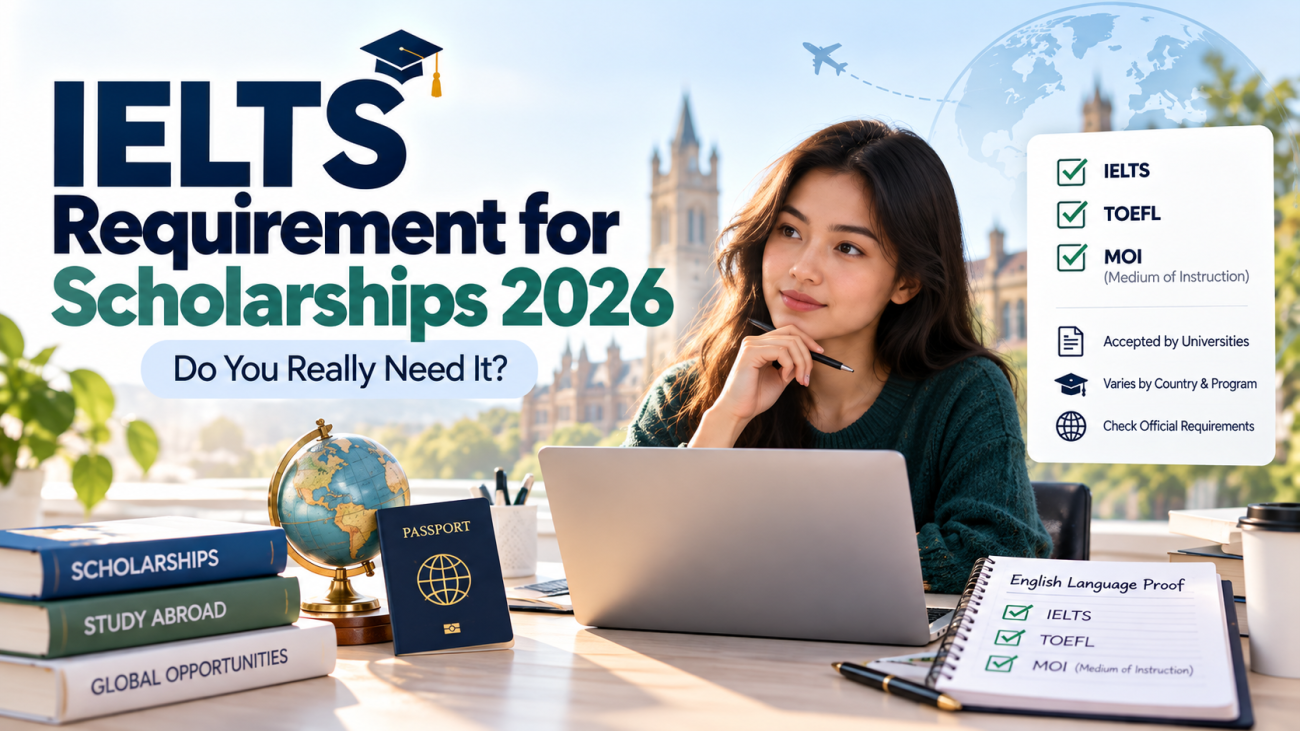
Can You Get a Fully Funded Scholarship Without IELTS?

Sometimes.

Some universities accept:

  • TOEFL
  • PTE
  • Previous education in English
  • Other approved language evidence

But every scholarship has different rules.

Always check the official requirement.

Can You Apply for More Than One Fully Funded Scholarship?

Usually, yes.

In fact, applying to several suitable programs can improve your chances.

But do not apply randomly.

A better strategy is:

Good fit + strong application + realistic eligibility

instead of:

Maximum number of applications

Quality matters.

How to Compare Two Fully Funded Scholarships

If you receive more than one offer, compare more than the money.

Look at:

  • Course quality
  • University reputation in your field
  • Research opportunities
  • Funding amount
  • Living costs
  • Career support
  • Alumni network
  • Location
  • Visa conditions
  • Post-study opportunities

The best scholarship is not always the one with the biggest stipend.

It is the one that fits your goals best.

Frequently Asked Questions About Fully Funded Scholarships

Are fully funded scholarships really free?

They usually cover most major costs, but you may still have personal or administrative expenses.

Do fully funded scholarships cover flights?

Some do, some do not.

Check the official funding breakdown.

Do I need work experience?

Some postgraduate scholarships require it.

Others do not.

Can undergraduate students get fully funded scholarships?

Yes, although these scholarships are often highly competitive.

Are PhD programs usually fully funded?

Many PhD programs offer funding, but the structure varies by university and country.

Can I apply before receiving university admission?

Sometimes.

Some scholarships require admission first.

Others combine scholarship and admission applications.

Final Thoughts

A fully funded scholarship in 2026 can completely change what is financially possible for a student.

But the words “fully funded” should never be the only reason you apply.

Read the funding details.

Understand the eligibility.

Check the university and program.

Make sure the opportunity matches your academic and career plans.

Then build an application that clearly shows why you are a good fit.

Do not chase every scholarship you see.

Find the ones that genuinely make sense for you and give those applications the attention they deserve.

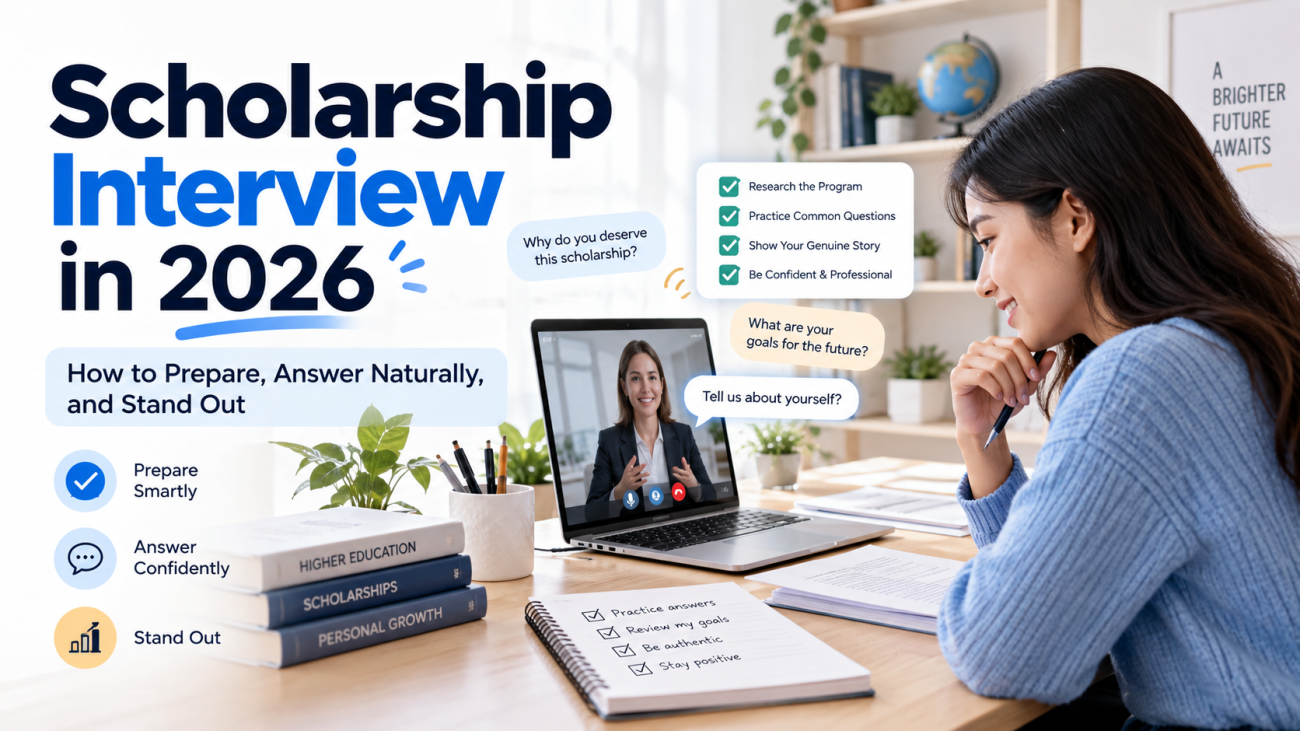
scholarship interview 2026

Scholarship Interview in 2026: How to Prepare, What to Expect, and How to Answer Naturally

Getting invited to a scholarship interview is exciting, but it can also be stressful.

At this stage, the scholarship committee already thinks your application is strong enough to consider seriously. The interview is usually their chance to understand the person behind the documents.

They may want to know whether your goals are realistic, whether your motivation is genuine, whether you can communicate clearly, and whether you are a good fit for the scholarship.

The biggest mistake students make is trying to sound perfect.

A strong scholarship interview in 2026 is usually not about giving memorized answers. It is about being prepared enough that you can speak clearly, honestly, and confidently about your own experiences.

This guide explains how scholarship interviews work, the questions you are likely to hear, how to answer them naturally, and what to do before, during, and after the interview.

What Is a Scholarship Interview?

A scholarship interview is a conversation between an applicant and one or more people representing the scholarship program.

The interview may take place:

  • In person
  • By Zoom
  • Through Microsoft Teams
  • By phone
  • Through a recorded video platform

Some interviews last 15 minutes.

Others may last 30–60 minutes.

The format depends on the scholarship.

You may speak with:

  • University staff
  • Professors
  • Scholarship administrators
  • Former scholarship recipients
  • Government representatives
  • Industry professionals

The purpose is usually the same: they want to understand whether the person they are meeting matches the application they have read.

Why Scholarship Interviews Matter

Your written application can show:

  • Grades
  • Achievements
  • Experience
  • Leadership
  • Research
  • Career goals

But an interview shows something different.

It shows how you think.

It shows whether you understand your own goals.

It shows whether you can explain your experiences without relying on carefully edited paragraphs.

It also gives the committee a chance to ask questions about anything that was unclear in your application.

For highly competitive scholarships, the interview can become an important final step in deciding between several strong candidates.

What Scholarship Interviewers Usually Look For

Different programs have different priorities, but scholarship interviewers often pay attention to several common areas.

Your Motivation

Why do you want this scholarship?

Why this university?

Why this subject?

Why now?

They want to hear an answer that makes sense.

A generic response such as:

I want this scholarship because it will help me achieve my dreams.

does not tell them much.

A stronger answer connects your past experience, current interests, and future direction.

Your Academic or Professional Potential

The committee may want to know whether you are prepared for the opportunity.

They could ask about:

  • Your academic background
  • Research experience
  • Work experience
  • Projects
  • Challenges
  • Skills
  • Future study plans

You do not need to pretend you know everything.

You need to show that you are capable of learning and using the opportunity well.

Your Leadership and Initiative

For leadership-focused scholarships, this may be one of the most important areas.

They may ask you to describe a time when you:

  • Led a team
  • Solved a problem
  • Managed conflict
  • Organized something
  • Took responsibility
  • Helped others

Again, titles matter less than evidence.

Your Future Plans

Scholarship providers often want to understand what happens after the degree.

They may ask:

  • What do you want to do after graduation?
  • How will this scholarship affect your career?
  • What problem do you want to solve?
  • How will you contribute to your community or field?

Your answer does not need to predict your whole life.

It simply needs to show direction.

How to Prepare for a Scholarship Interview

Good preparation does not mean memorizing full answers.

It means knowing your own story well enough that you can speak naturally.

Review Your Application

Before the interview, read your entire application again.

That includes:

  • Personal statement
  • CV
  • Recommendation letters if you can access them
  • Research proposal
  • Scholarship essays
  • Academic information

Interviewers may ask about something you mentioned months earlier.

You should remember what you wrote.

If your application says that a university project changed your career direction, be ready to explain that project.

Research the Scholarship

You should understand:

  • What the scholarship supports
  • Its mission
  • Its values
  • Who funds it
  • What type of candidates it selects
  • What expectations come with the award

Do not memorize the scholarship website.

Instead, think about why its priorities connect with your own experience.

Research the University and Program

If the scholarship is connected to a university, understand the program you want to join.

Know:

  • Why you chose the course
  • Relevant modules
  • Research opportunities
  • Faculty areas
  • Skills you hope to develop
  • How the degree supports your goals

Avoid saying that you selected a university only because it has a good ranking.

Rankings can matter, but they rarely make a convincing personal reason.

Prepare Examples From Your Experience

Think about several real situations from your life that demonstrate:

  • Leadership
  • Teamwork
  • Problem-solving
  • Resilience
  • Academic ability
  • Initiative
  • Communication
  • Community involvement

You can reuse these examples for different interview questions.

That makes preparation much easier.

Common Scholarship Interview Questions in 2026

You cannot predict every question.

However, some questions appear regularly across scholarship interviews.

Tell Us About Yourself

This sounds simple, but it can be difficult because the question is so broad.

Do not tell your entire life story.

A good answer can follow this structure:

Current situation → relevant background → key interest → future direction

For example:

I recently completed my undergraduate degree in economics, where I became particularly interested in development policy and data analysis. During my final year, I worked on a research project examining access to financial services in rural communities. That experience made me want to study development economics more deeply, and my long-term goal is to work on evidence-based economic policy in my country.

The answer is short, relevant, and gives the interviewer several areas to explore.

Why Do You Deserve This Scholarship?

This question can feel uncomfortable.

Try not to answer it as:

I deserve it because I have worked very hard.

Instead, explain why you are a strong match.

You could discuss:

  • Your preparation
  • Your achievements
  • Your commitment
  • Your alignment with the scholarship
  • How you would use the opportunity

A strong answer sounds confident without claiming that you are better than everyone else.

Why Did You Choose This Course?

Avoid answering only:

Because I am passionate about it.

Explain where the interest came from.

For example:

My interest developed during an undergraduate project where I worked with environmental data. I realized that I enjoyed using data to understand real-world problems, but I also saw gaps in my technical skills. This master’s program would help me strengthen those areas, particularly in statistical modeling and geospatial analysis.

That answer connects past experience with future study.

Why This University?

Specificity matters.

Mention one or two relevant reasons.

For example:

  • A particular specialization
  • Research group
  • Teaching approach
  • Faculty expertise
  • Industry connection
  • Internship structure

You do not need to praise everything about the university.

Choose what genuinely matters to you.

What Are Your Career Goals?

Try to avoid answers that are too vague.

Weak:

I want to become successful and help my country.

Better:

After completing the degree, I hope to work in public-sector data analysis, particularly in projects related to urban planning. Over time, I would like to contribute to evidence-based planning decisions that improve transport and public services.

The second answer gives the committee something concrete.

Tell Us About a Challenge You Faced

The committee is usually not looking for the most dramatic hardship.

They want to understand:

  • What happened
  • What you did
  • What you learned

Choose a genuine example.

You might discuss:

  • Academic difficulty
  • Project failure
  • Team conflict
  • Financial limitations
  • Work pressure
  • A research problem
  • A leadership challenge

The most important part is your response.

Tell Us About a Failure

Do not say:

I have never failed.

Everyone makes mistakes.

Choose something real but appropriate.

Explain:

What happened → why it happened → what you changed → what you learned

For example:

During my second year, I underestimated how much time a group project would require. I focused too heavily on my own section and did not communicate enough with the rest of the team. We completed the project, but the final result was weaker than expected. Since then, I have started setting shared deadlines and checking progress earlier when working in teams.

That answer demonstrates reflection.

Tell Us About a Leadership Experience

Use a real situation.

Explain:

  • The goal
  • Your responsibility
  • The challenge
  • What you did
  • The result

You do not need a formal leadership title.

Leadership can happen during a class project, volunteer activity, workplace task, or community initiative.

How Will You Contribute to the Scholarship Community?

Many scholarships are interested in what you will give back.

Possible contributions include:

  • Sharing professional experience
  • Supporting other scholars
  • Participating in events
  • Contributing research
  • Building international connections
  • Mentoring future applicants

Do not promise unrealistic things.

A genuine contribution is more convincing.

What Will You Do If You Do Not Receive the Scholarship?

This question tests resilience and commitment.

You should show that the scholarship matters, but that your goals do not completely depend on one decision.

For example:

This scholarship would make the program much more accessible to me, so I would be disappointed if I were unsuccessful. However, I would continue exploring other funding options and opportunities related to the same field because the long-term goal remains important to me.

This shows determination without sounding entitled.

Why Should We Choose You Over Other Candidates?

You cannot know the strengths of other applicants.

So do not compare yourself aggressively.

Focus on your own fit.

You might say:

I cannot judge the other candidates, but I believe I bring a combination of academic preparation, practical experience, and a clear plan for how I would use the scholarship. My work in community education has also given me direct experience with the problem I hope to study further.

That is confident without being arrogant.

How to Answer Scholarship Interview Questions Naturally

One of the easiest ways to sound robotic is to memorize complete paragraphs.

Instead, memorize ideas.

For each common question, prepare:

  • 2–3 key points
  • One example
  • One takeaway

Then speak around those points naturally.

Your answer may be slightly different every time.

That is fine.

Use the STAR Method for Experience Questions

For questions about specific experiences, the STAR method can help.

S — Situation

What was happening?

T — Task

What responsibility did you have?

A — Action

What did you do?

R — Result

What happened afterward?

For example:

Our student society wanted to organize a career event, but registrations were low. I was responsible for promotion, so I redesigned the communication plan and worked with department representatives to reach students directly. Within two weeks, registrations increased from around 40 to more than 150.

That answer is easy to follow because it has a clear structure.

How Long Should Your Answers Be?

There is no perfect length.

For many questions, one to two minutes is enough.

A simple question may require 30 seconds.

A behavioral question may take two minutes.

The key is to answer the question fully without turning every response into a speech.

If the interviewer wants more detail, they can ask.

What to Wear for a Scholarship Interview

Dress professionally but comfortably.

You do not necessarily need an expensive suit.

Aim for clothing that is:

  • Clean
  • Neat
  • Appropriate
  • Comfortable
  • Not distracting

For online interviews, remember that the camera will mainly show your upper body.

Simple clothing usually works best.

How to Prepare for an Online Scholarship Interview

Online interviews require a little extra preparation.

Test:

  • Internet connection
  • Camera
  • Microphone
  • Lighting
  • Video platform

Choose a quiet environment.

Keep the camera around eye level.

Make sure the background is not distracting.

Close unnecessary applications and silence notifications.

You should also have:

  • Water
  • Your CV
  • Your application
  • A few notes

Do not read answers directly from your screen.

Interviewers can usually tell.

What If Your Internet Stops Working?

Technical problems happen.

Do not panic.

Before the interview, keep the organizer’s email address or contact details nearby.

If you disconnect:

  1. Try to reconnect.
  2. Send a short message explaining the technical problem.
  3. Remain calm when you return.

A technical problem is usually less damaging than appearing extremely stressed because of it.

What If You Do Not Know an Answer?

Do not invent one.

You can say:

I haven’t had direct experience with that yet, but based on what I know…

Or:

That’s an area I’m still developing, so I would approach it by…

Showing how you think can be more valuable than pretending to know something you do not.

Can You Ask Questions at the End?

Yes.

If the interviewer asks whether you have any questions, try to ask something meaningful.

Good questions may include:

  • What opportunities exist for scholars to collaborate?
  • How do previous recipients usually engage with the scholarship community?
  • Are there mentoring opportunities within the program?
  • What qualities have you seen in scholars who make the most of the opportunity?

Avoid asking questions whose answers are clearly written on the scholarship homepage.

Scholarship Interview Mistakes to Avoid

Memorizing Every Answer

Prepared is good.

Scripted is not.

You want to sound like you are having a conversation.

Giving Very Long Answers

More words do not automatically make your answer stronger.

Answer the question, provide an example, and stop.

Giving Generic Answers

Specific experiences are easier to trust.

Speaking Negatively About Others

Avoid criticizing:

  • Previous universities
  • Employers
  • Professors
  • Other applicants

Even when describing a difficult situation, focus on what you learned.

Exaggerating Achievements

Interviewers may ask follow-up questions.

If you exaggerate, it can become obvious quickly.

Focusing Only on Financial Need

Financial support may be an important reason for applying.

But scholarships often want to understand your academic potential, leadership, goals, and future contribution too.

What to Do After the Scholarship Interview

After the interview, give yourself a few minutes to reflect.

Write down:

  • Questions they asked
  • Answers you felt good about
  • Questions you struggled with
  • Anything important you forgot

This can help if you have another scholarship interview later.

If appropriate, you can also send a short thank-you message.

Keep it simple.

There is no need to write another personal statement in your thank-you email.

Scholarship Interview Preparation Checklist

Before your interview, make sure you have:

  • Read your application again
  • Researched the scholarship
  • Researched the university or program
  • Prepared several real examples
  • Practiced common questions
  • Prepared your career goals
  • Tested your technology
  • Chosen appropriate clothing
  • Prepared one or two questions to ask
  • Confirmed the interview time and timezone

Preparation reduces anxiety because you know what you want to communicate.

Frequently Asked Questions About Scholarship Interviews

How long does a scholarship interview usually last?

It depends on the program, but many interviews last somewhere between 15 and 45 minutes.

Should I memorize answers?

No. Prepare your main points and examples, but speak naturally.

Is it okay to be nervous?

Yes. Interviewers expect some nervousness. Clear preparation matters more than appearing completely relaxed.

Can I take notes into the interview?

Usually, yes, especially for online interviews. Keep them brief and avoid reading from them continuously.

What if English is not my first language?

Focus on clarity rather than trying to sound like a native speaker. Speak at a comfortable pace and ask the interviewer to repeat a question if necessary.

Should I mention financial need?

Yes, if it is relevant. But also explain your academic goals, potential, and how the scholarship would help you create meaningful outcomes.

Final Thoughts

A scholarship interview in 2026 is not a test of whether you can give perfect answers.

It is an opportunity to show that the person behind the application is thoughtful, prepared, and genuinely motivated.

Know your own story.

Understand the scholarship.

Prepare real examples.

And when you answer a question, focus more on communicating clearly than trying to impress the panel.

You already submitted the achievements.

The interview is where you show the thinking, motivation, and personality behind them.

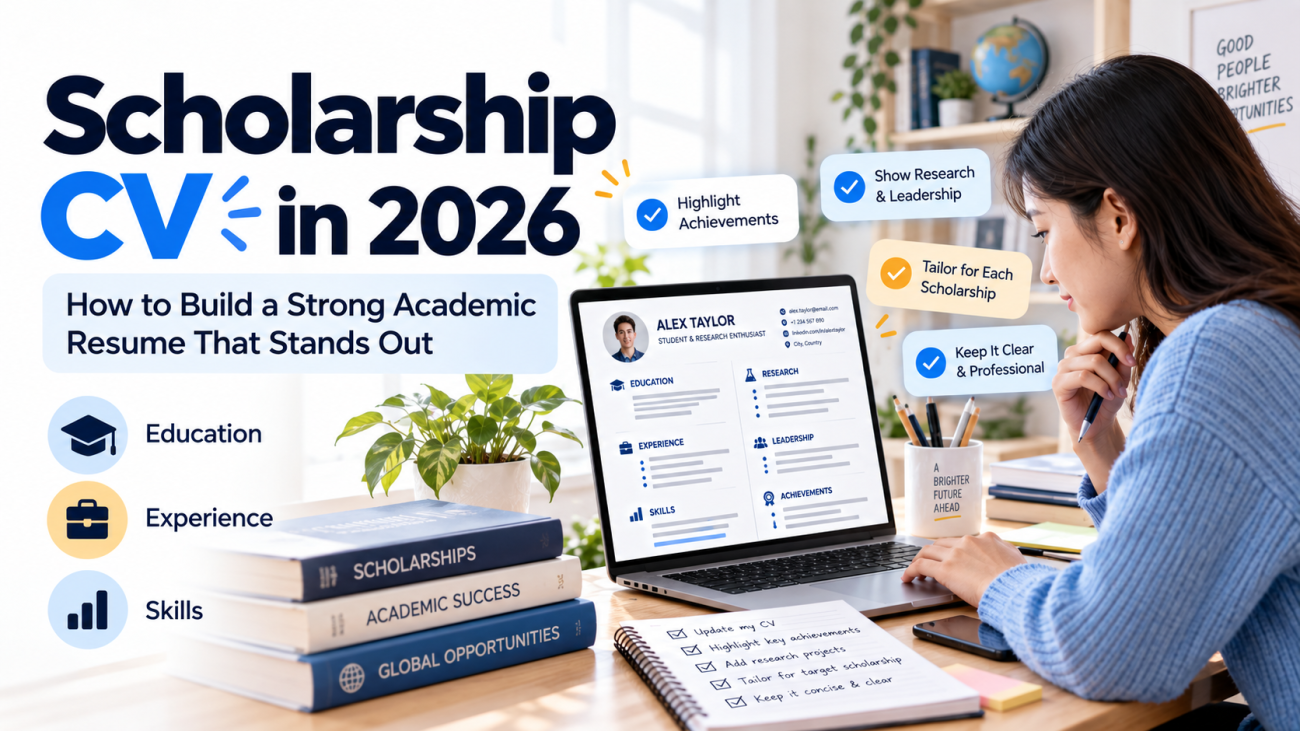
Scholarship CV in 2026 How to Make Your Resume Stand Out Without Overdoing It

Scholarship CV in 2026: How to Make Your Resume Stand Out Without Overdoing It

A scholarship CV can feel confusing because it is not exactly the same as a job resume.

You are not simply trying to show that you can perform a role. You are trying to show the scholarship committee that you have a strong academic background, useful experience, clear potential, and a reason to be considered for funding.

That means your CV should be focused, easy to read, and relevant to the scholarship you are applying for.

You do not need a fancy design. You do not need to fill it with every activity you have ever done. And you definitely do not need to make yourself sound more impressive than you really are.

A strong scholarship CV in 2026 is usually the one that makes it easy for the reader to understand your journey quickly.

This guide will show you what to include, what to leave out, how to organize your information, and how to make your scholarship CV feel professional without sounding robotic.

What Is a Scholarship CV?

A scholarship CV is a document that summarizes your academic background, achievements, experience, leadership, research, volunteering, skills, and other relevant activities.

It gives the scholarship committee a quick overview of who you are.

Think of it as a snapshot of your application.

Your personal statement tells your story.

Your recommendation letter gives someone else’s perspective.

Your scholarship CV shows the facts.

All three should support the same overall picture.

Why a Scholarship CV Matters

Scholarship committees may receive hundreds of applications.

They often need to understand an applicant quickly.

A clear CV can help them see:

  • What you have studied
  • What you have achieved
  • What experience you have
  • Whether you have leadership potential
  • Whether your background fits the scholarship
  • Whether your academic interests match the program

A poorly organized CV can hide good achievements.

A well-organized one makes them easy to notice.

How Is a Scholarship CV Different From a Job Resume?

There is some overlap, but the emphasis is different.

A job resume usually focuses strongly on:

  • Work experience
  • Professional skills
  • Business results
  • Industry achievements

A scholarship CV may place more importance on:

  • Education
  • Academic performance
  • Research
  • Awards
  • Leadership
  • Volunteering
  • Publications
  • Conferences
  • Extracurricular activities

The correct balance depends on the scholarship.

For an academic scholarship, education and research may come first.

For a leadership scholarship, professional and community experience may be more important.

What Should You Include in a Scholarship CV?

A scholarship CV does not need every possible section.

Use only the sections that help your application.

A good structure may include:

  • Personal information
  • Education
  • Academic achievements
  • Work experience
  • Research experience
  • Leadership
  • Volunteering
  • Awards
  • Publications
  • Conferences
  • Certifications
  • Skills
  • Languages

The order can change depending on your background.

1. Personal Information

Keep this section simple.

Include:

  • Full name
  • Email address
  • Phone number
  • City and country
  • LinkedIn profile if relevant

You usually do not need to include:

  • Religion
  • Marital status
  • Passport number
  • National ID number
  • Full home address
  • Personal information not requested by the scholarship

Only provide sensitive information when the official application specifically requires it.

2. Education

For most students, education should appear near the top.

Include:

  • Degree name
  • University or institution
  • Location
  • Study period
  • GPA or academic result if useful
  • Relevant specialization

Example:

Bachelor of Science in Computer Science
ABC University, Dhaka, Bangladesh
2022–2026
CGPA: 3.78/4.00

You can also include a few relevant courses if they strongly relate to the scholarship.

Do not list every course you completed.

3. Academic Achievements

If you have meaningful academic achievements, give them their own section.

Examples include:

  • Dean’s List
  • Academic scholarships
  • Competition awards
  • High-ranking examination results
  • Research awards
  • Departmental recognition

Be specific.

Instead of:

Received academic award.

Write:

Dean’s List, Faculty of Engineering, 2025

Clarity makes the achievement stronger.

4. Work Experience

Work experience can be useful even when the scholarship is academic.

Include:

  • Job title
  • Company or organization
  • Dates
  • 2–4 relevant bullet points

Avoid writing only job duties.

Try to show what you actually contributed.

Weak:

Responsible for helping customers.

Stronger:

Assisted an average of 30+ customers per day and helped resolve service issues.

The second version gives more context.

5. Research Experience

Research experience can be especially important for master’s, PhD, and academic scholarships.

Include:

  • Research title
  • Institution
  • Supervisor if relevant
  • Dates
  • Your contribution
  • Research methods
  • Results or outputs

For example:

Undergraduate Research Assistant
Department of Public Health, XYZ University
2025–2026

  • Collected and cleaned survey data from 300 participants
  • Supported statistical analysis using SPSS
  • Contributed to the literature review and final report

This is much stronger than simply writing:

Worked on a research project.

6. Leadership Experience

Leadership does not always mean holding a formal title.

You can show leadership through responsibility.

Examples:

  • Led a student team
  • Organized an event
  • Managed a project
  • Coordinated volunteers
  • Mentored junior students
  • Created a new initiative

Use evidence.

Instead of:

Strong leadership experience.

Write:

Coordinated a team of eight volunteers to organize a university career workshop attended by more than 200 students.

That gives the committee something concrete to remember.

7. Volunteer Experience

Scholarships that focus on social impact, leadership, community development, or service may value volunteering strongly.

Include:

  • Organization
  • Role
  • Dates
  • What you did
  • Who benefited
  • Any measurable result

Do not exaggerate the impact.

A small but genuine contribution is better than an unrealistic claim.

8. Awards and Scholarships

Include relevant awards such as:

  • Academic awards
  • Leadership awards
  • Competition prizes
  • Research recognition
  • Previous scholarships

If the award name is not self-explanatory, add a short explanation.

Example:

University Merit Scholarship, 2025
Awarded to the top 10% of students in the department.

That immediately shows why the award matters.

9. Publications and Conferences

This section is useful if you are applying for research-focused funding.

You can include:

  • Journal papers
  • Conference papers
  • Posters
  • Research presentations
  • Published articles
  • Book chapters

Use a consistent citation style.

If you have no publications, do not create this section.

A scholarship CV does not need to contain every possible heading.

10. Certifications

Include certifications that strengthen your scholarship application.

Examples:

  • Data analysis
  • Language certificates
  • Project management
  • Programming
  • Research methods
  • Professional training

Avoid filling the CV with unrelated online courses simply to make it look longer.

Quality matters more than quantity.

11. Skills

Your skills section should be relevant.

You may include:

Technical skills

  • Python
  • SPSS
  • MATLAB
  • AutoCAD
  • Excel

Research skills

  • Data collection
  • Statistical analysis
  • Literature review

Professional skills

  • Project coordination
  • Presentation
  • Team management

Avoid vague lists such as:

  • Hardworking
  • Honest
  • Motivated
  • Good person

Those qualities should come through your achievements, not a list.

12. Languages

If you speak multiple languages, include them.

For example:

  • Bengali — Native
  • English — Professional proficiency
  • Hindi — Conversational

Be honest about your level.

How Long Should a Scholarship CV Be?

There is no universal length.

For many undergraduate or master’s applicants, one to two pages is usually enough.

Research applicants with publications and academic experience may need more.

The key question is not:

Is my CV long enough?

The better question is:

Is every section useful?

If the scholarship committee can understand your strongest qualifications in two pages, adding a third page does not automatically make the CV better.

Should You Add a Photo to Your Scholarship CV?

This depends on the country, university, and scholarship.

Some regions commonly accept CV photos.

Others prefer resumes without them.

If the scholarship instructions do not ask for a photo, it is usually safer to focus on your qualifications.

Always follow the official requirements first.

Should You Use a Creative CV Design?

For most scholarships, simple is better.

A scholarship committee is not judging your graphic design ability unless you are applying to a design-related program.

Use:

  • Clean headings
  • Consistent spacing
  • Easy-to-read fonts
  • Clear dates
  • Simple bullet points

Avoid:

  • Too many colors
  • Progress bars
  • Large icons
  • Complicated charts
  • Extremely decorative templates
  • Tiny text

Your CV should look professional, not like a poster.

How to Write Strong Bullet Points

One of the easiest ways to improve your scholarship CV is to improve your bullet points.

Try this structure:

Action + task + result

Example:

Weak:

Helped organize seminars.

Better:

Coordinated logistics for three academic seminars involving more than 150 participants.

Another example:

Weak:

Worked in a research team.

Better:

Collaborated with a four-member research team to analyze survey data and prepare the final project report.

Details make your experience more credible.

Should You Include Your GPA?

Include your GPA if:

  • It is strong
  • The scholarship values academic performance
  • The application asks for it

If your GPA is lower than you would like, do not automatically hide it if the scholarship requires it.

Your application will usually include transcripts anyway.

Remember that many scholarships consider more than grades.

What If You Have Little Experience?

This is common for undergraduate students and recent graduates.

You can still build a strong scholarship CV.

Think beyond formal employment.

You may have:

  • Class projects
  • University clubs
  • Volunteer activities
  • Academic competitions
  • Research assignments
  • Student leadership
  • Part-time work
  • Personal projects
  • Internship experience

The goal is to show how you have used the opportunities available to you.

Common Scholarship CV Mistakes

Making the CV Too Long

More information does not always mean a stronger application.

Remove weak or unrelated content.

Using the Same CV for Every Scholarship

You do not need to completely rewrite your CV each time.

But you should adjust the order and emphasis.

For a research scholarship, move research higher.

For a leadership scholarship, highlight leadership and community experience.

Writing Long Paragraphs

CVs are meant to be scanned quickly.

Use short bullet points.

Save longer explanations for your personal statement.

Listing Responsibilities Without Results

Do not only explain what you were supposed to do.

Explain what you contributed.

Adding Unnecessary Personal Information

Only include information that is relevant or officially requested.

Using Inconsistent Dates

For example:

  • Jan 2025
  • 02/2024
  • March 2023

Choose one format and stay consistent.

Using Unprofessional Email Addresses

Use something simple.

Better:

[email protected]

Avoid:

[email protected]

Small details can affect professionalism.

How to Make Your Scholarship CV Feel Human

A CV is naturally more formal than a personal statement.

Still, it should reflect real experience.

Do not write exaggerated bullet points just because they sound impressive.

For example:

Revolutionized student engagement through transformative leadership.

This sounds dramatic but tells the reader almost nothing.

Instead:

Organized monthly study sessions for first-year students and coordinated five volunteer mentors.

Now the reader understands what happened.

Simple facts often sound more impressive than inflated language.

How Your CV Should Connect With the Rest of Your Application

Your CV, personal statement, and recommendation letters should support each other.

Suppose your CV says:

President, Environmental Society

Your personal statement might explain a specific project you led.

Your recommendation letter might describe your ability to organize people.

Together, they create a consistent picture.

If every document tells a completely different story, the application can feel disconnected.

Scholarship CV Checklist

Before submitting your scholarship CV, check that:

  • Your name and contact information are correct
  • Education details are accurate
  • Dates are consistent
  • Your strongest achievements are easy to find
  • Experience is described with specific examples
  • Relevant research is included
  • Leadership and volunteering are included when appropriate
  • Unnecessary personal details are removed
  • Grammar and spelling are correct
  • The file name looks professional
  • The formatting is easy to read
  • The CV matches the scholarship’s priorities

A suitable file name might be:

FirstName_LastName_Scholarship_CV.pdf

Frequently Asked Questions About Scholarship CVs

Do I need a CV for every scholarship?

No. Some scholarships do not request one. Always check the official application requirements.

Can a scholarship CV be two pages?

Yes. For many applicants, one to two pages is perfectly reasonable.

Should I include hobbies?

Only if they add meaningful value or demonstrate relevant achievements. You do not need a hobbies section simply to fill space.

Should I include references?

Usually not unless the scholarship specifically asks for them. Recommendation letters are normally handled separately.

Can I use the same CV for university admission and scholarships?

You can use the same base document, but scholarship applications often benefit from a version that emphasizes achievements, leadership, research, and impact more clearly.

Should I include high school achievements?

If you are applying for an undergraduate scholarship, yes, relevant high-school achievements can be valuable.

For postgraduate applicants with significant university experience, older school achievements usually become less important.

Final Thoughts

A strong scholarship CV in 2026 is not about trying to look perfect.

It is about presenting your strongest and most relevant experiences clearly.

Make it easy for the scholarship committee to understand where you have studied, what you have done, what you have achieved, and what kind of potential you bring.

Use simple formatting.

Write specific bullet points.

Focus on evidence.

And do not add unnecessary information just to make the document longer.

The strongest CV is often not the most decorated one.

It is the one that helps the reader understand your value quickly.

Scholarship Personal Statement in 2026 How to Write One That Actually Sounds Like You

Scholarship Personal Statement in 2026: How to Write One That Actually Sounds Like You

A scholarship personal statement is often the part of the application students worry about most.

Grades are straightforward. Your CV lists what you have done. Recommendation letters come from someone else.

But the personal statement is different.

It asks you to explain who you are, what shaped you, why you are applying, and what you plan to do with the opportunity.

That can feel difficult, especially when you know hundreds or even thousands of other students may be applying for the same scholarship.

The good news is that you do not need to sound extraordinary in every sentence.

A strong scholarship personal statement in 2026 should sound clear, specific, honest, and personal. It should help the reader understand the person behind the application.

This guide explains how to write one naturally, what scholarship committees usually look for, what to avoid, and how to make your statement feel genuinely yours rather than like something copied from the internet.

What Is a Scholarship Personal Statement?

A scholarship personal statement is a short essay that explains your background, motivation, achievements, goals, and reasons for applying for a scholarship.

Depending on the program, it may be called:

  • Personal statement
  • Motivation letter
  • Scholarship essay
  • Statement of motivation
  • Personal essay

Although these documents can have slightly different purposes, they usually try to answer similar questions.

The scholarship committee wants to understand:

Who are you?

What have you done so far?

Why does this opportunity matter to you?

What do you hope to achieve next?

Your personal statement connects all of those pieces.

Why Scholarship Personal Statements Matter

Imagine two students applying for the same scholarship.

Both have good grades.

Both have extracurricular activities.

Both meet the eligibility requirements.

One writes:

I have always dreamed of studying abroad because I believe education is important for my future.

The other explains how a particular academic experience changed their interests, what they did afterward, and how the scholarship connects directly with their future plans.

The second application is easier to remember.

That is what a good personal statement does.

It gives context to everything else in your application.

Your grades show performance.

Your CV shows experience.

Your personal statement explains why those experiences matter.

What Scholarship Committees Usually Look For

Different scholarships have different priorities, but many selection committees look for similar qualities.

Clear Motivation

They want to understand why you are applying.

Avoid vague reasons such as:

I want to study at a prestigious university.

Instead, explain what specifically interests you about the opportunity.

Maybe the degree offers a particular specialization.

Maybe the scholarship supports students interested in community development.

Maybe the program aligns strongly with the work you are already doing.

Specific reasons are more convincing.

Academic Potential

You do not need to repeat your entire transcript.

Instead, highlight experiences that demonstrate your ability to learn, solve problems, conduct research, or work independently.

For example, you might discuss:

  • A major university project
  • Research experience
  • A difficult subject you improved in
  • An academic competition
  • A thesis
  • A practical project related to your intended field

The goal is not to prove that you have never struggled.

The goal is to show that you can grow.

Leadership and Initiative

Leadership does not necessarily mean being president of a large organization.

You may have demonstrated leadership by:

  • Organizing a student event
  • Starting a small community project
  • Managing a university team
  • Helping classmates
  • Taking responsibility at work
  • Solving a problem without being asked

Scholarship committees often care more about what you actually did than the title you held.

Impact

Whenever possible, explain the result of your actions.

Instead of:

I volunteered at a local organization.

You could write:

I volunteered with a weekend tutoring program where I helped secondary-school students prepare for mathematics exams.

And if possible, go one step further.

Over six months, I worked with approximately 20 students and helped develop weekly practice materials for the program.

Now the reader understands your contribution.

Future Direction

Scholarship providers usually want to know what you intend to do with the opportunity.

Your future plan does not need to predict every detail of your career.

But it should show direction.

For example:

Current experience → chosen degree → future career → wider contribution

That sequence helps the scholarship committee understand how the opportunity fits into your journey.

How to Structure a Scholarship Personal Statement

There is no single perfect structure.

However, a simple structure can make writing much easier.

1. Start With a Meaningful Opening

Your opening should make the reader want to continue.

That does not mean you need a dramatic story.

You can begin with:

  • A specific experience
  • A moment that influenced your career choice
  • A problem you became interested in solving
  • A project that changed your thinking
  • A personal observation connected to your academic goals

Avoid overly dramatic openings that do not connect naturally with the rest of your essay.

Example of a Weak Opening

From a very young age, I have always believed that education is the key to success.

There is nothing technically wrong with this sentence.

The problem is that thousands of applicants could write exactly the same thing.

Example of a More Personal Opening

During my final undergraduate project, I spent several weeks analyzing why a community health initiative was struggling to reach rural families. That experience showed me how much good policy depends on understanding people, data, and local realities.

This opening tells us something about the applicant immediately.

It also creates a natural path toward discussing academic interests and future goals.

2. Explain Your Academic Journey

Your academic section should not simply repeat your transcript.

Instead, choose experiences that support your current direction.

You might discuss:

  • Why you chose your field
  • A project that influenced you
  • A professor or course that changed your perspective
  • Research you completed
  • A challenge you overcame
  • Skills you developed

Try to connect these experiences with the program or scholarship you are applying for.

3. Discuss Relevant Experience

This could include:

  • Employment
  • Internships
  • Research
  • Volunteering
  • Leadership
  • Entrepreneurship
  • Community involvement
  • Student organizations

Do not try to mention every activity.

Choose the experiences that strengthen your story.

Three meaningful examples are usually better than ten disconnected achievements.

4. Explain Why You Are Applying

This section should answer an important question:

Why this scholarship?

A weak answer focuses only on money.

For example:

I need this scholarship because studying abroad is expensive.

Financial support can absolutely be important.

But competitive scholarship providers usually want to understand what the opportunity enables beyond simply paying tuition.

A stronger explanation might discuss:

  • Access to a specialized program
  • Research opportunities
  • International exposure
  • Leadership development
  • Professional networks
  • Training unavailable in your current environment

The scholarship should feel connected to your goals.

5. Explain Your Future Goals

Your future goals should be realistic and connected to your past experience.

Avoid extremely broad claims such as:

I want to change the world.

Instead, explain what area you want to work in.

For example:

After completing the program, I hope to work in public-health data analysis and eventually support evidence-based health programs in underserved communities.

That goal is specific enough to feel real.

6. Finish With Purpose

A strong conclusion should bring the statement together.

Do not simply repeat everything you already wrote.

Instead, briefly reinforce:

  • Your motivation
  • Your readiness
  • What the opportunity would enable
  • What you hope to contribute

The ending should feel confident without sounding arrogant.

How to Make Your Personal Statement Sound Human

One of the biggest problems with scholarship essays today is that many sound almost identical.

They are technically correct.

The grammar is polished.

The vocabulary sounds impressive.

But you cannot tell who wrote them.

This has become even more important as more students use AI writing tools.

Your goal should not be to avoid good writing.

Your goal should be to preserve your voice.

Use Real Details

Instead of saying:

I developed strong leadership skills.

Explain when.

Where?

What happened?

Who was involved?

What did you do?

What changed?

Real details make writing sound naturally human.

Write the Way an Educated Version of You Would Speak

You do not need to use complicated vocabulary.

For example:

This transformative academic endeavor significantly augmented my interdisciplinary competencies.

Sounds impressive but unnatural.

You could simply write:

The project taught me how to work across different disciplines and communicate with people from different backgrounds.

The second version is much easier to trust.

Include Reflection

Strong personal statements do not only explain what happened.

They explain what the applicant learned.

For example:

Managing the event taught me that leadership is less about giving instructions and more about creating clarity when a team is under pressure.

That sentence gives the reader insight into how the applicant thinks.

Should You Use AI to Write a Scholarship Personal Statement?

AI can be useful.

It can help you:

  • Brainstorm ideas
  • Organize your structure
  • Improve grammar
  • Identify repetitive sentences
  • Shorten long paragraphs
  • Check clarity

However, there is a risk.

If you give an AI tool a prompt such as:

Write me a scholarship personal statement.

You may get a polished essay that could belong to almost anyone.

That is not what you want.

A scholarship personal statement should contain experiences, motivations, and details that actually belong to you.

A better approach is to write down your real experiences first and then use AI to help refine the presentation.

The ideas should remain yours.

How Long Should a Scholarship Personal Statement Be?

Always follow the official scholarship instructions.

A personal statement might have:

  • A word limit
  • A character limit
  • A page limit
  • Several separate essay questions

Common limits may fall somewhere around several hundred words, but there is no universal standard.

If a scholarship says 500 words, treat 500 words as the limit.

Do not submit 750 because you believe your story deserves more space.

Following instructions is part of the application.

What Should You Include in Your Scholarship Personal Statement?

A strong statement normally includes several of these elements:

  • Academic background
  • Relevant achievements
  • Leadership experience
  • Professional experience
  • Community involvement
  • Motivation
  • Career goals
  • Challenges you have learned from
  • Why the scholarship fits your goals
  • What you hope to contribute

You do not need to include all of them equally.

Choose what supports your application best.

Scholarship Personal Statement Example Framework

You can use this simple framework when planning your essay.

Paragraph 1 — Opening

Introduce a meaningful experience, motivation, or academic interest.

Paragraph 2 — Academic Background

Explain the educational experiences that prepared you for the opportunity.

Paragraph 3 — Experience and Achievements

Discuss relevant leadership, research, professional, or community experience.

Paragraph 4 — Why This Scholarship

Explain why the specific scholarship and program are appropriate for you.

Paragraph 5 — Future Goals

Explain what you intend to do afterward.

Paragraph 6 — Conclusion

Connect your experiences, goals, and the opportunity.

This is only a framework.

Your essay should still feel natural.

Common Scholarship Personal Statement Mistakes

Starting With Generic Statements

Avoid openings that could belong to any applicant.

Examples include:

Education has always been my passion.

I have dreamed of success since childhood.

I believe knowledge is power.

There is nothing inherently wrong with these ideas.

They are simply too broad to reveal much about you.

Repeating Your CV

Your personal statement should not become a paragraph version of your resume.

The committee already has your CV.

Use the essay to explain the meaning behind selected experiences.

Trying Too Hard to Impress

Complicated language does not automatically make an essay better.

Clarity is usually more effective.

If a simple word communicates your idea accurately, use it.

Exaggerating Your Story

Do not invent hardship, leadership, achievements, or impact because you think the committee expects a dramatic story.

Your experiences do not have to sound extraordinary.

They need to be genuine and relevant.

Writing About the Scholarship Instead of Yourself

Some applicants spend too much space praising the university or scholarship.

For example:

Your prestigious institution has world-class faculty, outstanding infrastructure, exceptional research opportunities…

The scholarship committee already knows about its own program.

Focus on why those resources matter specifically to your goals.

Ignoring the Scholarship’s Values

If the scholarship emphasizes leadership, your statement should contain evidence of leadership.

If it focuses on research, demonstrate your research potential.

If it focuses on community development, show how your experience connects to that mission.

One generic personal statement should not be submitted everywhere without modification.

How to Edit Your Scholarship Personal Statement

Do not submit your first draft.

A good editing process can significantly improve the essay.

First Edit: Content

Ask:

  • Does every paragraph have a purpose?
  • Have I provided real examples?
  • Are my goals clear?
  • Is the scholarship connection obvious?

Second Edit: Structure

Check whether one idea naturally leads to another.

Your essay should feel like one story rather than several unrelated paragraphs.

Third Edit: Language

Remove:

  • Repetition
  • Unnecessary adjectives
  • Complicated phrases
  • Generic statements
  • Sentences that sound unnatural

Final Edit: Accuracy

Double-check:

  • Scholarship name
  • University name
  • Course name
  • Dates
  • Grammar
  • Word count

One small copy-and-paste error involving the wrong university name can make an otherwise good application look careless.

Questions to Ask Yourself Before Submitting

Before you submit your scholarship personal statement, ask yourself:

Could someone else submit this exact essay without changing much?

If yes, it probably needs more personal detail.

Then ask:

Can the reader understand what I have done?

Can they understand why I am applying?

Can they understand what I want to do next?

Have I shown evidence rather than making unsupported claims?

If those answers are clear, your statement is moving in the right direction.

Scholarship Personal Statement Checklist

Before submitting, make sure you have:

  • Followed the word limit
  • Answered the actual scholarship question
  • Included specific examples
  • Explained your motivation
  • Connected your past with your future
  • Explained why the scholarship matters
  • Avoided copying your CV
  • Removed generic phrases
  • Proofread names and dates
  • Asked someone else to review it
  • Kept the writing truthful

Frequently Asked Questions

How do I start a scholarship personal statement?

Start with something specific and relevant to your academic journey, experience, interests, or goals. You do not need an overly dramatic opening.

Should I talk about financial difficulties?

You can if financial need is relevant to the scholarship or genuinely part of your story. However, do not make financial difficulty the entire statement unless the scholarship specifically asks for it.

Can I use the same personal statement for multiple scholarships?

You can reuse parts of your background and experience, but important applications should be customized to the scholarship’s goals and selection criteria.

Should I mention my weaknesses?

You do not need to create a list of weaknesses. However, discussing a genuine challenge can be useful if you explain how you responded and what you learned.

Can AI write my scholarship personal statement?

AI can help with brainstorming, editing, grammar, and structure. Your final statement should still reflect your real experiences, voice, and goals.

What makes a scholarship essay memorable?

Usually, specificity.

Real situations, thoughtful reflection, clear motivation, and concrete goals make an essay easier to remember than complicated vocabulary.

Final Thoughts

A strong scholarship personal statement in 2026 does not need to make you sound like a completely different person.

It should make the reader understand the strongest version of the person you already are.

You do not need to claim that every experience changed your life.

You do not need to sound perfect.

And you certainly do not need to fill every paragraph with impressive words.

Tell the reader what you have done, what those experiences taught you, where you want to go next, and why this scholarship would help you get there.

Specificity builds credibility.

Reflection shows maturity.

And a clear connection between your past, present, and future gives your application a story worth remembering.

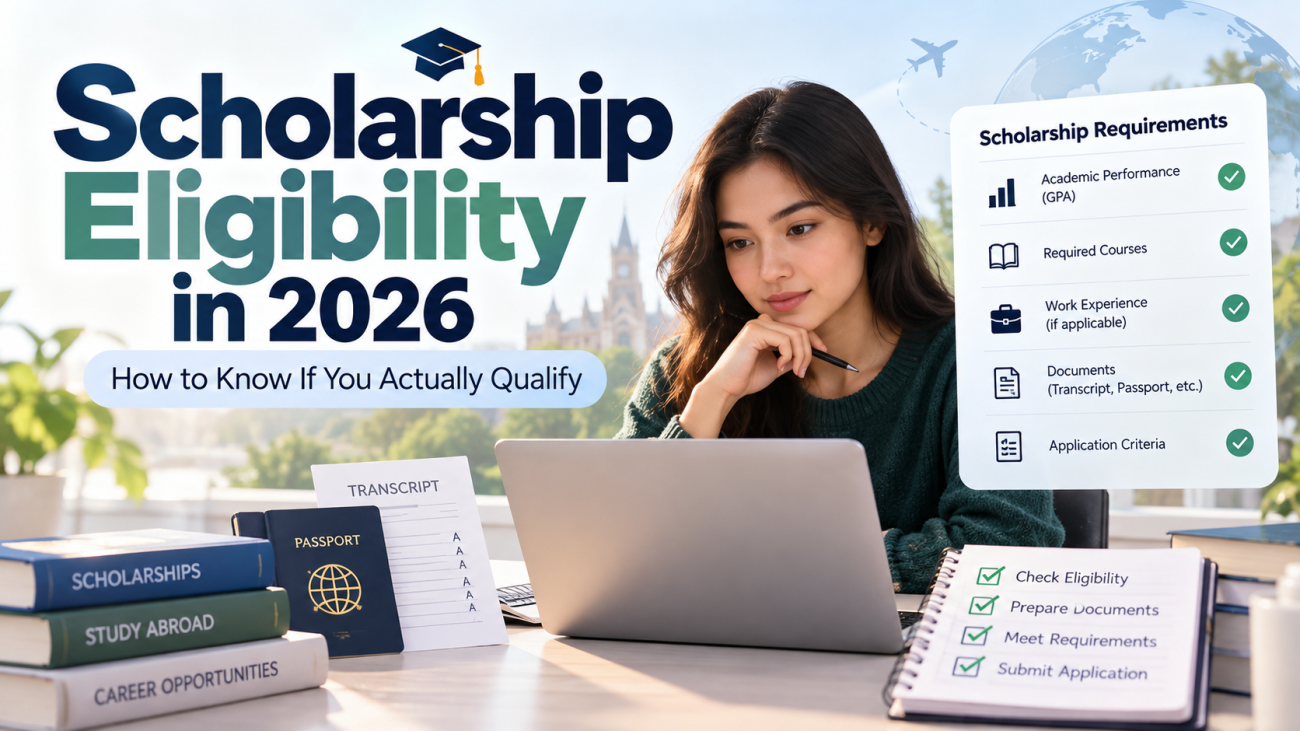
scholarship recommendation letter (3)

How to Ask for a Scholarship Recommendation Letter in 2026

A strong scholarship recommendation letter can do something your grades and personal statement cannot: show the scholarship committee how another person sees your character, work ethic, potential, and achievements.

For many students, however, asking someone for a recommendation feels uncomfortable.

You may wonder:

  • Who should I ask?
  • How early should I contact them?
  • What information should I give them?
  • What if they say no?
  • Can I use the same recommendation letter for several scholarships?

These are normal questions, especially when you are applying for scholarships for the first time.

The good news is that getting a strong recommendation letter is not about knowing an important person. It is about choosing someone who genuinely knows your abilities and giving that person enough time and information to write something meaningful.

This guide explains how to ask for a scholarship recommendation letter in 2026, who you should choose, what to send your referee, and the mistakes that can weaken an otherwise strong scholarship application.
What Is a Scholarship Recommendation Letter?

A scholarship recommendation letter is a written evaluation of an applicant provided by someone who knows their academic work, professional performance, leadership, research ability, or character.

Scholarship committees use recommendation letters to gain an outside perspective on the applicant.

Your application might say:

I am hardworking and committed to my studies.

A recommender can make that claim more credible by describing a real situation in which you demonstrated those qualities.

For example, a professor might explain how you completed a difficult research project, helped classmates understand a complex topic, or consistently performed beyond expectations.

That type of evidence makes a recommendation more persuasive.

Why Scholarship Recommendation Letters Matter

Competitive scholarships often receive applications from students with similar academic results.

Many applicants may have:

  • Strong grades
  • Good English-language scores
  • Leadership experience
  • Volunteer activities
  • Well-written personal statements

A recommendation letter can help distinguish one candidate from another.

A strong letter provides context.

It can explain not only what you achieved, but also how you achieved it and what your performance suggests about your future potential.

This is particularly important for fully funded scholarships, postgraduate scholarships, research scholarships, and leadership-focused awards.

Who Should You Ask for a Scholarship Recommendation Letter?

The best person to recommend you is not always the person with the most impressive job title.

Choose someone who can provide specific examples of your strengths.

A University Professor

A professor can be an excellent choice if they:

  • Taught you in a relevant subject
  • Supervised your academic work
  • Know your performance well
  • Can discuss your motivation and academic ability

A detailed recommendation from a lecturer who knows you personally is often stronger than a vague recommendation from a senior professor who barely remembers you.

A Research Supervisor

Students applying for master’s-by-research, PhD, or academic scholarships may benefit from a recommendation from a research supervisor.

They may be able to discuss your:

  • Research skills
  • Analytical ability
  • Academic writing
  • Independence
  • Problem-solving
  • Commitment to a research project

For research scholarships, this type of recommendation can be particularly valuable.

An Employer or Manager

Some postgraduate or professional scholarships value work experience.

In that case, a current or former manager may be able to describe your:

  • Professional performance
  • Leadership
  • Reliability
  • Communication skills
  • Initiative
  • Ability to work under pressure

Choose someone who has directly supervised your work whenever possible.

A Volunteer or Community Supervisor

If the scholarship emphasizes leadership, social impact, or community service, a person who supervised your volunteer work may also be appropriate.

They should be able to explain what you actually contributed rather than simply confirming that you participated.

Who Should You Avoid Asking?

Avoid selecting a recommender simply because they are influential.

For example, a letter from a company director who barely knows you may sound generic.

It might say:

The applicant is a hardworking and talented student.

But a lecturer who worked closely with you may be able to write:

During a six-month research project, the applicant independently analyzed more than 200 survey responses and presented the findings clearly to the department.

The second example gives the scholarship committee actual evidence.

You should generally avoid asking:

  • Family members
  • Close friends
  • People who cannot describe your work
  • Someone you met only briefly
  • Anyone who seems reluctant to recommend you

A hesitant recommender may produce a weak letter.

How to Ask for a Scholarship Recommendation Letter

The way you ask matters.

A thoughtful request shows professionalism and makes the recommender’s job easier.

Ask Early

Do not contact someone two days before the scholarship deadline unless absolutely necessary.

Whenever possible, ask at least three to four weeks before the deadline.

For especially competitive scholarships, asking even earlier can be helpful.

Professors and managers are often busy, and they may receive recommendation requests from several students at the same time.

Giving them sufficient notice increases the likelihood that they can write a detailed letter.

Ask Clearly and Politely

Your request should explain exactly what you need.

Include:

  • The scholarship name
  • The program or university
  • The deadline
  • Why you are applying
  • Why you are asking that person
  • How the recommendation needs to be submitted

You can also ask whether they feel comfortable providing a strong recommendation.

That wording is useful.

Someone may be willing to write a letter but may not know you well enough to write a convincing one.

It is better to discover that early.

What Should You Send Your Recommender?

Never assume your recommender remembers every achievement or project you completed.

Make their job easier by providing useful information.

Your Updated CV

Your CV helps the recommender understand your broader background.

Include relevant:

  • Education
  • Employment
  • Research
  • Leadership
  • Volunteering
  • Awards
  • Skills

Keep the CV updated before sending it.

The Scholarship Description

Send the official scholarship description or eligibility criteria.

This helps your recommender understand what the selection committee values.

If the scholarship emphasizes leadership, for example, your recommender can focus on examples that demonstrate your leadership potential.

Your Personal Statement or SOP

If available, sharing your personal statement can help your recommender understand your goals.

It also helps ensure that your recommendation letter and personal statement support the same overall story.

Your application should feel connected rather than fragmented.

A Short List of Relevant Achievements

You can provide several bullet points reminding the recommender of projects or achievements they personally observed.

For example:

  • Research project completed under their supervision
  • Leadership role in a university society
  • Excellent performance in a particular course
  • Internship achievement
  • Community initiative
  • Academic competition

Do not write the recommendation letter for them unless the institution explicitly permits a draft.

Instead, provide useful facts.

Submission Instructions

Clearly explain whether the recommender needs to:

  • Upload a letter
  • Complete an online form
  • Send an email
  • Use a university portal
  • Submit before a separate referee deadline

Provide the exact deadline.

What Makes a Strong Scholarship Recommendation Letter?

A strong recommendation usually contains specific evidence.

It should explain:

How the Recommender Knows You

The scholarship committee should understand the relationship.

For example:

I taught the applicant in two undergraduate economics courses and later supervised their final-year research project.

This provides context immediately.

Your Relevant Strengths

The letter should highlight qualities connected to the scholarship.

Examples include:

  • Academic ability
  • Leadership
  • Research skills
  • Creativity
  • Professional maturity
  • Communication
  • Persistence
  • Community involvement

Specific Examples

Specific examples are one of the most important parts of a recommendation.

Compare these two statements.

Generic:

She is an excellent leader.

Specific:

She coordinated a six-member volunteer team that organized weekly tutoring sessions for more than 60 secondary-school students.

The second statement gives the committee something concrete to evaluate.

Your Potential

Strong recommendations often explain why the applicant is likely to succeed in the future.

A recommender may connect your previous performance with your intended course, research area, or career.

That helps the scholarship committee see the investment value of supporting you.

Should You Ask Your Recommender to Mention the Scholarship Name?

Usually, yes.

A recommendation written specifically for a scholarship often feels more credible than a completely generic letter.

For example, instead of:

I recommend this student for future academic opportunities.

A stronger ending might say:

I strongly recommend the applicant for the XYZ Scholarship and believe they would make excellent use of this opportunity.

However, this depends on how many scholarships you are applying for.

If your referee is willing to provide separate recommendations, personalization is preferable.

Can You Use the Same Recommendation Letter for Multiple Scholarships?

Sometimes.

It depends on the scholarship rules and submission system.

Some universities allow applicants to reuse recommendations.

Others send a separate request directly to the recommender for every scholarship.

If the scholarships are significantly different, a customized recommendation may be more effective.

For example, a research scholarship may require a stronger focus on academic and research ability, while a leadership scholarship may emphasize community impact and professional experience.

Always check the official requirements before reusing a letter.

How Many Recommendation Letters Do You Need?

There is no universal number.

A scholarship may require:

  • One recommendation
  • Two recommendations
  • Three recommendations

Some scholarships may not require any.

Never submit additional letters unless the application permits them.

More recommendations do not automatically make an application stronger.

Two detailed letters are usually more valuable than several generic ones.

Should You Ask a Professor or an Employer?

Choose the person whose experience with you best matches the scholarship.

For an academic scholarship, a professor may be more appropriate.

For a professional leadership scholarship, an employer may provide stronger evidence.

For a research scholarship, a research supervisor is often ideal.

If the scholarship requires two referees, using different types of recommenders can sometimes provide a broader picture.

For example:

Academic referee + professional referee

This combination may demonstrate both academic ability and workplace performance.

What If Your Recommender Says No?

Do not take it personally.

There are many reasons someone may decline.

They may:

  • Be too busy
  • Not remember your work well enough
  • Feel unable to write a strong recommendation
  • Be unavailable before the deadline

Thank them politely and contact another suitable person.

A respectful refusal can actually be helpful because it prevents you from submitting a weak recommendation.

Should You Remind Your Recommender About the Deadline?

Yes, but do it politely.

If the deadline is approaching and the recommendation has not been submitted, send a short reminder.

For example, you might follow up approximately one week before the deadline.

Avoid sending repeated messages every day.

Remember that your recommender is helping you voluntarily.

What Should You Do After the Recommendation Is Submitted?

Thank your recommender.

A short message is enough.

You can also update them later if you win the scholarship.

People who support students often appreciate knowing the outcome.

Maintaining a good professional relationship can also be useful for future academic applications, research positions, or graduate studies.

Common Recommendation Letter Mistakes

Several small mistakes can weaken your scholarship application.

Asking Too Late

A rushed letter is more likely to be generic.

Give your recommender enough time.

Choosing Someone Based Only on Status

A famous professor who does not know you well may not be the strongest choice.

Choose relevance over prestige.

Giving No Information

Do not simply write:

Please write me a recommendation.

Provide your CV, scholarship information, deadline, and relevant achievements.

Sending the Wrong Deadline

Some scholarships have different deadlines for applicants and referees.

Double-check both.

Forgetting to Follow Up

If your recommender has not submitted the letter close to the deadline, send a polite reminder.

Using a Generic Letter Everywhere

Where possible, recommendations should reflect the priorities of the scholarship.

Personalization makes the application feel intentional.

Scholarship Recommendation Letter Checklist

Before contacting your referee, make sure you have:

  • Chosen someone who genuinely knows your work
  • Checked the scholarship’s recommendation requirements
  • Confirmed the submission deadline
  • Prepared an updated CV
  • Prepared the scholarship description
  • Shared your personal statement if appropriate
  • Listed relevant achievements
  • Explained the submission process
  • Allowed sufficient preparation time

A little preparation can significantly improve the quality of the recommendation you receive.

Frequently Asked Questions About Scholarship Recommendation Letters

How early should I ask for a scholarship recommendation letter?

Try to ask at least three to four weeks before the deadline. Earlier is better for competitive scholarships or busy academic periods.

Can I ask my employer for a scholarship recommendation?

Yes. Employers can be excellent referees for scholarships that value professional experience, leadership, or career development.

Can a friend write my scholarship recommendation?

Usually, no. Scholarship providers generally expect academic, professional, research, or community referees who can objectively evaluate your abilities.

Can I see my recommendation letter?

That depends on the application system and the recommender. Some scholarships require confidential recommendations that applicants cannot view.

Should a recommendation letter be different for every scholarship?

Ideally, important scholarships should receive recommendations tailored to their selection criteria. However, some institutions allow general academic recommendations to be reused.

What if I do not know any professor well?

Consider lecturers, project supervisors, research mentors, internship supervisors, employers, or community leaders who have directly observed your work.

Final Thoughts

A strong scholarship recommendation letter does not come from the most powerful person you know.

It comes from someone who can describe your abilities honestly, specifically, and convincingly.

Choose your recommender carefully, ask early, and give them the information they need to support your application.

Your goal is not to control what they write.

Your goal is to make it easy for them to remember the strongest examples of your work and explain why you deserve the opportunity.

When your personal statement, academic record, and recommendation letters all tell the same credible story, your scholarship application becomes much stronger.

Scholarship 2026 (5)

Scholarships in 2026: A Complete Guide to Finding and Winning the Right Scholarship

For many students, studying at a good university can feel financially out of reach. Tuition fees, accommodation, travel, books, health insurance, and everyday living expenses can quickly add up. The good news is that scholarships in 2026 continue to create opportunities for students who want to study at home or abroad without carrying the full financial burden themselves.

Whether you are looking for a fully funded scholarship in 2026, an undergraduate scholarship, a master’s scholarship, or financial support for doctoral studies, the key is knowing where to look, what universities and scholarship providers expect, and how to prepare a strong application.

This guide explains the most important things students should know about scholarships in 2026, including eligibility requirements, application documents, funding types, deadlines, and practical tips for improving your chances of success.


What Is a Scholarship?

A scholarship is financial support provided to a student to help cover the cost of education. Unlike a student loan, scholarship funding usually does not need to be repaid.

Scholarships may be offered by:

  • Universities and colleges
  • Governments
  • International organizations
  • Charitable foundations
  • Private companies
  • Research institutions
  • Non-governmental organizations

Some scholarships cover only part of the tuition fee, while others can cover almost every major study-related expense.

For this reason, students should always check exactly what is included before applying.

Types of Scholarships Available in 2026

Students searching for scholarships in 2026 will come across several different funding options.

1. Fully Funded Scholarships

A fully funded scholarship generally provides the most comprehensive financial support.

Depending on the scholarship program, funding may include:

  • Full tuition fees
  • Monthly living allowance
  • Accommodation support
  • Travel or airfare
  • Health insurance
  • Study materials
  • Visa-related expenses
  • Research funding

Fully funded scholarships are highly competitive because they significantly reduce the financial pressure of studying abroad.

2. Partial Scholarships

Partial scholarships cover only a portion of a student’s education costs.

For example, a university may offer:

  • 25% tuition reduction
  • 50% tuition reduction
  • Fixed financial awards
  • Accommodation discounts

Students receiving partial scholarships may still need to show that they can cover the remaining tuition and living expenses.

3. Merit-Based Scholarships

Merit scholarships are awarded primarily on academic achievement or outstanding performance.

Selection criteria may include:

  • High GPA
  • Strong examination results
  • Academic awards
  • Research achievements
  • Leadership experience
  • Extracurricular activities

Universities often use merit scholarships to attract high-performing students.

4. Need-Based Scholarships

Need-based scholarships are designed for students who may not have sufficient financial resources to fund their education independently.

Applicants may need to submit documentation showing their household income or financial circumstances.

5. Government Scholarships

Many countries offer scholarship programs to attract international students and strengthen educational cooperation.

Government scholarships can be particularly valuable because many provide full or substantial financial support.

Examples of countries that regularly offer international scholarship opportunities include:

  • United Kingdom
  • United States
  • Canada
  • Australia
  • Germany
  • Japan
  • South Korea
  • Türkiye
  • China
  • Hungary

Students should always confirm the latest eligibility rules and deadlines on the official scholarship website.

Who Can Apply for a 2026 Scholarship?

Eligibility requirements vary from one scholarship to another.

However, scholarship providers commonly evaluate applicants based on several factors.

Academic Performance

Strong academic results are important for many competitive scholarships.

Universities may assess:

  • GPA
  • Secondary school results
  • Bachelor’s degree performance
  • Master’s degree performance
  • Relevant academic subjects

There is no universal GPA requirement, so students should check the specific requirements of each scholarship.

English Language Ability

International students may be asked to demonstrate English proficiency through tests such as:

  • IELTS
  • TOEFL
  • PTE Academic

Some universities may waive English language tests if the applicant previously studied in English, although waiver policies vary significantly between institutions.

Leadership and Extracurricular Activities

Scholarship committees often look beyond grades.

Leadership experience may come from:

  • Student organizations
  • Volunteer work
  • Community projects
  • Professional organizations
  • Entrepreneurship
  • Sports or cultural activities

Applicants should focus on what they achieved rather than simply listing activities.

Professional Experience

Certain postgraduate scholarships require professional experience.

This is especially common for scholarships focused on leadership, public policy, development, business, or professional training.

Research Experience

Students applying for master’s-by-research or PhD scholarships may need to demonstrate previous research experience.

This could include:

  • Academic publications
  • Thesis work
  • Research assistantships
  • Conference presentations
  • Research projects

A strong research proposal may also be required.

Documents Commonly Required for Scholarship Applications

Preparing documents early can make the scholarship application process much easier.

A typical 2026 scholarship application may require the following documents.

Academic Transcripts

Applicants usually need official records showing their previous academic performance.

Make sure your transcripts are clear, complete, and translated into the required language if necessary.

Passport

International scholarship applications commonly require a valid passport or another accepted identification document.

Students planning to study abroad should check their passport validity well before applying.

Curriculum Vitae or Resume

A scholarship CV should clearly summarize your:

  • Education
  • Work experience
  • Leadership activities
  • Skills
  • Awards
  • Volunteering
  • Research experience

Keep the information relevant and easy to scan.

Personal Statement

A personal statement gives the scholarship committee a better understanding of who you are beyond your grades.

A strong personal statement should explain:

  • Your academic background
  • Your motivation
  • Your achievements
  • Your career plans
  • Why you selected the course or university
  • How the scholarship would support your goals

Avoid making the statement sound like a generic template.

Specific stories and genuine experiences are usually more memorable.

Statement of Purpose

A Statement of Purpose, commonly called an SOP, focuses heavily on your academic and professional direction.

Your SOP should create a logical connection between your past experiences, chosen program, and future goals.

Recommendation Letters

Scholarship providers may request one or more letters of recommendation.

Suitable referees can include:

  • University professors
  • Academic supervisors
  • Employers
  • Research supervisors
  • Professional mentors

Choose people who actually know your work and can provide specific examples of your abilities.

English Language Test Results

If IELTS, TOEFL, PTE, or another test is required, make sure the score remains valid during the application period.

Research Proposal

Research-based programs may require applicants to submit a detailed proposal outlining:

  • Research topic
  • Research problem
  • Objectives
  • Methodology
  • Expected contribution
  • Relevant literature

The proposal should demonstrate that the applicant understands the field and can undertake independent research.


How to Find Scholarships for 2026

Finding the right scholarship can sometimes be more difficult than completing the application itself.

The most reliable approach is to search through official sources.

Check University Websites

Start with universities that offer your preferred course.

Visit sections such as:

Admissions → International Students → Scholarships → Funding

Universities often publish scholarships that may not appear prominently on third-party websites.

Search Government Scholarship Portals

Government education ministries, foreign affairs departments, and official study-abroad portals often publish scholarship opportunities.

Always verify scholarship information through an official government website before submitting personal documents.

Explore Scholarship Databases

Scholarship databases can help students discover opportunities across multiple universities and countries.

However, use these websites primarily for discovery.

After finding a scholarship, confirm the requirements directly with the organization offering it.

Speak With University Admissions Teams

If scholarship information is unclear, contacting the university directly can be helpful.

Ask specific questions such as:

  • Is the scholarship available to international students?
  • Is there a separate scholarship application?
  • Do I need an admission offer first?
  • Is the scholarship renewable?
  • What costs are covered?

Clear questions usually produce more useful answers.

When Should You Apply for a 2026 Scholarship?

One of the biggest mistakes students make is starting too late.

Many scholarships for programs beginning in 2026 may open several months before the academic intake.

A practical preparation timeline might look like this:

8–12 Months Before Intake

Start researching universities, countries, programs, and scholarship options.

Review eligibility requirements and identify any academic or language tests you need.

6–8 Months Before Intake

Prepare your:

  • CV
  • Personal statement
  • SOP
  • Academic transcripts
  • Recommendation letters
  • English language test

You should also shortlist scholarships based on eligibility and funding.

3–6 Months Before Intake

Submit applications according to official deadlines.

Do not wait until the final day, especially if the application portal requires multiple documents.

After Submission

Continue checking your email and scholarship portal.

Some programs may require:

  • Interviews
  • Additional documents
  • Verification
  • University admission confirmation

Respond promptly when additional information is requested.

How to Write a Strong Scholarship Application

A successful scholarship application usually communicates three things clearly:

Who you are, what you have already achieved, and what you intend to accomplish next.

Be Specific

Instead of writing:

I am passionate about helping my community.

Explain what you actually did.

For example, describe a project you participated in, the problem you addressed, and the outcome.

Specific evidence makes your application more credible.

Connect Your Past With Your Future

Your application should tell a coherent story.

For example:

Previous education → relevant experience → chosen degree → future career goal

If these elements feel disconnected, scholarship committees may struggle to understand your motivation.

Research the Scholarship Provider

Different scholarships prioritize different qualities.

One program may focus heavily on leadership, while another may prioritize academic achievement or community development.

Read the scholarship’s mission carefully and demonstrate how your goals align naturally with it.

Do not simply copy phrases from the scholarship website.

Show Impact

Whenever possible, demonstrate measurable outcomes.

For example:

Instead of saying:

I helped organize a student event.

You could explain:

I coordinated a five-member team that organized a career workshop attended by more than 150 students.

Concrete details make achievements easier to understand.

Proofread Everything

Grammar mistakes will not necessarily destroy an application, but careless errors can make a strong candidate appear less prepared.

Check:

  • Names
  • Dates
  • University names
  • Course names
  • Grammar
  • Document formatting

Ask another person to review important statements before submission.

Common Scholarship Application Mistakes

Avoiding simple mistakes can significantly improve the quality of an application.

Applying Without Checking Eligibility

Read every eligibility requirement before spending hours preparing an application.

Using the Same Personal Statement Everywhere

Using one generic statement for multiple scholarships usually produces weaker applications.

Adapt your application to the scholarship’s priorities.

Exaggerating Achievements

Scholarship applications should be persuasive but truthful.

Some universities verify academic, employment, or leadership claims.

Missing Deadlines

A strong application submitted after the deadline may not be considered at all.

Keep a spreadsheet or calendar containing:

  • Scholarship name
  • University
  • Country
  • Deadline
  • Required documents
  • Application status

Ignoring Smaller Scholarships

Students often focus exclusively on famous fully funded scholarships.

That can be a mistake.

Smaller university scholarships may have fewer applicants and can still significantly reduce tuition expenses.

Are Fully Funded Scholarships Difficult to Get?

Yes, many fully funded scholarships are competitive.

However, competitive does not mean impossible.

Scholarship committees are not necessarily looking for a candidate who is perfect in every category. They usually want applicants who strongly match the objectives of the program.

A candidate with excellent grades but no clear motivation may lose to someone with slightly lower grades who demonstrates strong leadership, relevant experience, and a well-defined career plan.

This is why the overall quality of your application matters.

Can You Apply for Multiple Scholarships in 2026?

In many cases, yes.

Applying for several suitable scholarships can improve your overall chances of receiving funding.

However, always read the conditions carefully.

Some scholarship programs may restrict recipients from holding multiple awards simultaneously.

The best strategy is to apply broadly while focusing only on opportunities for which you genuinely meet the requirements.

Can International Students Get Scholarships in 2026?

Yes. Universities and governments around the world continue to provide scholarships specifically for international students.

Funding opportunities exist at:

  • Undergraduate level
  • Master’s level
  • MBA level
  • PhD level
  • Research level
  • Professional training level

Eligibility often depends on nationality, academic background, chosen subject, and destination country.

International applicants should also consider additional costs such as visa fees, flights, health insurance, and accommodation when comparing scholarship packages.

How to Avoid Scholarship Scams

Unfortunately, scholarship scams exist.

Be cautious if an organization:

  • Guarantees you a scholarship
  • Requests unusually large application fees
  • Asks for banking information without explanation
  • Uses unofficial email addresses
  • Pressures you to pay immediately
  • Provides no verifiable institution or official website

Legitimate scholarship opportunities should have clear eligibility criteria, application procedures, and official contact information.

When uncertain, verify the scholarship directly through the relevant university or government organization.

Frequently Asked Questions About Scholarships in 2026

What is the best scholarship for 2026?

There is no single scholarship that is best for every student. The right scholarship depends on your academic level, nationality, subject, destination country, financial needs, and career goals.

Can I get a scholarship without IELTS?

Some universities and scholarship programs may accept alternative English-language evidence or provide IELTS exemptions. However, policies vary by institution, so applicants should confirm the official requirements before applying.

Can students with an average GPA get scholarships?

Yes. Not every scholarship is based exclusively on grades. Some programs also consider leadership, financial need, professional experience, community involvement, sports, creativity, or research potential.

Do scholarships cover living expenses?

Some do. Fully funded scholarships often provide living allowances, while partial scholarships may cover only tuition fees.

Always check the scholarship’s official funding details.

When should I start searching for 2026 scholarships?

Ideally, begin researching 6 to 12 months before your intended study intake. Starting early gives you more time to prepare test scores, recommendation letters, academic documents, and personal statements.

Final Thoughts

Winning a scholarship in 2026 is rarely about submitting as many applications as possible. A better strategy is to identify scholarships that genuinely match your background and prepare each application carefully.

Start early, research official sources, understand the scholarship’s objectives, and build an application that clearly demonstrates your academic ability, experience, motivation, and future potential.

Most importantly, do not reject yourself before the scholarship committee has a chance to evaluate you.

A scholarship opportunity may be competitive, but every successful applicant started in exactly the same place: researching an opportunity and deciding to apply.

message-tshirts

10 Pieces of Clothing Older Women should Avoid

It is not unusual to walk around a mall or even on the street and find a woman dressed in an outfit that is not appropriate for her age. While it may be fun for some women to dress up, it’s not necessarily the same for others. While some women are good at styling outfits, some just aren’t. Sure some older women have great bodies and still insist on wearing trends meant for younger girls. The question is, should they be doing this? Here are some clothes older women should not wear

1. Message T-shirts

Sure they are amazing and you see celebrities wearing them every time but if you are well in your forties, you might want to stick to just a great cotton plain t-shirt that you can always just dress up or down. You want a classy look. The message t-shirts were fueled by Young Hollywood and were initially just a way for them to express themselves. Mostly, to express their frustrations.

2. Very trendy Jeans

When you get to a certain age, some denim styles just aren’t for you. If your jeans have patches, if they are ripped, embellished, super low-rise then that’s too much for an older woman. You will only end up looking out of place when you step out or even look like you are trying too hard to hold on to your youth. Go for more conservative colors and simpler cuts instead.

3. Ill-fitting or poorly constructed clothing

You should avoid anything that’s either too tight or too loose. Adjusting the hips of your pencil skirt to make it fit you better or fixing the hem of your skirt will certainly go a long way in making you look classier as you will be more kempt. Tight clothes only make you feel and look uncomfortable. People are bound to stare at you when your clothes are the reason you can’t even walk properly. Be aware of your size and just buy clothes that fit.

4. Costume shoes

Well, everyone, if not most people, is guilty of buying shoes that are not exactly practical. In other words, you cannot just wear them on a random day. Examples include stripper heels, clear plastic shoes or just a six-inch pair of stilettos that you know you can’t walk too far in. If you are older, just avoid these trendy or costume shoes and tone it down a bit. Get more comfortable pairs that will look classy. Get a wider heel for extra support. Remember as we age, feet lose their fatty cushion.

5. Micro mini skirts

Sure we see some older women wearing these micro miniskirts like Tina Turner right? The thing is, it depends on what you do. She can wear them on stage but honestly, an older woman will look ridiculous walking around in one of those. How about just going for a flattering and classy piece? A pencil skirt for example. It will allow you to show off just enough. You could just avoid anything that is four inches or more above your knee.

6. White, ribbed cotton tank tops

We live in a world where we see celebrities every time wearing things that younger girls should be wearing, even when they are older. Don’t get fooled into trying it out yourself. If you are in your forties for example, just avoid wearing those white, ribbed cotton tank tops. Instead, go for a scoop neck t-shirt from a reputable t-shirt maker. It will still help you show off your amazing figure but in the right way.

7. Excessive cleavage

As an older woman, you shouldn’t have the need to show off too much because sometimes, a little goes a long way. Leave that to the younger girls. You could always just go for a nice blouse, unbutton just a few buttons and that’s it. You will look sexy but classy that way.

8. Hair gadgets

Flowery scrunchies, cute little butterfly or banana clips and other whimsical hair accessories are just not right for a fully grown woman. They will make you look very ridiculous. Why would a grown woman be wearing something their five-year-old daughter would be wearing right? Keep your hair accessories subtle. You don’t want the wrong kind of attention.

9. Overly decorated handbags

It is not unusual to walk around and see younger girls or different kinds of celebrities on TV with large outstanding bags that are overly decorated. You should stay away from such. You do not want to be walking around with a bag that has bells and whistles attached to it. Sometimes, simple is best. Also, you don’t have to carry the biggest bag around. You should go for one that can carry your basic necessities and not your entire life.

10. Inexpensive and unflattering underwear

Many women do not know their right underwear size, especially when it comes to bras. As you age, your breasts begin to sag more and it becomes even more important to get good quality undergarments. Do not compromise on this. Remember, you get what you pay for. While sometimes a younger woman will get away with buying just basic undergarments an older woman should not take such chances. Stay away from visible or colored bra straps and avoid visible panty lines.

Yellow And Green Bold Money Blog Banner (6)

The Dutch Horizon Scholarship 2024

In the spirit of academic innovation and cultural diversity, the Dutch Horizon Scholarship 2024 takes center stage as a beacon for students seeking excellence in the Netherlands. Far more than a financial aid initiative, this scholarship is a testament to the country’s commitment to nurturing the next generation of leaders, thinkers, and change-makers. The Dutch Horizon Scholarship aims to empower students to explore new academic horizons, engage in groundbreaking research, and contribute to Dutch society’s rich tapestry.

Scholarship Details:

The Dutch Horizon Scholarship 2024 is a comprehensive program aimed at providing exceptional students with the resources and opportunities needed to excel academically and contribute to research and innovation. The scholarship covers tuition fees, and living expenses, and offers additional support for research projects. In addition to financial aid, scholars will benefit from mentorship programs, networking events, and exclusive academic and professional development opportunities.

Eligibility Criteria:

To be eligible for the Dutch Horizon Scholarship 2024, applicants must meet the following criteria:

  1. Academic Excellence: Demonstrated outstanding academic achievements, typically maintaining a minimum GPA of 3.7 or equivalent in their previous educational pursuits.
  2. Research Aptitude: A proven track record of research contributions, projects, or a compelling research proposal showcasing the applicant’s commitment to advancing knowledge in their chosen field.
  3. Innovation and Leadership: Evidence of leadership qualities and a history of innovation, either through academic achievements, extracurricular activities, or participation in projects that demonstrate the applicant’s potential to drive positive change.
  4. Cultural Engagement: Dedication to fostering cross-cultural understanding is evident through experiences or initiatives, showcasing the applicant’s commitment to promoting cultural diversity.

Application Process:

The Dutch Horizon Scholarship 2024 seeks individuals with exceptional academic abilities, research aptitude, and a commitment to cultural diversity. Applicants are required to submit the following:

  1. A comprehensive record of academic achievements, including grades, courses, and any relevant honors or awards.
  2. A detailed portfolio showcasing the applicant’s research contributions, projects, or, for prospective researchers, a compelling research proposal outlining their intended contributions to their field.
  3. Applicants need two recommendations from educators or professionals speaking to academic prowess, research aptitude, and leadership potential.
  4. A well-crafted personal statement reveals the applicant’s academic journey, aspirations, and how the Dutch Horizon Scholarship aligns with excellence and cultural engagement commitment.
  5. The scholarship committee will invite shortlisted candidates for an interview to further assess their suitability for the scholarship. The interview may explore the applicant’s academic interests, research goals, and vision for contributing to their field and Dutch society.

Selection Committee:

A distinguished selection committee comprising academics, cultural experts, and industry leaders will oversee the Dutch Horizon Scholarship 2024. The committee members bring diverse perspectives and expertise to ensure a thorough and unbiased evaluation of each applicant.

Benefits of the Scholarship:

  1. Recipients of the Dutch Horizon Scholarship will receive comprehensive financial support, covering tuition and accommodation. And living expenses, allowing them to fully dedicate themselves to their academic and research pursuits.
  2. Scholars gain access to research grants, supporting ongoing projects or new initiatives, fostering continuous academic exploration and innovation.
  3. This mentorship aims to provide guidance, support, and valuable insights to help students navigate their academic and professional journey.
  4. Recipients gain access to exclusive events, conferences, and seminars, fostering connections with influential figures in academia, industry, and research.
  5. Encouraging cultural engagement, the Dutch Horizon Scholarship fosters an appreciation for diversity and promotes cross-cultural understanding through scholar participation.

Conclusion:

The Dutch Horizon Scholarship 2024 is a commitment to fostering academic excellence, innovation, and cultural engagement, beyond financial aid. This scholarship invests in bright minds, creating future leaders, researchers, and cultural ambassadors to enhance the Netherlands’ global standing. The Dutch Horizon Scholarship symbolizes belief in individuals’ potential for global impact through academic excellence, cultural engagement, and positive change.

Brown How to Start a Bungee Jumping Business Blog Banner

The Helvetia Excellence Scholarship 2025

In the heart of innovation and academic prowess, the Helvetia Excellence Scholarship 2025 emerges. It symbolizes Switzerland’s commitment to nurturing exceptional talent and fostering a culture of excellence.

More than just a financial aid initiative, this scholarship represents an investment in future leaders, researchers, and contributors to society. The Helvetia Excellence Scholarship is designed to empower students.

It encourages pursuing academic passions, engaging in groundbreaking research, and emerging as leaders in their respective fields.

Scholarship Details:

The Helvetia Excellence Scholarship 2025 is a comprehensive program aimed at providing exceptional students with the resources and opportunities needed to excel academically and contribute to research and innovation.

The scholarship covers tuition fees, and living expenses, and offers additional support for research projects. In addition to financial aid, scholars will benefit from mentorship programs, networking events, and exclusive academic and professional development opportunities.

Eligibility Criteria:

To be eligible for the Helvetia Excellence Scholarship 2025, applicants must meet the following criteria:

  1. Academic Excellence: Demonstrated outstanding academic achievements, typically maintaining a minimum GPA of 3.7 or equivalent in their previous educational pursuits.


  1. Research Aptitude: A proven track record of research contributions, projects, or a compelling research proposal showcasing the applicant’s commitment to advancing knowledge in their chosen field.


  1. Innovation and Leadership: Evidence of leadership qualities and a history of innovation, either through academic achievements, extracurricular activities, or participation in projects that demonstrate the applicant’s potential to drive positive change.


  1. Multicultural Perspective: A commitment to promoting and embracing a multicultural perspective, with experiences or initiatives that showcase the applicant’s dedication to fostering cross-cultural understanding.

Application Process:

The Helvetia Excellence Scholarship 2025 application aims to identify individuals with outstanding academic abilities, research aptitude, and a commitment to multiculturalism. Applicants are required to submit the following:

  1. Academic Transcripts: A comprehensive record of academic achievements, including grades, courses, and any relevant honors or awards.
  2. A detailed portfolio showcasing the applicant’s research contributions, projects, or, for prospective researchers, a compelling research proposal outlining their intended contributions to their field.
  3. Applicants need two recommendations from educators or professionals speaking to academic prowess, research aptitude, and leadership potential.
  4. A well-crafted personal statement reveals the applicant’s academic journey, aspirations, and how the Helvetia Excellence Scholarship aligns with excellence and multiculturalism commitment.
  5. Interview: The scholarship committee will invite shortlisted candidates for an interview to further assess their suitability for the scholarship. The interview may delve into the applicant’s academic interests, research goals, and vision for contributing to their field and society.

Selection Committee:

A distinguished selection committee comprising academics, cultural experts, and industry leaders will oversee the Helvetia Excellence Scholarship 2025.

The committee members bring diverse perspectives and expertise to ensure a thorough and unbiased evaluation of each applicant.

Benefits of the Scholarship:

  1. Helvetia Excellence Scholarship recipients receive comprehensive financial support, covering tuition, accommodation, and living expenses, enabling full dedication to academic and research pursuits.
  2. Scholars gain access to research grants, supporting ongoing projects or new initiatives, fostering continuous academic exploration and innovation.
  3. The scholarship includes participation in a mentorship program, connecting scholars with accomplished professionals and academics in their respective fields. This mentorship aims to provide guidance, support, and valuable insights to help students navigate their academic and professional journey.
  4. Recipients gain access to exclusive events, conferences, and seminars, fostering connections with influential figures in academia, industry, and research.
  5. Encouraging multicultural engagement, the Helvetia Excellence Scholarship fosters appreciation for diversity and promotes cross-cultural understanding through scholar participation.

Conclusion:

The Helvetia Excellence Scholarship 2025 commits to fostering academic excellence, innovation, and multiculturalism, beyond being a financial aid program.

This scholarship invests in bright minds, creating future leaders, researchers, and cultural ambassadors for Switzerland’s global standing and interconnected future.

The Helvetia Excellence Scholarship symbolizes belief in individuals’ potential for global impact through academic excellence, cultural engagement, and positive change.

The Italia Futura Scholarship 2024

The Italia Futura Scholarship 2024 emerges as a transformative opportunity for Italian students, fostering academic excellence and innovation. Beyond financial aid, this scholarship commits to nurturing the next generation of leaders, thinkers, and change-makers. The Italia Futura Scholarship is designed to empower outstanding students, providing them with the resources, mentorship, and opportunities needed to shape the future of Italy and make a positive impact on the global stage.

Scholarship Details:

The Italia Futura Scholarship 2024 is a comprehensive initiative aimed at supporting students across diverse disciplines. It covers tuition fees, and accommodation expenses, and offers a stipend for living costs, allowing recipients to focus wholeheartedly on their academic pursuits. In addition to financial support, scholars will gain access to mentorship programs, networking events, and exclusive workshops to enhance their academic and professional growth.

Eligibility Criteria:

To be eligible for the Italia Futura Scholarship 2024, applicants must meet the following criteria:

  1. Academic Excellence: Demonstrated outstanding academic achievements, typically maintaining a minimum GPA of 3.7 or equivalent in their previous educational endeavors.
  2. Innovative Thinking: A proven track record or a compelling proposal showcasing the applicant’s innovative thinking, creativity, and commitment to pushing the boundaries of knowledge in their respective fields.
  3. Leadership Potential: Evidence of leadership qualities and a commitment to making a positive impact on society, either through academic achievements, extracurricular activities, or community involvement.
  4. Global Perspective: A demonstrated awareness of global issues and a commitment to contributing to the international community, either through research, projects, or initiatives.

Application Process:

The Italia Futura Scholarship 2024 application process aims to identify individuals with exceptional academic abilities, innovative thinking, and a commitment to positive change. This process is designed to select candidates who embody these qualities and can contribute to the scholarship’s goals. Applicants are required to submit the following:

  1. Academic Transcripts: A comprehensive record of academic achievements, including grades, courses, and any relevant honors or awards.
  2. Innovation Proposal: A detailed proposal showcases the applicant’s innovative thinking, presenting a specific project or idea with potential impact on their field or society.
  3. Letters of Recommendation: Educators, mentors, or professionals require two letters of recommendation from applicants. They should speak to the applicant’s academic prowess, innovative thinking, and leadership potential.
  4. Personal Statement: A well-crafted personal statement reveals the applicant’s academic journey, aspirations, and alignment with the scholarship’s goals.
  5. Interview: The interview may delve into the applicant’s academic interests, innovative ideas, and vision for contributing to their field.

Selection Committee:

A distinguished selection committee, including academics, industry leaders, and innovation experts, will oversee the Italia Futura Scholarship 2024. The committee members bring diverse perspectives and expertise to ensure a thorough and unbiased evaluation of each applicant.

Benefits of the Scholarship:

  1. Financial Support: Recipients of the Italia Futura Scholarship will receive comprehensive financial support, covering tuition, accommodation, and living expenses. This allows them to fully dedicate themselves to their academic and innovative pursuits.
  2. Mentorship Program: Scholars can engage in a mentorship program, connecting with experienced professionals and academics in their respective fields. This mentorship aims to provide guidance, support, and valuable insights to help students navigate their academic and professional journey.
  3. Networking Opportunities: The program includes exclusive events, workshops, and seminars exposing students to influential figures in academia, industry, and the community. These interactions offer a platform for building connections and gaining valuable insights into various fields.
  4. Innovation Hub Access: Recipients will have access to an innovation hub with state-of-the-art facilities. It encourages collaborative and interdisciplinary approaches to solving real-world problems.
  5. Global Exchange Programs: The scholarship may include opportunities for global exchange programs. It enables scholars to broaden perspectives, engage with international communities, and contribute to the global conversation on innovation and positive change.

Conclusion:

The Italia Futura Scholarship 2024 is not just a financial aid program. It is a transformative opportunity for exceptional individuals with a passion for academic excellence, innovation, and positive change. By investing in these bright minds, this scholarship aims to create a cohort of future leaders. They drive progress, contribute globally, and shape a better future for Italy and beyond, fostering positive change. As the recipients embark on their educational journey, the Italia Futura Scholarship stands as a symbol of belief. It signifies confidence in individuals’ potential to make a lasting impact through innovative thinking, leadership, and commitment to positive change.